Connect with us

Slider

Covid-19 inspires Zimbabweans to rediscover natural wonders

Published

on

BY KUDZAI MAZVARIRWOFA

The distant braying of a zebra carries over the crisp breeze.

Advertisement

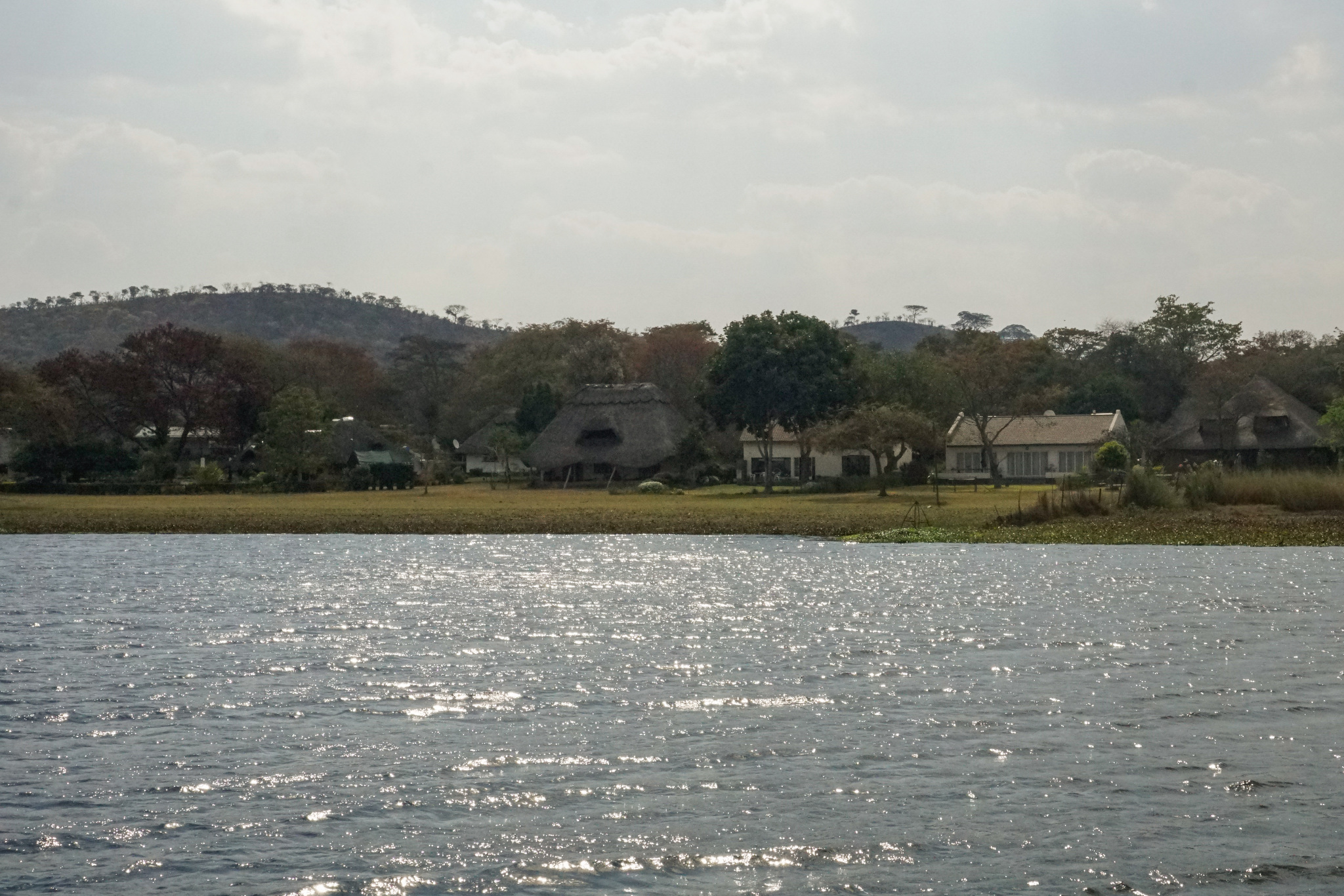
An endless expanse of greenery meets a body of deep blue water, glimmering silver where the sun kisses it.

Visitors of all ages turn their faces up to the warm rays, revelling in what they had once taken for granted: their country’s natural beauty.

“The thing that Covid has certainly brought home is that people need to escape urbanization,” says Gary Stafford, owner of Kuimba Shiri Bird Park, a wildlife refuge that has become a popular day trip from Harare, Zimbabwe’s capital.

Advertisement

“They need to get out of the house, they need to get sunshine, they need to get air, they need to feel the grass beneath their feet.”

When Zimbabwe closed its borders in March 2020, the influx of tourists drawn to its waterfalls and wildlife — more than two million international visitors per year — dropped to zero overnight.

Pandemic travel restrictions threatened to cripple the tourism industry, which had accounted for eight percent of the country’s gross domestic product and supported 393,500 jobs, according to a 2017 report from World Travel and Tourism Council, a research organisation based in London.

Advertisement

Local citizens, however, have softened the blow — taking advantage of bargains at luxury destinations and increasing their visits to low-cost attractions within driving distance, eagerly seeking out safe recreation opportunities and a change of scene after being confined indoors during lockdown periods.

“They don’t have to travel far and, because of the size of the area, do not feel crowded, thereby able to relax and enjoy time out in the open,” says Ken Worsley, director of the Mukuvisi Woodlands Nature Reserve and Environmental Education Centre, a 270-hectare park in the Harare suburbs where people come to walk their dogs, run, cycle, ride horses and spot wild animals.

From 2016 to 2019, Zimbabwe’s tourism industry earned more than US$1 billion a year, largely from foreign visitors.

Advertisement

With the country’s borders closed for most of 2020, it earned only US$369 million last year, says Godfrey Koti, head of corporate communications for the Zimbabwe Tourism Authority.

At Victoria Falls, one of Zimbabwe’s biggest tourist attractions and a Unesco World Heritage Site, the number of visitors plummeted nearly 70 percent, from 493,698 in 2019 to 155,366 in 2020.

In response, the Zimbabwe Tourism Authority launched the ZimBho campaign in October 2020, a marketing initiative encouraging domestic travel and awarding prizes for related social media posts.

Advertisement

The campaign has been a success, Koti says.

“There has been a sharp increase in domestic tourism,” he says, also crediting “the absence of international tourists and a general increased appetite in travel.”

Paul Matamisa, head of the Tourism Business Council of Zimbabwe, agrees, but notes that overall attendance remains significantly lower than usual.

Advertisement

“The level of domestic travel has been welcomed by the travel and tourism sector, but it does not, of course, replace the drop in international arrivals,” he says, adding that local visitor numbers also fluctuate due to periodic tightening of lockdowns in response to Covid-19 case numbers.

Parks and recreation centres near Zimbabwe’s capital, less dependent on foreign visitors to begin with, seem to have experienced the greatest gains.

At Kuimba Shiri Bird Park, just a one-hour drive west of the capital, urban families can try birdwatching, horseback riding, boat rides, fishing and other lakeside activities.

Advertisement

Thirty years since he opened the park, Stafford says the pandemic has prompted a surge of first-time visitors.

“We are getting a lot of people who ordinarily have not come out here, who have been in their little circle in the city, coming out to the bird park,” he says, “which is quite nice.”

At Chinhoyi Caves, a national park two hours northwest of Harare, managed by Zimbabwe Parks and Wildlife Management Authority, visitors come to enjoy scuba diving, cave tours and a lion park.

Advertisement

“Of course, during the lockdown, the numbers reduced drastically, but they have since started picking up — especially locally,” says public relations manager Tinashe Farawo.

To further boost ticket sales and other visitor spending that helps fund wildlife management efforts, the authority has encouraged special offers such as the ZB Bank “Stay now, and Pay Later” programme, which allows the bank’s account holders to delay payments.

Through a package deal, Innocent Mozeka says he paid US$145 for a two-day trip to Zimbabwe’s Eastern Highlands — less than half of what it would typically cost for travel, accommodation, food and activities.

Advertisement

“Crisp air, lush green forest, rolling landscapes,” he says, enthusiastically describing his vacation.

“I wouldn’t mind staying for a week because of the serene atmosphere and beautiful environment, fresh air, receptive community.”

Zimbabwe resumed international flights in October 2020, and reopened its land borders in December 2020, but visitor numbers remain well below pre-pandemic levels.

Advertisement

The United Nations Conference on Trade and Development estimates that countries with low vaccination rates, such as Zimbabwe, will see a 75 PERCENT reduction in inbound tourists in 2021.

The Tourism Business Council of Zimbabwe is counting on domestic levels to keep rising, during and beyond the pandemic period, Matamisa says.

“It is to be hoped that the thrust of encouraging domestic tourism will be sustained when things get back to normal,” he says.

Advertisement

“And it is also hoped that people who travel abroad extensively in normal times may undertake more local travel as a result of ‘rediscovering’ their own country for holiday purposes.” – Global Press Journal

Advertisement
Continue Reading
Click to comment

Leave a Reply

Your email address will not be published. Required fields are marked *

National

Parliament weighs 40% community share in carbon credit deals

Published

on

BY NOTHANDO DUBE

Lawmakers in Zimbabwe are debating a comprehensive Climate Change Management Bill that supporters say will finally ensure rural communities are no longer “mere spectators” in the multi-billion dollar carbon credit industry.

Advertisement

The Bill, which moved into its second reading, seeks to regulate carbon trading and protect the country’s natural resources from foreign exploitation.

Mutsa Murombedzi delivered a passionate plea for the legislation, arguing that it is a matter of “justice, survival and the dignity of our people”. “Climate change is not a distant stone,” Murombedzi told the House. “It is the flood that we see in Chimanimani, which sweeps away our schools… the heatwave that scotches our communities in Hwange, one silent drought that empties our granaries”.

A major point of contention and hope is the proposed 40% community share in carbon projects. Lawmakers argued that previous projects often left locals with nothing but “tsotso stoves or bicycles” while profits were “repatriated back to their countries, particularly those from the global north”.

Advertisement

Master Makope applauded the move to bring transparency to a sector where deals were often done “without the knowledge of the authorities”.

“By having this policy framework, I believe our people are going to benefit,” Makope said.

“The Minister has to make sure that the villagers, the communities, should also have easy access to registration of their own projects because they are the ones who own these forests”.

Advertisement

The debate also focused on the establishment of a National Climate Fund.

Susan Matsunga insisted on rigorous oversight, suggesting a biennial reporting cycle to Parliament to ensure progress is measurable. “This is about building a culture of transparency that ensures our climate goals are not just promises on paper but measurable achievements,” Matsunga stated.

Murombedzi added that “Climate finance must not vanish into corridors in Harare; it must flow to the ward level where resilience is built”.

Advertisement

Continue Reading

Binga

Lawmaker urges localized climate strategies for Tsholotsho, Hwange

Published

on

BY NOKUTHABA DLAMINI

A Shamva South lawmaker has called for a radical shift in climate change mitigation strategies, demanding that the government abandon “one-size-fits-all” projects in favor of solutions that respect the unique geography and culture of districts like Tsholotsho, Hwange, and Binga.

Advertisement

During the debate on the Climate Change Management Bill, Joseph Mapiki argued that national programs often fail because they ignore local realities.

“We should look at our projects in terms of the area,” Mapiki told the National Assembly. “For example, in Tsholotsho and Hwange, where there are game parks, we cannot force them to do horticulture because there is no water. We should encourage them to engage in tourism”.

Mapiki also challenged the government’s staffing policies for climate initiatives, insisting that local language and cultural knowledge are essential for the success of any environmental committee.

Advertisement

“If someone from Mashonaland Central goes and is incorporated in a Committee in Binga, it means that the Committee will not function well because that person will not be conversant with the language,” he argued.

He further emphasized that “First preference should be given to the locals to avoid taking people from other areas… because those other people will not be aware of the language and culture of the people there”.

Beyond staffing and local projects, Mapiki raised concerns about the influence of international donors on Zimbabwe’s environmental policy.

Advertisement

He urged the government to ensure that the majority of climate funding is domestic to avoid “stringent measures and conditions” imposed by foreign entities.

“Our plea Hon. Minister, is that 98% funding for that Bill should be from Zimbabwe,” Mapiki stated.

“Foreign funding is hampering our progress”. His remarks were supported by other MPs who noted that climate change mainstreaming must include the “vulnerable communities” and “local authorities” who are on the frontlines of weather shocks in the province.

Advertisement

Continue Reading

Hwange

Hwange MP challenges government over Nambya teacher deployment

Published

on

BY NOKUTHABA DLAMINI

Hwange East legislator Joseph Bonda has called on the government to address what he describes as the marginalisation of the Nambya language in schools, arguing that current teacher deployment policies are undermining early learning in Matabeleland North.

Advertisement

According to the National Assembly’s official record of 7 April 2026, Bonda formally asked the Minister of Public Service, Labour and Social Welfare to explain why trained Nambya-speaking teachers are not being employed in Hwange District while non-speakers are posted to the area.

He said the practice was “depriving children of receiving instruction in their mother tongue at the early education stage”, which he described as critical to both educational outcomes and cultural development.

Under Zimbabwe’s language policy framework, learners are expected to be taught in their mother language in the early grades. Critics say failure to align teacher deployment with local languages weakens that principle in practice.

Advertisement

Despite the concerns raised, the matter remains unresolved in Parliament. The inquiry was deferred on 18 March and, at the latest sitting, the ministry had yet to provide a formal response.

Parents in the district say the issue has direct consequences for children’s performance.

“Our children are disadvantaged from the start,” said Ester Ncube, a parent in Jambezi under Chief Shana. “If a child cannot understand the teacher in Grade One, it affects everything that follows.”

Advertisement

Community leaders argue that the debate goes beyond classroom instruction and touches on identity.

“Language is part of who we are,” said local elder Eliziya Vashe Shoko. “If schools do not teach in Nambya, we are slowly losing our identity. Government must take this seriously.”

Young professionals in the province say the challenge is not a shortage of qualified personnel but gaps in recruitment and deployment.

Advertisement

“There are trained teachers who speak Nambya, Lozvi, Chidombe and other local languages, but they are not being deployed here,” said Lindiwe Sibanda, a recent graduate.

“At the same time, teachers from outside are brought in. It does not make sense. These languages should be prioritised so that communities feel a sense of belonging and respect.”

The language dispute forms part of a wider push for regional equity in Matabeleland North. Bonda has also raised concerns over local employment quotas in the wildlife sector and what he describes as the exclusion of Hwange from national weather forecasts. He argues that these issues reflect a broader mismatch between national policy and local needs.

Advertisement


SOURCE: CITE

Advertisement
Continue Reading

Trending

Copyright © 2022 VicFallsLive. All rights reserved, powered by Advantage