Connect with us

Slider

AAT opens a wellness spa in Victoria Falls

Published

on

BY NOKUTHABA DLAMINI

Africa Albida Tourism (AAT) group has opened Victoria Falls’ first purpose-built building, setting a new benchmark in health and wellness.

Advertisement

The facility which was officially opened on Wednesday will be open for both to the public and Victoria Falls Safari Lodge estate guests

AAT chief executive Ross Kennedy said the hospitality group was enthusiastic about the facility, and they are already planning to expand it to cater for other occasional events for private functions as well as yoga retreats, weddings  and foodie events.

“Next year is looking very strong for the destination and our industry, so long may that continue … we are going to have the best November we’ve had since we opened our doors 30 years ago,” Kennedy said.

Advertisement

“I think that this destination and the tourism industry in this country is in for, quite possibly, the best three or four years that we have ever known in tourism in Zimbabwe,” he added.

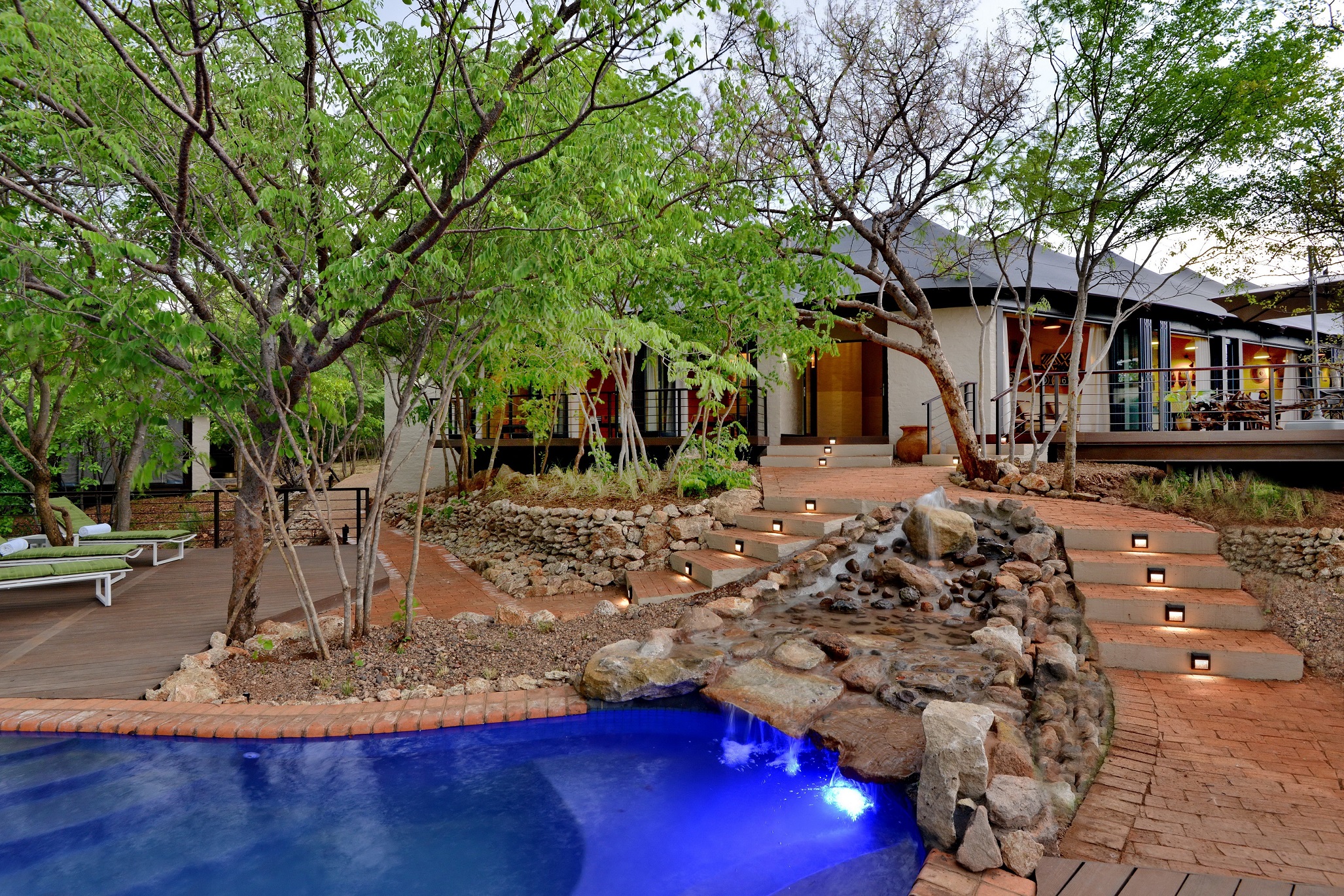
Victoria Falls Safari Spa, located in indigenous woodland on the Victoria Falls Safari Lodge estate, was built in response to growing demand for wellness travel, and it was hoped it would extend stays in the destination, Kennedy said.

The Spa features manicure and pedicure stations, a hair and make-up studio, relaxation rooms, a splash pool and café as well as three stand-alone treatment  rooms.

Advertisement

It will be operated by a team of five therapists, offering a range of luxurious treatments including massages, facials, manicures and pedicures as well as hair and event make-up services, and uses all natural, plant-based Africology and Cashmere & Co. products.

“The African tented safari camp-style spa, in keeping with the rest of the hospitality group’s portfolio, uses bold, colourful, Ndebele design elements, and is located in a natural environment and furnished to portray the rich textures of Africa,” AAT said.


Advertisement


Advertisement
Continue Reading
Click to comment

Leave a Reply

Your email address will not be published. Required fields are marked *

National

Government to equip Mpilo Hospital with radiotherapy machines funded by sugar tax initiative

Published

on

BY WANDILE TSHUMA 

Patients in Matabeleland North who rely on specialized care in Bulawayo are set to benefit from a major upgrade in cancer treatment facilities, as the government begins deploying equipment funded by the national sugar tax.

Advertisement

The Deputy Minister of Health and Child Care, Sleiman Timios Kwidini, confirmed to Parliament that the Treasury has released approximately $30.8 million to procure critical radiotherapy machines. Two low-energy units are earmarked for the country’s major referral centers, specifically Mpilo Central Hospital in Bulawayo and Parirenyatwa Hospital in Harare.

Advanced payments have been made to suppliers, and the government confirmed that installation is currently in progress alongside the preparation of specialized treatment bunkers. Kwidini described the move as a significant milestone intended to reduce patient waiting times and the costly need for referrals to facilities outside the country.

However, the announcement met with sharp criticism from lawmakers who argued the ministerial update lacked sufficient detail regarding the total revenue collected and the specific types of equipment purchased.

Advertisement

Surrender Kapoikilu led the debate, questioning whether the ministry had secured essential components like linear accelerators and diagnostic tools like endoscopes. He warned that without adequate surge protection, the high-tech equipment remains at risk from power fluctuations. “ZESA currents have many surges,” Kapoikilu said. “If you just plug it in, in five minutes, a machine is gone”.


He emphasized that effective treatment must begin with proper diagnosis, stating, “If you cannot diagnose cancer, you cannot conquer”.

Advertisement

The discussion expanded to include the dire state of basic patient care, with Corban Madzivanyika pointing out that referral centers often lack fundamental tools. “You get to the hospital and you are told that there is no wheelchair,” Madzivanyika told the House, describing the shortage of stretchers and wheelchairs as embarrassing.

Responding to the concerns, the Acting Speaker, Joseph Tshuma, directed the ministry to defer the matter and return with a more comprehensive dossier detailing the expenditure and the availability of essential medicines.


Advertisement

Continue Reading

National

Parliament weighs 40% community share in carbon credit deals

Published

on

BY NOTHANDO DUBE

Lawmakers in Zimbabwe are debating a comprehensive Climate Change Management Bill that supporters say will finally ensure rural communities are no longer “mere spectators” in the multi-billion dollar carbon credit industry.

Advertisement

The Bill, which moved into its second reading, seeks to regulate carbon trading and protect the country’s natural resources from foreign exploitation.

Mutsa Murombedzi delivered a passionate plea for the legislation, arguing that it is a matter of “justice, survival and the dignity of our people”. “Climate change is not a distant stone,” Murombedzi told the House. “It is the flood that we see in Chimanimani, which sweeps away our schools… the heatwave that scotches our communities in Hwange, one silent drought that empties our granaries”.

A major point of contention and hope is the proposed 40% community share in carbon projects. Lawmakers argued that previous projects often left locals with nothing but “tsotso stoves or bicycles” while profits were “repatriated back to their countries, particularly those from the global north”.

Advertisement

Master Makope applauded the move to bring transparency to a sector where deals were often done “without the knowledge of the authorities”.

“By having this policy framework, I believe our people are going to benefit,” Makope said.

“The Minister has to make sure that the villagers, the communities, should also have easy access to registration of their own projects because they are the ones who own these forests”.

Advertisement

The debate also focused on the establishment of a National Climate Fund.

Susan Matsunga insisted on rigorous oversight, suggesting a biennial reporting cycle to Parliament to ensure progress is measurable. “This is about building a culture of transparency that ensures our climate goals are not just promises on paper but measurable achievements,” Matsunga stated.

Murombedzi added that “Climate finance must not vanish into corridors in Harare; it must flow to the ward level where resilience is built”.

Advertisement

Continue Reading

Binga

Lawmaker urges localized climate strategies for Tsholotsho, Hwange

Published

on

BY NOKUTHABA DLAMINI

A Shamva South lawmaker has called for a radical shift in climate change mitigation strategies, demanding that the government abandon “one-size-fits-all” projects in favor of solutions that respect the unique geography and culture of districts like Tsholotsho, Hwange, and Binga.

Advertisement

During the debate on the Climate Change Management Bill, Joseph Mapiki argued that national programs often fail because they ignore local realities.

“We should look at our projects in terms of the area,” Mapiki told the National Assembly. “For example, in Tsholotsho and Hwange, where there are game parks, we cannot force them to do horticulture because there is no water. We should encourage them to engage in tourism”.

Mapiki also challenged the government’s staffing policies for climate initiatives, insisting that local language and cultural knowledge are essential for the success of any environmental committee.

Advertisement

“If someone from Mashonaland Central goes and is incorporated in a Committee in Binga, it means that the Committee will not function well because that person will not be conversant with the language,” he argued.

He further emphasized that “First preference should be given to the locals to avoid taking people from other areas… because those other people will not be aware of the language and culture of the people there”.

Beyond staffing and local projects, Mapiki raised concerns about the influence of international donors on Zimbabwe’s environmental policy.

Advertisement

He urged the government to ensure that the majority of climate funding is domestic to avoid “stringent measures and conditions” imposed by foreign entities.

“Our plea Hon. Minister, is that 98% funding for that Bill should be from Zimbabwe,” Mapiki stated.

“Foreign funding is hampering our progress”. His remarks were supported by other MPs who noted that climate change mainstreaming must include the “vulnerable communities” and “local authorities” who are on the frontlines of weather shocks in the province.

Advertisement

Continue Reading

Trending

Copyright © 2022 VicFallsLive. All rights reserved, powered by Advantage