Connect with us

Slider

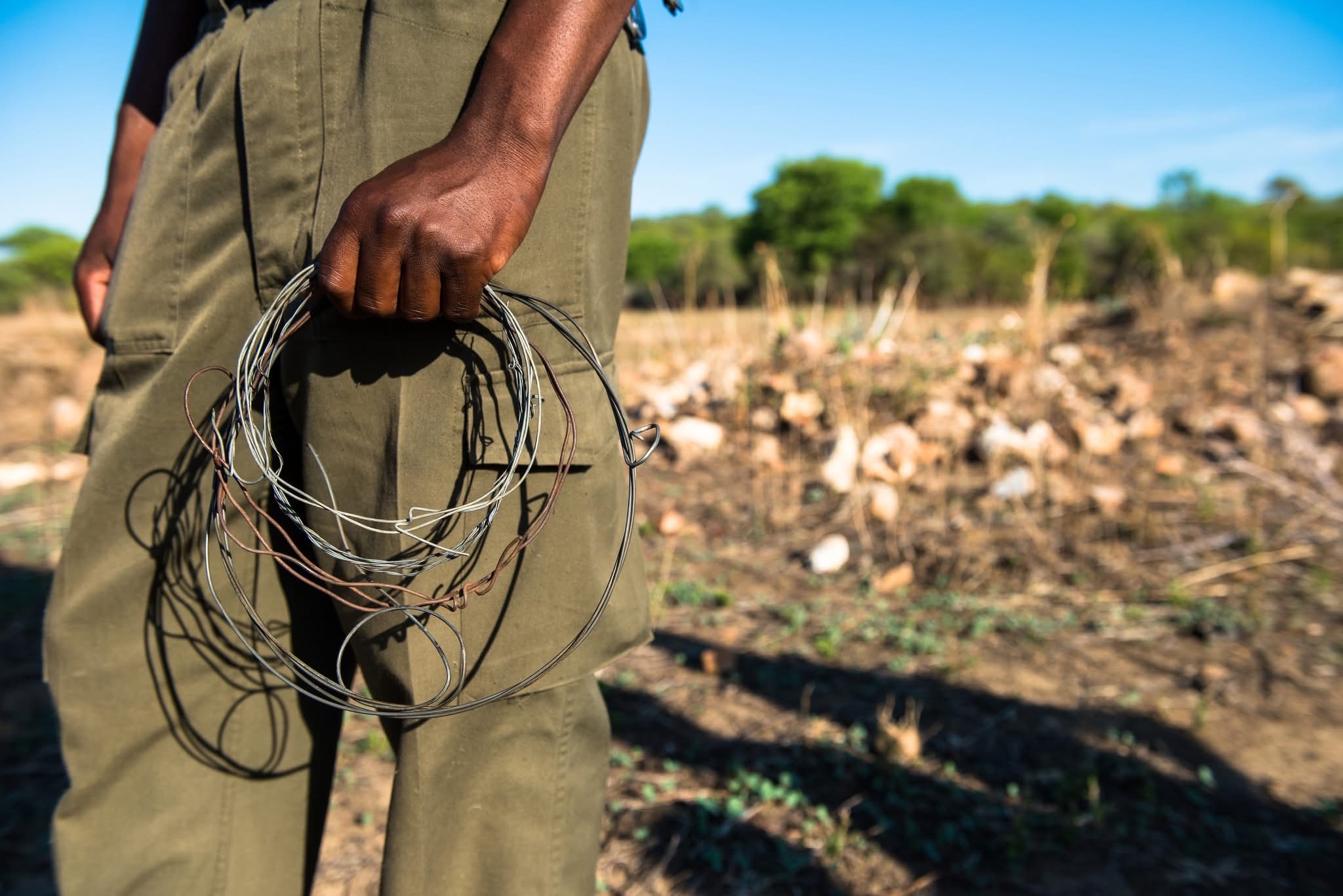
Wire snares continue to kill wildlife around Hwange, despite crackdown

Published

on

BY NOKUTHABA DLAMINI

Wire snares continue to take a heavy toll on wildlife in the forests surrounding Hwange National Park and the Victoria Falls wildlife corridors, despite intensified anti-poaching efforts.

Advertisement

Figures from the Zimbabwe Parks and Wildlife Management Authority (ZimParks) show that 1 760 wire snares were recovered in Hwange National Park and the Victoria Falls area in 2024.

In the first ten months of 2025, a further 1 048 snares were removed, underscoring the persistence of illegal snaring in one of southern Africa’s most important conservation landscapes.

ZimParks says snaring is most common along park boundaries and buffer zones, particularly around Sinamatella, Hwange Main Camp, Matetsi and Robins Camp, as well as in nearby communities such as Dete and Mambanje.

Advertisement

“Our teams remain actively deployed on the ground, conducting regular patrols and monitoring exercises to combat snaring and other illegal activities,” ZimParks said in a written response. “This consistent field presence has been instrumental in safeguarding wildlife populations.”

However, conservation organisations operating in these areas say the rising number of recovered snares points to an escalating problem rather than success.

Painted Dog Conservation (PDC), which runs extensive anti-poaching patrols in and around Hwange, describes wire snares as one of the most indiscriminate threats to wildlife.

Advertisement

“Poachers are quite skilled and know what they are targeting,” said David Kuvaoga, operations director at PDC. “But the snare itself is not selective.”

He said animals of all sizes are caught.

“We have seen elephants trapped by the trunk, lions, buffalo, giraffe and painted dogs,” Kuvaoga said. “Once an animal is caught, it can suffer for hours or days. Many die without ever being seen.”

Advertisement

PDC rangers removed more than 3 500 wire snares in 2024 across Hwange, the Gwayi Valley and surrounding forestry areas.

“For every snare we remove, there are animals that have already been injured or killed,” he added.

In the Victoria Falls area, the Victoria Falls Anti-Poaching Unit (VFAPU) has reported a steady increase in snaring incidents, particularly during the dry season when wildlife movements intensify.

Advertisement

VFAPU recorded 59 snares recovered in September 2025 and 54 in October, alongside confirmed wildlife losses including buffalo and hyena.

“Animals lost to poaching is always a bitter pill to swallow,” VFAPU said in its October operational report. “Sadly, we lost three animals that we know of. From every case, we learn more about how these poaching groups operate.”

VFAPU said the regular recovery of snares reflects active and ongoing poaching, prompting expanded patrols in collaboration with ZimParks and neighbouring ranger units.

Advertisement

At the Conservation Wildlife Fund (CWF) in Hwange, conservationists caution against viewing high snare recovery figures as progress.

“It is difficult to describe collecting snares as success,” said Debra Ogilvie-Roodt of CWF. “Success would be seeing fewer snares being set in the first place.”

She said snares remain lethal long after they are placed.

Advertisement

“A snare doesn’t stop killing once it’s set,” Ms Ogilvie-Roodt said. “Unless it is found and removed, it will continue to trap animals. We have seen lions with snares around their necks, giraffes caught and elephants injured. Many do not survive.”

ZimParks acknowledges the scale of the challenge and says it is intensifying enforcement and cooperation with conservation partners.

The authority works with organisations including Painted Dog Conservation, Conservation Wildlife Fund, Friends of Hwange, Dete Animal Rescue Trust, Victoria Falls Anti-Poaching Unit and Victoria Falls Wildlife Trust, many of which operate outside protected areas where most snares are set.

Advertisement

“These partners play a critical role in early detection and rapid response,” ZimParks said.

ZimParks says its anti-snaring strategy includes increased law-enforcement patrols, de-snaring operations, sniffer dogs, intelligence networks, technology such as drones and camera traps, and community engagement through programmes like CAMPFIRE.

The authority warns that snaring threatens not only biodiversity but also livelihoods.

Advertisement

“Snaring poses a serious ecological threat and undermines wildlife-based tourism, which is a major revenue earner for local communities and the country,” ZimParks said.

SOURCE: CITE

Advertisement
Continue Reading
Click to comment

Leave a Reply

Your email address will not be published. Required fields are marked *

National

Government warns farmers to step up tick control as January Disease threat looms

Published

on

BY STAFF REPORTER

The Ministry of Lands, Agriculture, Fisheries, Water and Rural Development has urged livestock farmers across Zimbabwe to heighten disease surveillance and tick control measures as the 2026 rainy season continues, warning of an increased risk of January Disease (Theileriosis).

Advertisement

In a farmer advisory posted on the Ministry’s official Facebook page, authorities said the tick-borne disease spreads rapidly under warm and wet conditions and can decimate entire cattle herds if not effectively controlled.

The Ministry emphasised that weekly cattle dipping is mandatory during the rainy season, in line with Government policy to curb the spread of the brown ear tick, the primary carrier of January Disease. Farmers were urged to pay dipping levies, ensure correct acaricide dilution as per manufacturers’ instructions, and utilise spray races where possible for improved effectiveness.

In high-risk areas or during active outbreaks, farmers may be directed to follow a 5:5:4 dipping regime, involving more frequent dipping intervals. The Ministry also recommended the use of tick grease on sensitive areas such as inside the ears, the udder and under the tail.

Advertisement

As part of broader prevention efforts, the Ministry said the locally produced BOLVAC vaccine is now available in increased quantities, with farmers encouraged to contact their local veterinary offices to access the vaccine.

Farmers were further advised to conduct daily inspections of their cattle and remain alert to early warning signs of January Disease, which include swollen lymph nodes, loss of appetite, breathing difficulties, frothing, watery or cloudy eyes, fever and general weakness.

The Ministry reminded farmers that all suspected cases or sudden cattle deaths must be reported to the Directorate of Veterinary Services within 24 hours, stressing that the movement of sick or tick-infested animals is prohibited as it contributes to the spread of the disease.

Advertisement

Failure to comply with dipping regulations constitutes an offence under the Animal Health Act, with penalties that may include fines or arrest, the Ministry warned.

Farmers requiring assistance or wishing to report suspected cases were advised to contact their local Veterinary Extension Officer or the Ministry of Lands, Agriculture, Fisheries, Water and Rural Development.

“Prevention saves wealth,” the Ministry said, urging farmers to take proactive measures to protect their herds.

Advertisement

Continue Reading

In the community

Two missing Apostolic Faith sect members found deceased in Zambezi River

Published

on

BY NOKUTHABA DLAMINI 

Two members of an Apostolic Faith sect who were swept away by strong currents during a baptism service on the Zambezi River in Victoria Falls on Saturday have been found deceased, two days after they went missing.

Advertisement

Search and rescue efforts, which had been ongoing since the incident, culminated on Monday when the two bodies were located with the assistance of a local rafting company operating on the river.

Confirming the development, Victoria Falls Residents Association chairperson, Kelvin Moyo, said the discovery brought a tragic end to hopes of finding the pair alive.

“As of this afternoon, we have received confirmation that both bodies have been found,” said Moyo. “The operation was supported by a local rafting company, and at the time of the update, teams were still working on the process of retrieving one of the bodies from the river.”

Advertisement

Moyo said the incident has once again highlighted the dangers associated with conducting religious activities in the Zambezi River, particularly during periods of strong water flow.

He urged residents and visitors to exercise extreme caution when approaching the river and called on religious groups to prioritise safety when carrying out baptism rituals.

Authorities are expected to continue engaging relevant stakeholders on safety measures as the community comes to terms with the loss.

Advertisement

Continue Reading

In the community

Government intensifies crop pest control efforts in Mat North

Published

on

BY STAFF REPORTER 

The government has intensified efforts to contain a crop pest outbreak affecting parts of Matabeleland North Province, with enhanced control measures set to be rolled out this week.

Advertisement

According to ZBC News, a visit by its crew to Hwange District revealed widespread infestation, with several farmers reporting damage to early-stage crops, particularly traditional grains and sunflower. Authorities say swift intervention is essential to prevent further losses and protect the current farming season.

Provincial Agricultural and Rural Development Advisory Services (ARDAS) Acting Director, Mkhunjulelwa Ndlovu, told ZBC News that government has moved quickly to assist affected farmers through the distribution of pesticides and the deployment of extension officers.

“We have noted with concern the infestation of crop pests, particularly on small grains and sunflower, mostly at the early stages of crop development. As Government, we have moved in and this week we are distributing pesticides to Tsholotsho, Binga and Hwange so that farmers can effectively control the pests and protect their crops,” he said.

Advertisement

Ndlovu added that extension officers are already on the ground working closely with farmers to ensure the correct application of chemicals and to assess the extent of the damage.

“We are optimistic that timely pest control and continued farmer participation will result in improved yields, enhanced household food security and the prospects of a bumper harvest in Matabeleland North Province,” he said.

Despite the challenges, Ndlovu urged farmers not to lose hope, encouraging them to replant where possible, as conditions remain favourable in most areas and support systems are in place.

Advertisement

The distribution of inputs and technical support forms part of ongoing Government efforts to boost agricultural productivity and strengthen household food security.

Advertisement
Continue Reading

Trending

Copyright © 2022 VicFallsLive. All rights reserved, powered by Advantage