Connect with us

National

Zimbabwe makes gains against TB

Published

on

BY WANDILE TSHUMA

The World Health Organization (WHO) data show that Zimbabwe continues to make measurable gains in its fight against tuberculosis (TB).

Advertisement

According to the Global Tuberculosis Report 2025, Zimbabwe’s estimated TB incidence has declined to 203 per 100,000 population, representing a 3.8 % reduction from 2023. The report states that “TB incidence in Zimbabwe has fallen to 203 per 100 000, a 3.8 % reduction from 2023.” 

On treatment outcomes, the country’s overall success rate for all forms of TB has improved to 91 %, up from 89 % in 2023. The report quotes: “Treatment success for all forms of TB has improved to 91 %, up from 89 % in 2023.” 

For drug-resistant TB (DR-TB), progress has also been recorded: treatment success rose from 64 % for the 2021 cohort to 68 % for the 2022 cohort. As the report notes: “treatment success for drug-resistant TB increased from 64 % for the 2021 cohort to 68 % for the 2022 cohort.” 

Advertisement

In the critical sphere of TB‐HIV co-infection, Zimbabwe saw a drop in the co‐infection rate to 49 %, down from 51 %. The report states: “TB/HIV co-infection rates have fallen to 49 %, down from 51 %.” 

Zooming out, the 2025 global report shows that across the world TB is falling again, although not yet at the pace required to meet targets. Globally, incidence declined by almost 2 % between 2023 and 2024, and deaths fell around 3 %. 

However, the report warns that progress is fragile. Funding shortfalls, health-system disruptions (especially during the COVID-19 era), and the ongoing challenge of drug-resistant TB threaten to erode gains. The WHO page reminds that the 2025 edition “provides a comprehensive … assessment of the TB epidemic … at global, regional and country levels.” 

Advertisement

For example, although more people are being diagnosed and treated than in previous years, not enough are being reached with preventive interventions, and many countries are still far from the targets set under the End TB Strategy.


Advertisement
Continue Reading
Click to comment

Leave a Reply

Your email address will not be published. Required fields are marked *

National

EcoCash bill splitting signals rise of social commerce in Zimbabwe

Published

on

BY STAFF REPORTER

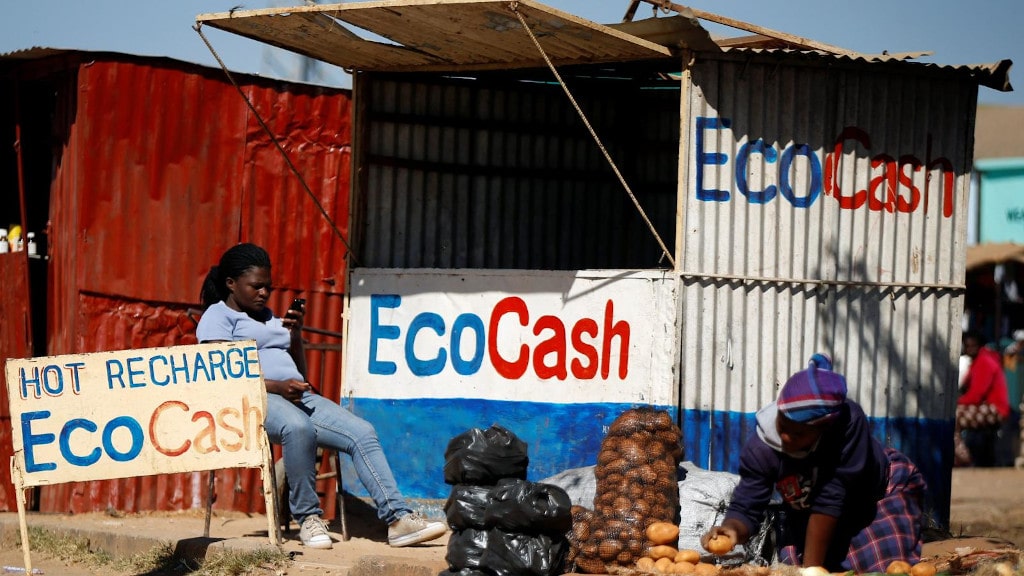
EcoCash’s latest bill-splitting feature on its Super App is not just a product upgrade, it is part of a broader shift towards “social commerce,” where financial transactions are embedded directly into everyday conversations.

Advertisement

Traditionally, sending money has been a deliberate, separate action: open the app, enter details, confirm payment. But with EcoCash’s integrated chat environment, that process is being redefined. Payments now happen in the same space where decisions are made — within conversations among friends, families and colleagues.

This development, which is being driven by Sasai Fintech, a subsidiary of Cassava Technologies, result is a more natural flow between communication and commerce.

This model, often referred to as chat-first payments, is gaining traction globally. Platforms such as Venmo in the United States and Revolut in Europe have popularised the idea of embedding payments into social interactions, allowing users to split bills, request funds and settle expenses within a messaging context.

Advertisement

EcoCash’s move signals that Zimbabwe is aligning with — and in some ways accelerating — this global trend.

Unlike many mature markets where card-based payments dominated before social features were layered on, Zimbabwe’s mobile-first ecosystem provides a different foundation. Mobile money is already deeply embedded in daily life, making it easier to integrate financial services into conversational platforms without requiring a behavioural overhaul.

By placing bill-splitting within its chat interface, EcoCash is effectively turning conversations into transaction points. A group discussing dinner plans can now split the bill instantly. Colleagues organising transport can settle contributions in real time. Families coordinating school fees or groceries can move from agreement to payment without leaving the chat thread.

Advertisement

This convergence of messaging and money is at the heart of social commerce.

From a strategic standpoint, the implications are significant. Each conversation has the potential to generate multiple transactions, increasing activity on the platform while strengthening user engagement. Payments become less of a task and more of a seamless extension of communication.

Industry analysts note that this model tends to drive higher transaction frequency and user retention, as financial interactions become habitual rather than occasional. For EcoCash, the bill-splitting feature is a practical entry point into this space, simple enough to encourage adoption, yet powerful enough to shift behaviour.

Advertisement

Continue Reading

National

Zimbabwe’s diplomatic ‘House of Cards’ exposed as funding crisis hits missions

Published

on

File footage retrieved online

BY WANDILE TSHUMA

Zimbabwe’s push to rebrand itself on the global stage is being undermined by a deepening funding crisis that has left key diplomatic missions in disrepair and staff facing eviction threats, lawmakers have warned.

Advertisement

A parliamentary report presented on Tuesday  shows a stark disconnect between rising foreign currency inflows and the deteriorating state of the country’s embassies abroad. While diaspora remittances surged to nearly $1.8 billion in the first three quarters of 2025 and exports jumped 27%, Treasury released only about 60% of the Foreign Affairs Ministry’s budget.  

The shortfall, equivalent to over ZWG1.2 billion, has “critically hampered” operations and stalled infrastructure upgrades at missions meant to anchor Zimbabwe’s international presence, according to the Portfolio Committee on Foreign Affairs.

“The substandard condition of missions… projects an image of resource scarcity and neglect,” the report said, singling out the embassy in Japan as emblematic of the decline.  

Advertisement

Renovation delays in key capitals such as London and Berlin, alongside stalled construction projects in Abuja, have eroded Zimbabwe’s diplomatic standing, lawmakers said. The ministry failed to meet targets to renovate or construct properties, missing at least five planned upgrades by September 2025 due to lack of funds.  

Members of Parliament warned that the deteriorating infrastructure risks sabotaging the government’s “Brand Zimbabwe” campaign, which seeks to attract tourists, investors and trade partners.

“If we want to attract investment and build strong relations, we must present ourselves in a dignified and professional manner,” one lawmaker said during debate, adding that underfunded embassies “do not present the actual face of the country.”  

Advertisement

The crisis extends beyond bricks and mortar. MPs said erratic funding has disrupted day-to-day operations, leaving missions struggling with basic costs such as fuel, ICT support and staff welfare. In some cases, diplomats abroad face “evictions and lockouts” due to unpaid expenses, Parliament heard.  

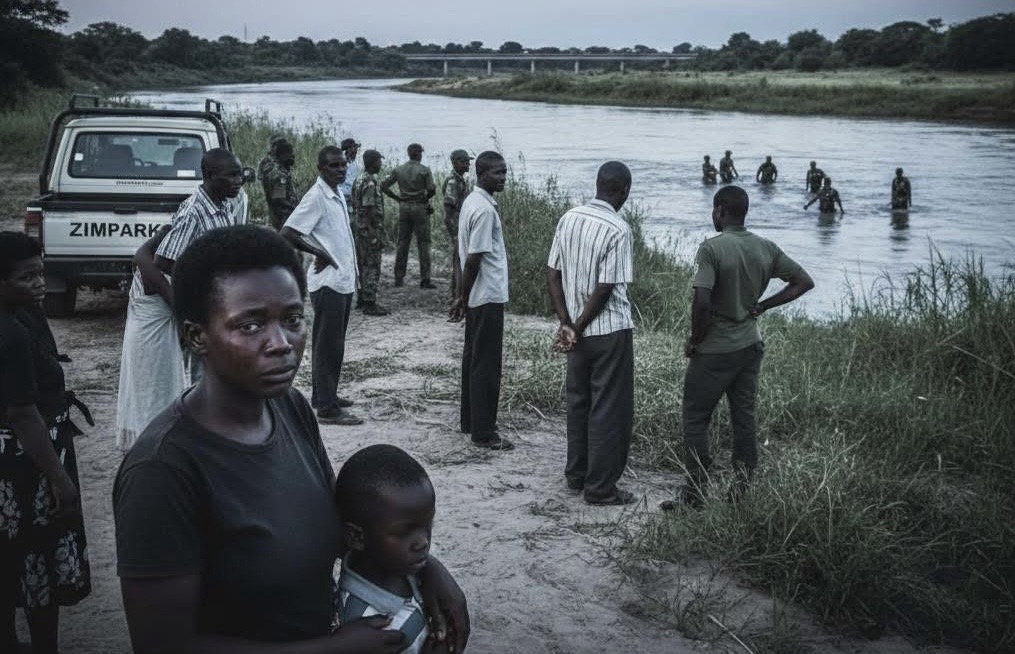
Underfunding has also weakened Zimbabwe’s ability to assist its citizens overseas and curtailed its participation in global diplomacy. “Underfunded embassies are often unable to assist globally dispersed citizens, even in emergencies,” another MP said.  

The situation has created what analysts describe as a fragile diplomatic architecture — one buoyed by strong economic inflows from the diaspora and export growth, yet hollowed out by fiscal constraints.

Advertisement

The committee noted that while Treasury has provided average monthly reimbursements of about $6.3 million to support missions, the funding gaps have “compromised the Ministry’s performance” and delayed critical projects.  

This contradiction is particularly striking given the government’s emphasis on economic diplomacy. Export earnings reached $8.57 billion between January and November 2025, sharply narrowing the trade deficit, while tourism campaigns under the “Brand Zimbabwe” banner have boosted international arrivals.  

Yet lawmakers cautioned that without adequate and timely funding, these gains could be undermined.

Advertisement

“Funding must not be allocated on paper. It must be released on time. Without that, even the best plans will fail,” one MP said.  

The committee urged Treasury to prioritise full and timely disbursements to restore Zimbabwe’s diplomatic infrastructure, warning that continued neglect could damage the country’s global image and weaken its ability to compete for investment.

“Embassies are the face of the nation,” the report concluded. “Without resources, that face risks becoming a liability rather than an asset.”

Advertisement

Continue Reading

In the community

Zimbabwe moves to support human-wildlife conflict victims

Published

on

BY NOKUTHABA DLAMINI

Cabinet has officially approved a transformative National Wildlife Policy, marking the first major overhaul of the sector’s regulatory framework in over three decades.

Advertisement

For the communities of Matabeleland North—from the elephant-dense corridors of Hwange to the tourism heartbeat of Victoria Falls—the policy promises a radical shift in how local people coexist with and benefit from the country’s natural heritage.

Presented by Finance minister Mthuli Ncube on Tuesday, the new policy acknowledges that the wildlife sector has been “remarkably transformed” since the current laws were enacted in 1992.

The updated framework seeks to align Zimbabwe with modern international best practices, moving toward a “vibrant wildlife-anchored economy” that directly supports national development.

Advertisement

For residents of Hwange and Victoria Falls, the most critical breakthrough is the policy’s explicit focus on human-wildlife conflict (HWC).

The framework provides for the implementation of the Human-Wildlife Conflict Relief Fund, specifically designed to provide benefits and support to victims of wildlife encounters.

This is paired with new regulations for CAMPFIRE (Communal Areas Management Programme for Indigenous Resources) and the establishment of dedicated wildlife corridors to reduce dangerous interactions between animals and human settlements.

Advertisement

The policy is built upon 10 strategic pillars, including community-based natural resources management and the equitable sharing of benefits.

Crucially, the government now recognises wildlife as a “public resource,” with the policy aiming to support devolution and enhance “active community participation.”

This ensures that present and future generations in Matabeleland North are not just neighbours to the game reserves, but active stakeholders in its socio-economic success.

Advertisement

However, community members say the success of the policy will depend on how effectively benefits are devolved to grassroots level.

“We have heard policies before, but what matters is whether the money reaches us,” said a Hwange villager, Eslina Ndlovu from Nemanhanga. “Our schools are struggling, some do not even have adequate classrooms or learning materials. If wildlife revenue is coming from our areas, it should help improve our education system.”

Another villager,Joseph Mwembe from Vukuzenzele village under Chief Mvuthu, echoed similar sentiments, calling for investment in health services. “We are living with wildlife every day, but our hospitals are not equipped. We don’t have proper referral hospitals or machines. If this policy is serious about supporting communities, then we must see that money building clinics, equipping hospitals, and improving services here in Matabeleland North,” he said.

Advertisement

Villagers stressed that without tangible improvements in infrastructure and social services, the policy risks falling short of its intended impact.

“If communities do not benefit in real terms, then it defeats the whole purpose of calling wildlife a national resource,” added Ndlovu.

The policy also introduces measures for fisheries conservation and the protection of indigenous plant species, with strict penalties for violations that threaten resource sustainability.

Advertisement

Continue Reading

Trending

Copyright © 2022 VicFallsLive. All rights reserved, powered by Advantage