Connect with us

Slider

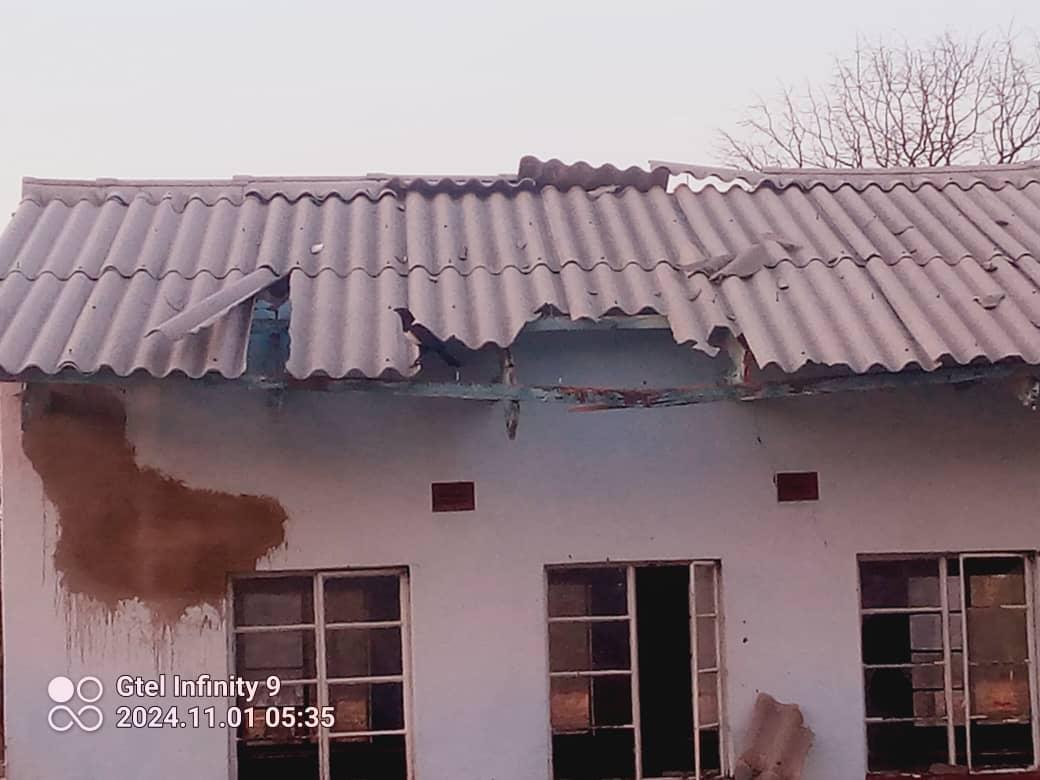
Schools in Tsholotsho destroyed by heavy rains, learners left conducting lessons under the trees

Published

on

BY NOKUTHABA DLAMINI 

Last week’s heavy rains have left a trail of destruction in Tsholotsho, with two schools severely affected.

Advertisement

Nembe Primary School and Nembe Secondary School suffered significant infrastructure damage, displacing learners and prompting calls for urgent assistance.
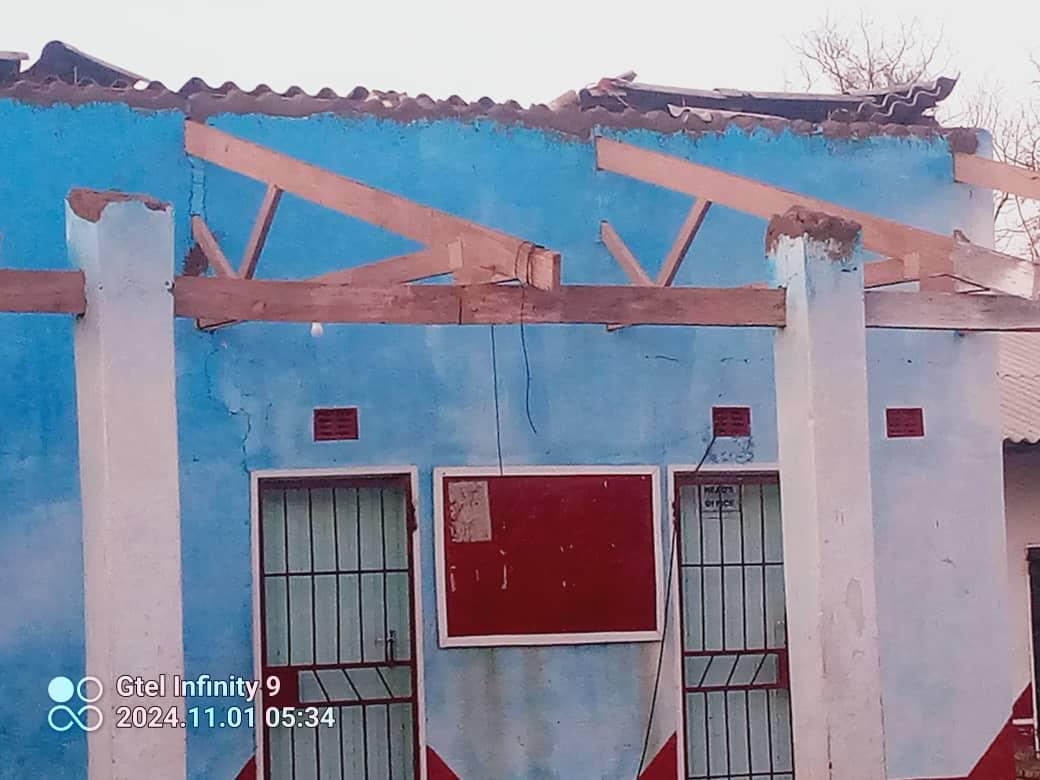
 

According to Ward 22 Councillor Nkululeko Ndebele, the rains destroyed wall blocks, scattered blanks everywhere, and damaged walls at Nembe Primary School.

“The wall block of grade three and four was destroyed, and the office of the staff, administration block, and solar panels were also damaged,” he said.

Advertisement

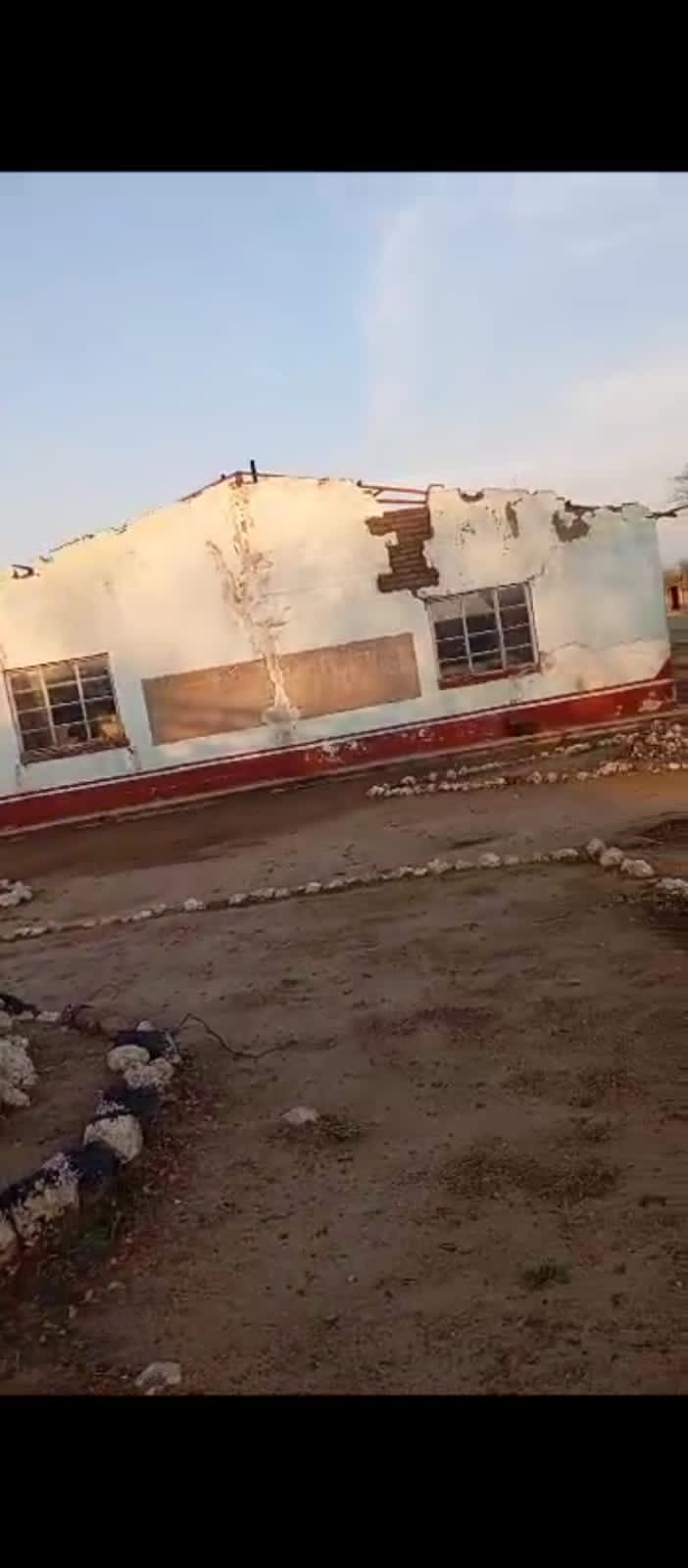
At Nembe Secondary School, the block used by Form One and Two students was destroyed, leaving learners without classrooms.

“Currently, the children are learning under the trees because no action has been taken,” Councillor Ndebele lamented.
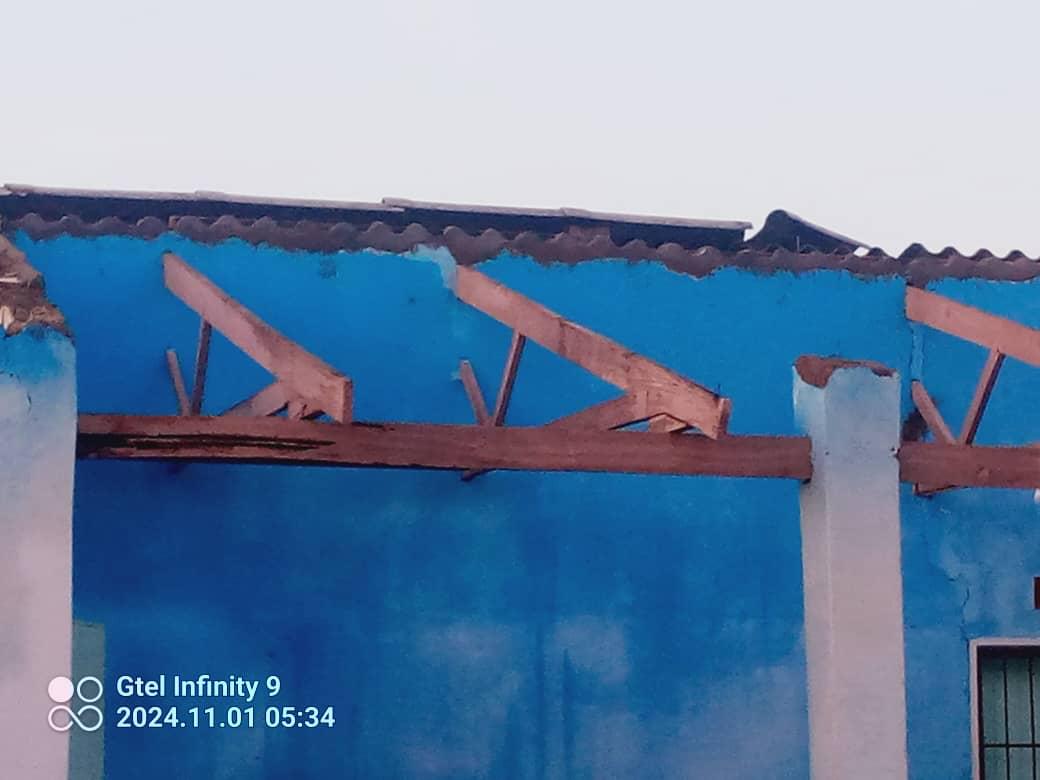
The District Schools Inspector visited the site on Monday to assess the damage, and a further visit is scheduled for today to determine the extent of the destruction.

Advertisement

Councillor Ndebele appealed for international assistance, citing the economic situation and drought ravaging the communities.

“Parents cannot afford to rebuild the schools, and we need help from anyone willing to assist,” he said.

Ndebele says the schools, built in the 1950s, have never been maintained, and their age has contributed to the extent of the damage.
“We are getting into the rain season, and we urgently need help to rebuild and restore these schools,” Councillor Ndebele emphasized.
Advertisement


Advertisement
Continue Reading
Click to comment

Leave a Reply

Your email address will not be published. Required fields are marked *

National

Rising Zambezi flows lift Kariba water levels amid improved rains

Published

on

BY WANDILE TSHUMA

Water levels at the Kariba Dam are gradually rising following improved rainfall across the Zambezi River Basin, bringing cautious optimism for water availability and power generation.

Advertisement

In a hydrological update released Tuesday, the Zambezi River Authority said the Lake Kariba reservoir level had reached 477.74 metres above sea level as of 10 March 2026.

Usable live storage now stands at 15.57 percent, equivalent to about 10.08 billion cubic metres of usable water.

The Authority said the increase is being driven by improved rainfall across much of the Kariba catchment during the 2025/2026 rainy season, which has boosted river flows and inflows into the reservoir.

Advertisement

“This reflects an improvement compared to the same date in 2025, when the reservoir stood at 476.93 metres above sea level with usable live storage of 9.87 percent,” the Authority said.

Zambezi flows rising at key monitoring points

River flows are also increasing at key monitoring stations along the Zambezi River.

Advertisement

At the Chavuma Gauging Station, flows reached 3,058 cubic metres per second on 10 March 2026, significantly higher than 2,088 cubic metres per second recorded during the same period last year.

Flows have also risen sharply near Victoria Falls, a key tourism and hydrological monitoring point.

At the Victoria Falls (Nana’s Farm) Gauging Station, river flows increased to 1,645 cubic metres per second, compared to 871 cubic metres per second on the same date in 2025.

Advertisement

The Authority said the upward trend reflects stronger rainfall upstream and around the Victoria Falls area, which is feeding the Zambezi system.

Outlook

The Zambezi River Authority said it will continue monitoring rainfall patterns and inflows across the basin to guide water utilisation at hydropower stations linked to the Kariba Dam.

Advertisement

The reservoir is a critical source of electricity for both Zimbabwe and Zambia, which jointly own and manage the dam through the Authority.

Advertisement
Continue Reading

National

Parliament flags dozens of council by-laws as unconstitutional

Published

on


BY NOKUTHABA DLAMINI

Advertisement

Subheading:

Legal committee says several statutory instruments exceed legal powers, impose excessive fines and create room for arbitrary charges.

Story:

Advertisement

The Parliament of Zimbabwe has raised alarm over dozens of local authority by-laws, warning that many of them violate the Constitution and the laws under which they were created.

In an adverse report, the Parliamentary Legal Committee said several statutory instruments gazetted in October 2025 are ultra vires, meaning they exceed the legal powers granted under the Urban Councils Act and the Rural District Councils Act. 

The by-laws affect a number of local authorities including Masvingo, Plumtree, Shurugwi, Chimanimani, Chivi and Insiza.

Advertisement

According to the committee, some of the regulations were improperly enacted because the minister responsible for local government made the by-laws directly instead of councils, which are legally mandated to draft them before submitting them for ministerial approval. 

“The by-law making authority is the council, not the minister,” the report states, adding that the process set out in the law was not followed. 

The committee also flagged excessive penalties in some statutory instruments. Under existing legislation, fines imposed through council by-laws should not exceed Level Five on the standard scale of fines — about US$200. However, some by-laws impose penalties ranging between US$500 and US$5,000, which lawmakers said violates the enabling legislation. 

Advertisement

Another major concern is that several by-laws require residents to pay permit or licence fees without specifying the amounts, creating legal uncertainty.

Lawmakers warned that leaving such fees undefined could allow authorities to impose arbitrary charges, potentially opening the door to corruption and abuse of power. 

The committee also highlighted constitutional concerns in some provisions, including those that allow councils to seize property or evict residents without court oversight, which may violate constitutional protections against arbitrary deprivation of property and unlawful eviction. 

Advertisement

In its conclusion, the committee said the statutory instruments are inconsistent with both the Constitution and the Acts of Parliament that empower local authorities, recommending that the laws be reviewed and amended to comply with constitutional and legal requirements. 


Advertisement
Continue Reading

In the community

Hwange West MP demands urgent action after two killed by elephants in Victoria Falls

Published

on

BY NOKUTHABA DLAMINI 

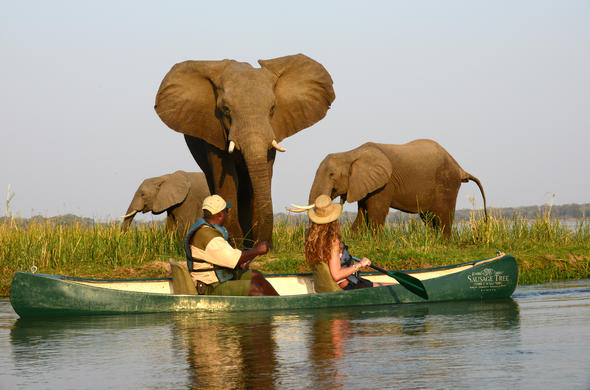
VICTORIA FALLS – Hwange West legislator Vusumuzi Moyo has called for urgent and decisive intervention to address escalating human-elephant conflict after two people were killed by elephants in Victoria Falls within the space of a week.

Advertisement

Rising on a point of national interest in the National Assembly, Moyo said the recent deaths had left families in mourning and exposed the growing danger faced by communities living near wildlife corridors.

“In closing, Mr Speaker Sir, I want to convey my message to two families within Victoria Falls. This happened within a week. They lost their lives because of this conflict,” Moyo said. “In a space of a week, two families are mourning the loss of their loved ones.”

Victoria Falls and surrounding communities, which border wildlife areas, have in recent years experienced increased incidents of elephants straying into residential areas, destroying crops and infrastructure, and in some cases fatally attacking residents.

Advertisement

Moyo told Parliament that the crisis must no longer be viewed solely as a conservation issue but as a matter of human dignity and national development.

“My issue is not merely about wildlife management. It is about national development, constitutional responsibility and ultimately, protecting human dignity,” he said.

He warned that communities from Kariba to Binga, and in tourism corridors around Victoria Falls, are “under siege” from escalating human-elephant conflict.

Advertisement

“Families are losing crops, infrastructure is being destroyed and tragically, lives continue to be lost. This House cannot ignore the cries of rural citizens who coexist with wildlife every day,” Moyo said.

The Hwange West MP defended previous government decisions to cull elephants in high-conflict zones, arguing that such measures were sometimes necessary to restore ecological balance and protect human life.

“These are not acts of recklessness but acts of necessity because conservation must never come at the expense of human survival,” he said.

Advertisement

While acknowledging the importance of non-lethal measures such as fencing and translocation, Moyo said in some areas those interventions were no longer sufficient on their own.

He urged authorities to urgently implement provisions of the Parks and Wildlife Act, promulgated on 28 November 2025, particularly in communities bordering national parks.

“It is my sincere hope that the implementation of the Parks and Wildlife Act… will be taken to the areas that border within national parks so that people appreciate and that the regulations can be done as fast as possible,” he said.

Advertisement

Moyo stressed that Parliament must strike a balance between conservation and protecting human life.

“The people are not asking Parliament to choose between elephants and human beings. They are asking us to restore the balance,” he said.

The latest fatalities have renewed debate in Victoria Falls over how authorities can better safeguard residents while maintaining Zimbabwe’s strong conservation reputation.

Advertisement

Continue Reading

Trending

Copyright © 2022 VicFallsLive. All rights reserved, powered by Advantage