Connect with us

National

Journalist’s convinction a travesty of justice, say campaigners  

Published

on

BY JASON BURKE

Media freedom campaigners have criticised the conviction of a journalist in Zimbabwe   for allegedly breaking immigration laws, describing the decision as “a monumental travesty of justice” that raises concerns for the press in the lead-up to elections next year.

Advertisement

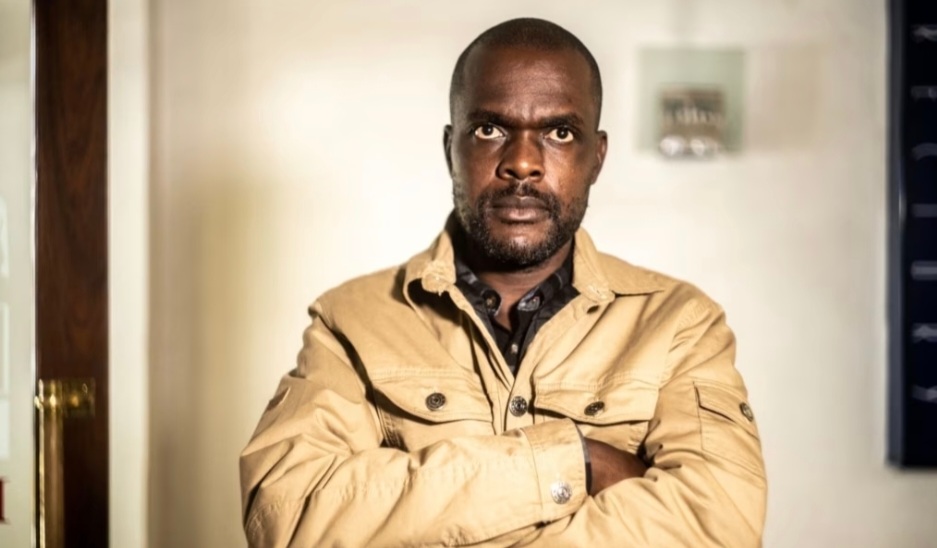
Jeffrey Moyo, a freelance correspondent for the New York Times, was given a suspended prison sentence of five years and fined US$615 by a court in Bulawayo after being found guilty on Tuesday of helping to obtain press accreditation needed by two reporters from his news organisation to enter Zimbabwe.

Prosecutors said the accreditation was fake – a charge denied by the New York Times. Moyo spent three weeks in jail last year and his trial started in January. The 37-year-old reporter’s legal team said they would appeal against the decision.

Angela Quintal, the Africa programme coordinator of  the Committee to Protect Journalists, a US-based campaign group, said the court’s decision showed that press freedom in Zimbabwe had deteriorated under President Emmerson Mnangagwa, who took power after the fall of the veteran autocrat Robert Mugabe in 2017.

Advertisement

“The fact that Moyo’s prison sentence was suspended does not make it any less of a mockery of justice. Authorities must not contest Moyo’s appeal, and ensure that he and other journalists can work in Zimbabwe freely, especially with a general election scheduled for next year,” Quintal said.

The military takeover that ousted Mugabe led to a brief period of relative tolerance in Zimbabwe. Mnangagwa, a former spy chief known as the Crocodile, promised political and economic reform leading to major investment from overseas.

But successive crackdowns led to hundreds of opposition activists being harassed, abducted and assaulted, dashing hopes of democratic reform.

Advertisement

Repression has continued, with journalists and others who have criticised the government facing what many observers say are politically motivated charges designed to intimidate or obstruct their work.

Reporters and campaigners who have made allegations of corruption against officials have been particular targets.

Campaigners fear repression is likely to intensify in the coming months.

Advertisement

Zimbabwe’s ruling Zanu-PF party may be facing an uphill struggle to secure a clear victory in the 2023 presidential election, which is due after a new opposition party made significant gains in March byelections.

The Citizens Coalition for Change, which was only founded in January, won 19 out of 28 parliamentary seats in polls widely regarded as a test run for next year’s election.

In 2018 a fractured opposition came within one person  of forcing Mnangagwa into a runoff.

Advertisement

The vote was marred by allegations of rigging. – The Guardian

Advertisement
Continue Reading
Click to comment

Leave a Reply

Your email address will not be published. Required fields are marked *

National

World AIDS Day: UN Chief says ending AIDS by 2030 “is within grasp”

Published

on

BY SONIA HLOPHE

United Nations Secretary-General António Guterres has marked World AIDS Day with a message urging world leaders to scale up investment, confront stigma and ensure that lifesaving HIV services reach everyone who needs them.

Advertisement

In his statement, Guterres said this year’s commemoration serves as a reminder that the world “has the power to transform lives and futures, and end the AIDS epidemic once and for all.”

He highlighted the major gains achieved over the past decade.

“The progress we have made is undeniable,” he said, noting that “since 2010, new infections have fallen by 40 per cent” while “AIDS-related deaths have declined by more than half.” Access to treatment, he added, “is better than ever before.”

Advertisement

But despite this global progress, the Secretary-General warned that the crisis is far from over.

“For many people around the world, the crisis continues,” he said. “Millions still lack access to HIV prevention and treatment services because of who they are, where they live or the stigma they endure.”

Guterres also raised concern over shrinking resources:

Advertisement

“Reduced resources and services are putting lives at risk and threatening hard-won gains.”

He said ending AIDS requires fully supporting communities, scaling up prevention and ensuring treatment for everyone.

“Ending AIDS means empowering communities, investing in prevention and expanding access to treatment for all people.”

Advertisement

He also called for innovation to be matched by real-world delivery:

“It means uniting innovation with action, and ensuring new tools like injectables reach more people in need.”

Above all, he stressed the need for a human-rights centred response so no one is excluded.

Advertisement

“At every step, it means grounding our work in human rights to ensure no one is left behind.”

With the 2030 global deadline approaching, the UN chief said success is still possible if momentum is sustained.

“Ending AIDS as a public health threat by 2030 is within grasp. Let’s get the job done.”

Advertisement


Advertisement
Continue Reading

National

Zimbabwe fast-tracks approval of long-acting HIV prevention drug Lenacapavir

Published

on

BY WANDILE TSHUMA

Zimbabwe has taken a major step in the fight against HIV following the rapid approval of Lenacapavir, a groundbreaking long-acting injectable for HIV pre-exposure prophylaxis (PrEP). The Medicines Control Authority of Zimbabwe (MCAZ) authorised the drug in just 23 days, marking one of the fastest regulatory approvals in the country’s history.

Advertisement

The application, submitted by pharmaceutical company Gilead Sciences in October, underwent an expedited review because of its public health importance. MCAZ says the fast-tracked process did not compromise scientific scrutiny, with the product subjected to a rigorous assessment of its safety, efficacy and quality.

Lenacapavir is designed for adults and adolescents weighing at least 35kg who are HIV-negative but at substantial risk of infection. Unlike traditional daily oral PrEP, the medicine is administered as a six-monthly injection, following an initiation phase that includes one injection and oral tablets on Days 1 and 2. Health authorities say this long-acting formulation could dramatically improve adherence and expand prevention options, particularly for communities where daily pill-taking is difficult.

MCAZ Director-General  Richard T. Rukwata described the approval as a landmark moment in Zimbabwe’s HIV response.

Advertisement

“The rapid approval of Lenacapavir reflects MCAZ’s dedication to accelerating access to trusted, high-quality health products. This milestone brings new hope for HIV prevention and reinforces our commitment to safeguarding public health,” he said.

To fast-track the process, the Authority applied a regulatory reliance approach, drawing on scientific assessments from the World Health Organization’s Prequalification Programme (WHO PQ). This allowed evaluators to build on internationally recognised review processes while ensuring Zimbabwe’s own standards were met.

The introduction of Lenacapavir comes as Zimbabwe continues efforts to reduce new HIV infections, particularly among young people and key populations who face barriers to consistent PrEP use. Public health experts say the drug’s twice-yearly dosing could be a game changer in improving uptake and protection.

Advertisement

MCAZ says it remains committed to ensuring Zimbabweans have access to safe, effective and good-quality medical products, in line with its mandate under the Medicines and Allied Substances Control Act.

Advertisement
Continue Reading

National

Zimbabwe makes gains against TB

Published

on

BY WANDILE TSHUMA

The World Health Organization (WHO) data show that Zimbabwe continues to make measurable gains in its fight against tuberculosis (TB).

Advertisement

According to the Global Tuberculosis Report 2025, Zimbabwe’s estimated TB incidence has declined to 203 per 100,000 population, representing a 3.8 % reduction from 2023. The report states that “TB incidence in Zimbabwe has fallen to 203 per 100 000, a 3.8 % reduction from 2023.” 

On treatment outcomes, the country’s overall success rate for all forms of TB has improved to 91 %, up from 89 % in 2023. The report quotes: “Treatment success for all forms of TB has improved to 91 %, up from 89 % in 2023.” 

For drug-resistant TB (DR-TB), progress has also been recorded: treatment success rose from 64 % for the 2021 cohort to 68 % for the 2022 cohort. As the report notes: “treatment success for drug-resistant TB increased from 64 % for the 2021 cohort to 68 % for the 2022 cohort.” 

Advertisement

In the critical sphere of TB‐HIV co-infection, Zimbabwe saw a drop in the co‐infection rate to 49 %, down from 51 %. The report states: “TB/HIV co-infection rates have fallen to 49 %, down from 51 %.” 

Zooming out, the 2025 global report shows that across the world TB is falling again, although not yet at the pace required to meet targets. Globally, incidence declined by almost 2 % between 2023 and 2024, and deaths fell around 3 %. 

However, the report warns that progress is fragile. Funding shortfalls, health-system disruptions (especially during the COVID-19 era), and the ongoing challenge of drug-resistant TB threaten to erode gains. The WHO page reminds that the 2025 edition “provides a comprehensive … assessment of the TB epidemic … at global, regional and country levels.” 

Advertisement

For example, although more people are being diagnosed and treated than in previous years, not enough are being reached with preventive interventions, and many countries are still far from the targets set under the End TB Strategy.


Advertisement
Continue Reading

Trending

Copyright © 2022 VicFallsLive. All rights reserved, powered by Advantage