Connect with us

In the community

Little Zimbabwe’ community in South Africa struggles for survival

Published

on

BY MOSIMA RAFAPA

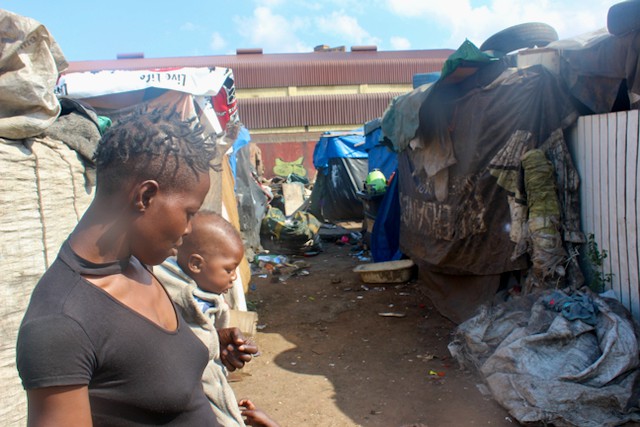
Mostly undocumented immigrants live in leaking shacks without sanitation, water or electricity in this small informal settlement in Marabastad, Pretoria, South Africa.

Advertisement

But they say they are happy to be left in peace.

No toilets, no electricity, no water – not much has changed in “Little Zimbabwe” informal settlement, situated in the busy business area of Marabastad, Pretoria, since GroundUp last reported on the living conditions here in 2019.

However, the 16 or so families, all from Zimbabwe, with more than 35 children, say they are grateful to be left in peace. Metro law enforcement has not demolished their shacks for over a year. Taxi drivers operating in the area, who used to accuse the residents of dealing in drugs like nyaope, have also left them alone.

Advertisement

Elizabeth Musungabe, 26, recalled an attack in September 2019 when taxi drivers torched their shacks, trapping a seven-month-old baby inside one. “We thought he’d die but we were able to rescue him,” she says, pointing to a now two-and-a-half-year-old boy.

Most of the residents are undocumented and many have been in South Africa for a decade at least.

Their shacks are made out of asbestos sheets, board, cloth, plastic sheets and tent material.

Advertisement

One-roomed shacks are crowded and divided in two for separate families.

They sleep on makeshift beds. They cook on open fires. Bushes nearby serve as a toilet.

Many of the children are not registered.

Advertisement

“We had documents that we received at a hospital when you give birth, but we lost them during the time they burned our shacks. Some even lost their asylum documents,” Precious Twariki told GroundUp.

Eight of the children are of school-going age.

“Previously, four children in the settlement attended a primary school in town.

Advertisement

“We paid R400 for them and they were allowed to attend without documentation because the owner of the school is Nigerian.

“Now they’ve stopped going because the fees have gone up.

“They want us to pay R800 per month. It’s a private school,” says Melody Zimuto.

Advertisement

Four teenagers currently go to school in Atteridgeville, Pretoria West.

Musungabe moved to the settlement in 2014.

She is undocumented and struggles to find work.

Advertisement

Originally from Harare, she went first to Limpopo to look for a job in 2012.

“I survive by asking for donations and doing people’s laundry.

“Our husbands go out everyday to look for material for recycling, so we also rely on that,” she says.

Advertisement

Musungabe has four children and is expecting her fifth.

Tariro Musa, from Rusape, went to Johannesburg in 2010 to live with her aunt.

She moved to the settlement earlier this year after she lost her housekeeping job at a hotel in Arcadia.

Advertisement

She had taken maternity leave, but when she returned to work she was told her position had been filled.

“I could not afford to pay rent. I also ask for piecemeal jobs from flats nearby,” she says.

She survived for a while by washing cars. She now asks passersby and store owners in town for food.

Advertisement

Melody Zimuto was one of the first to erect a shack in the settlement.

She says they used to have to share the space with nyaope smokers on one side.

“When it rained, we slept under the veranda of the shops in Marabastad,” she says.

Advertisement

She moved to Little Zimbabwe in 2011.

“When they closed the Schubart building, we moved here. We used to pay rent to some people.

“I think they had hijacked the flats, because we don’t know who owns them.

Advertisement

“We had no alternative place to go because most of us are poor,” says Zimuto.

Zimuto came to South Africa in 2008 to support her mother who is blind.

She survives on piecemeal jobs and sometimes begs for food in town. She has four children.

Advertisement

Caroline Chinozvana was only 14 when she came to South Africa from Harare a decade ago.

She was orphaned when she was five.

She begs for money at the traffic lights and looks for piecemeal jobs.

Advertisement

Chinozvana says that without an ID the residents struggle to find work or to access social relief programmes.

She sleeps in a small shack with her three children on two makeshift beds.

The shacks leak when it rains.

Advertisement

“We don’t mind as adults, but we worry about our children,” she says. – GroundUp

Advertisement
Continue Reading
Click to comment

Leave a Reply

Your email address will not be published. Required fields are marked *

Hwange

Hwange man sentenced to 18 years for rape of 12-year-old niece

Published

on

BY NOKUTHABA DLAMINI 

A Hwange court has sentenced a 31-year-old man to 18 years in prison for the rape of his 12-year-old niece following a New Year’s Eve assault, the National Prosecuting Authority of Zimbabwe (NPAZ) said.

The Hwange Regional Magistrates’ Court handed down the sentence after hearing how the man lured the child to his residence in Dingani Village, Dete, on the 31st of December, last year.

The court heard that at approximately 12:00 hours, the offender used a false pretext to get the victim into his room, instructing her to bring her mother’s mobile phone to help him with a WhatsApp application. Once inside, he forcibly pushed the girl onto a bed and raped her.

Following the assault, the man ordered the child into silence, but the crime was discovered immediately when the girl returned home in tears and narrated the ordeal to her mother. The victim’s family confronted the man and reported the matter to the police, leading to his arrest.

In a statement regarding the conviction, the NPAZ described the case as a profound betrayal of trust within a family unit.

The authority noted that the 18-year term was intended to send a clear message that the law would serve as a shield for our children, particularly against those responsible for their protection [1]. Prosecutors also commended the family for their swift action in reporting the crime to authorities.

Continue Reading

Binga

ZPCS reports 104 HIV-positive inmates across Matabeleland North prisons

Published

on

BY STAFF REPORTER

A total of 104 inmates are living with HIV across eight correctional facilities in Matabeleland North, according to data from the Zimbabwe Prisons and Correctional Services.

The figures, which were first reported by the Chronicle, were presented by ZPCS Assistant Principal Correctional Officer Godknows Ncube during a National Aids Council stakeholder meeting in Bulawayo.

Of the inmates recorded as positive, 98 are aged 25 and older, while six are under the age of 25. The affected facilities include Victoria Falls Prison, Hwange Prison, Ntabazinduna Satellite Prison, Anju Farm Prison, Tsholotsho Prison, Lupane Prison, and Binga Prison .

During the most recent quarter, 144 inmates underwent testing for HIV, resulting in one positive diagnosis .

While correctional facilities received 900 male condoms, officials reported that no female condoms were provided. Ncube noted the need to address this gender bias and ensure that female protectors are available for inmates.

The prison service is also facing challenges with medication adherence. Ncube emphasized that there is a high number of defaulters, particularly among younger inmates who were aware of their HIV status before entering the system.

He called for the integration of HIV services with other health programs and stressed the importance of strengthening monitoring and reporting within the prisons. Currently, some facilities in the region are not yet accredited to provide antiretroviral therapy services, highlighting a need for further staff training and equipment

Continue Reading

In the community

Heavy rains worsen condition of Binga’s poor road network

Published

on

BY STAFF REPORTER 

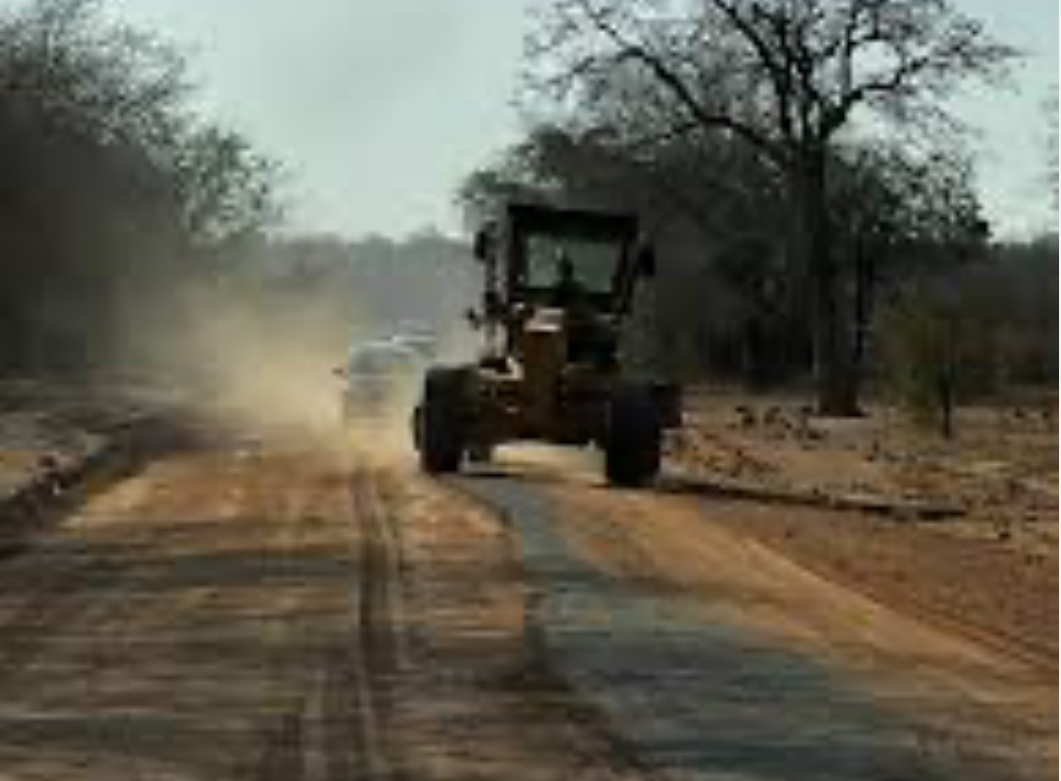
Communities in Binga are facing worsening road conditions after heavy rains damaged key routes, prompting urgent calls for rehabilitation and government intervention.

Advertisement


Binga South legislator Fanuel Cumanzala said several major roads in the district have been severely affected by incessant rains, disrupting transport and access to essential services. 

Advertisement


He cited the Karoi-Binga Centre Road, Binga Centre-Cross Dete Road, Kariangwe-Lusulo Road, and Gwai-Lusulo Road as critical routes in need of urgent attention.

“The state of these roads is now a serious concern for our communities as they are no longer easily accessible,” Cumanzala said 

Advertisement


“People are struggling to reach markets, health facilities and schools due to the damage caused by continuous rains.”

Advertisement


Transport and Infrastructural Development minister Felix Mhona said the Karoi-Binga Road, a 192-kilometre inter-provincial route linking Mashonaland West to Matabeleland North, has only 62 kilometres surfaced, with the remaining 130 kilometres gravel. 

He said plans were underway to upgrade the gravel sections.

Advertisement


Mhona added that the Karoi-Binga-Cross Dete Road has been earmarked for rehabilitation under a Public-Private Partnership, with an investor’s expression of interest currently under consideration. 

Advertisement


On the Kariangwe-Lusulo and Gwai-Lusulo roads, he said ongoing works are focused on repairing rain-damaged structures.

“Contractors working along the Bulawayo-Victoria Falls Road have also been engaged to attend to nearby damaged structures,”Mhona said.

Advertisement


“As a ministry, we will continue assessing the situation and submit funding requests for full rehabilitation as a long-term solution.”

Advertisement


He noted that several roads in Binga District have outlived their lifespan and require urgent rehabilitation, adding that upgrading costs have been calculated and projects will be implemented gradually as funds become available.

In the meantime, he said the ministry will continue routine maintenance efforts such as re-gravelling and pothole patching in collaboration with local stakeholders.

Advertisement


“We are committed to improving the road network in Binga to enhance access to markets, healthcare and education facilities while ensuring long-term sustainability of the infrastructure,” Mhona said.  Source: Southern Eye 

Advertisement


Continue Reading

Trending

Copyright © 2022 VicFallsLive. All rights reserved, powered by Advantage