Connect with us

Slider

Zimbabwe’s inflation surges to six-month high of 66.1 percent

Published

on

HARARE – Zimbabwe’s annual inflation accelerated to 66.1 percent in February, up from 60.6 percent the previous month to reach a six-month high, according to the data released by Zimbabwe National Statistics Agency (ZimStat) Friday.

Zimbabwe’s annual inflation has been gradually rising since September last year, with monetary authorities attributing this to the parallel exchange rates pass-through effect on domestic inflation toward the end of last year.

Advertisement

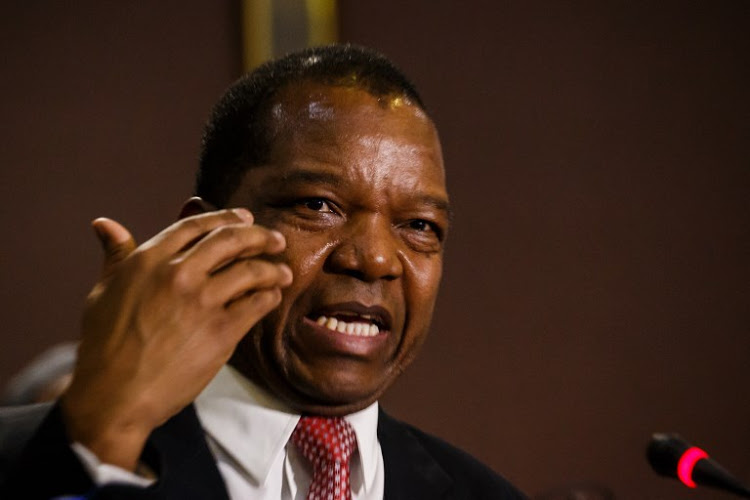
In his monetary policy statement earlier this month, Reserve Bank of Zimbabwe governor John Mangudya acknowledged the resurgence of inflationary pressures in the economy and said the Bank will sustain tight monetary policy measures to bring further stability to the exchange rate and inflation.

According to the ZimStat, the monthly inflation in February quickened to 7 percent, gaining 1.7 percentage points on the January rate of 5.3 percent.

“This means that prices, as measured by the all items for Consumer Price Index, increased by an average rate of 7.0 percent from January 2022 to February 2022,” the statistical agency said.

Advertisement

On Thursday, Finance minister Mthuli Ncube said in 2022, the government intends to halve the inflation figure and achieve an inflation target of 32.6 percent, as a result of counter inflationary measures that will be implemented during the course of the year.

“From runaway triple-figure inflation, by December 2021, year-on-year inflation had dropped to 60.7 percent,” said Ncube.

“In 2022, our government plans to halve that number to achieve an inflation target of 32.6 percent and implement an end period range of 15-20 percent.”

Advertisement

He said while inflation in the range of 30 percent would be still high, “it is light years away from the numbers we have seen in the past.” –Xinhua

Advertisement
Continue Reading
Click to comment

Leave a Reply

Your email address will not be published. Required fields are marked *

National

30 killed in Easter road crashes as pedestrians bear the brunt

Published

on

BY WANDILE TSHUMA 

The Zimbabwe Republic Police has reported a worrying rise in road fatalities during the 2026 Easter holiday, despite a decline in the total number of accidents.

Advertisement

According to the police, 30 people were killed in road traffic accidents during the holiday period, up from 24 deaths recorded in 2025. However, the total number of accidents dropped from 384 in 2025 to 337 in 2026, while injuries also decreased significantly from 178 to 104. 

Police said 22 of the recorded accidents were fatal, compared to 21 during the same period last year. 

Pedestrians most affected

Advertisement

Pedestrians accounted for the majority of fatalities, making up 63% of the deaths (19 people). Passengers were the second most affected group with seven deaths (23%), followed by drivers with three (10%), while one rider (3%) was killed. 

Speeding, overtaking blamed

Authorities identified speeding as the leading cause of accidents during the period, with many drivers losing control of their vehicles. Unsafe overtaking was also cited as a major contributor to head-on collisions. 

Advertisement

Deadly incidents recorded

One of the most tragic incidents occurred on 2 April 2026, when six family members died after a head-on collision between a Toyota Corolla and a truck along the Harare–Masvingo Road. 

In another traffic accident , seven people were killed and four injured on 3 April 2026 at the 51km peg along the Bulawayo–Beitbridge Road. A truck rammed into three vehicles — a Nissan March, Toyota Probox and Toyota Hiace — before striking pedestrians who had gathered at the scene. 

Advertisement

Police warning

The police have urged motorists to exercise caution, obey traffic laws and avoid speeding, especially during peak travel periods. Drivers involved in accidents are also being reminded to stop, render assistance and report incidents.


Advertisement

Continue Reading

National

Econet InfraCo targets ultra-luxury market with Vic Falls resort

Published

on

BY STAFF REPORTER 

Econet InfraCo has unveiled plans for a multimillion-dollar luxury resort in Victoria Falls, marking a strategic push by the billion-dollar infrastructure platform into high-end tourism.

Advertisement

The development, branded Vic Falls Lifestyle, will feature 40 luxury residential villas supported by premium amenities, including restaurants, wellness centres and sports facilities.

Chief executive Fayaz King described the project as a landmark for Zimbabwe’s luxury tourism segment.
“These will be among the most exclusive residential properties ever developed in Zimbabwe, designed to meet top-tier international hospitality standards comparable to presidential suites in leading global hotels,” he said.

The project aims to reposition Victoria Falls as a destination for affluent global travellers seeking privacy, exclusivity and fully integrated services.
Recently listed on the Victoria Falls Stock Exchange with a valuation of about US$1 billion, Econet InfraCo said the resort will include a 24-hour, 10-bed private hospital offering emergency and dental services—an amenity tailored to high-net-worth clientele.
Security and privacy will be central to the offering, with the gated development providing round-the-clock protection for residents and guests.

Advertisement

Under the investment model, buyers will own individual villas but will be required to place them in a rental pool for up to 11 months a year, balancing personal use with income generation.

“Victoria Falls needs developments of this calibre to attract visitors who not only spend, but invest,” King said.

Econet founder and group chairman Strive Masiyiwa played an advisory role in shaping the concept and is expected to be among the property owners.
The company said the project has already drawn interest from local and diaspora investors, as well as international buyers.

Advertisement

Land has been secured, planning is at an advanced stage, and construction is scheduled to begin before year-end.

The Victoria Falls resort is Econet InfraCo’s second major project. Its flagship, Econet Tech City, is a planned industrial and technology hub near Robert Gabriel Mugabe International Airport in Harare, expected to host around 300 businesses across more than 800 hectares.

Advertisement
Continue Reading

In the community

Mat North athletes use stones, sticks as equipment shortages stall progress

Published

on

BY NOKUTHABA DLAMINI 

For many young athletes from Matabeleland North, the road to national competitions begins with makeshift tools—stones in place of shot puts and sticks standing in for hurdles.

Advertisement

Despite a commendable showing at the just-ended National Association of Secondary School Heads (NASH) athletics championships in Kadoma, the province’s progress continues to be hampered by a critical shortage of proper equipment.

Speaking after the event, Matabeleland North NAPH vice secretary Edward Mudimba of Binga said the lack of standard implements at grassroots level is affecting athletes’ development and performance.

“In some cases, learners are using stones for throwing events and sticks for hurdles at school level. By the time they reach national competitions, they are not familiar with standard equipment,” said Mudimba.

Advertisement

Matabeleland North sent a delegation of 121 participants drawn from all seven districts and showed encouraging improvement at the national meet. However, Mudimba said the province’s potential is being held back by resource constraints.

“We are improving and we are going somewhere, but we need proper support. From school level up to provincial level, we are largely using substandard implements,” he said.

The challenge is most evident in field events such as shot put, discus and javelin, where proper technique depends on consistent use of correct equipment.

Advertisement

“You find that learners are improvising with stones or other objects. When they get to national level and are given standard equipment, it becomes difficult for them to adjust,” he added.

Other disciplines such as high jump are also affected, with many schools lacking basic equipment like landing mats, uprights and crossbars.

Despite these setbacks, Matabeleland North athletes still managed to compete against better-resourced provinces—highlighting the depth of raw talent in the region.

Advertisement

“There is talent in our children, but without proper equipment and financial support, it becomes difficult to fully develop that potential,” said Mudimba.

He urged schools and stakeholders to prioritise investment in standard athletics equipment, acknowledging that while costs are high, they are necessary for long-term development.


Advertisement

Continue Reading

Trending

Copyright © 2022 VicFallsLive. All rights reserved, powered by Advantage