Connect with us

Uncategorized

Zimbabwe’s government breaks with its own currency policy  

Published

on

BY RAY NDLOVU

Zimbabwe appears to be undermining its own currency as it struggles with inflation.

Advertisement

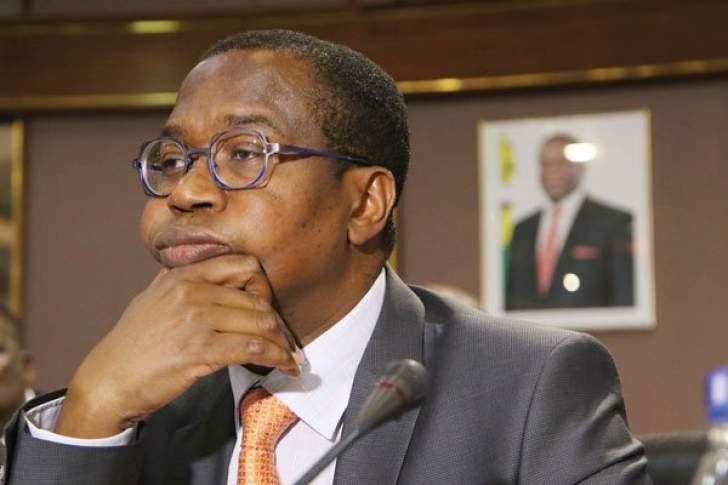
Finance minister Mthuli Ncube, has since reintroduced the Zimbabwe dollar in 2019, insisting that as much of the country’s business as possible must be carried out in the local currency.

That, he said, was necessary to break the yoke that use of the United States currency had over the economy since the Zimbabwe dollar was suspended in 2009.

As the value of neighbours’ currencies declined, Zimbabwe’s industry became uncompetitive, and the economy collapsed.

Advertisement

But in what economists say seems to be a case of admitting that the local unit has failed to win acceptance, Ncube has announced that government workers will receive annual bonuses this month in US dollars for the first time since 2018.

The measure, which will see the cash-strapped government pay out US$90 million, is due to rising prices and demands from labour unions, he said.

While a precursor to the reintroduced Zimbabwe dollar traded at parity with the greenback in February 2019, you need 105 of the units to get a US dollar now.

Advertisement

On the black market that rate is 175. That’s slashed the earnings of civil servants in real terms and fuelled inflation, currently at 55 percent.

“A precedent has been set,” said Sifiso Ndlovu, the chief executive officer of the Zimbabwe Teachers Association, the largest civil service labour union. – Bloomberg

Advertisement
Continue Reading
Click to comment

Leave a Reply

Your email address will not be published. Required fields are marked *

Binga

ZPCS reports 104 HIV-positive inmates across Matabeleland North prisons

Published

on

BY STAFF REPORTER

A total of 104 inmates are living with HIV across eight correctional facilities in Matabeleland North, according to data from the Zimbabwe Prisons and Correctional Services.

Advertisement

The figures, which were first reported by the Chronicle, were presented by ZPCS Assistant Principal Correctional Officer Godknows Ncube during a National Aids Council stakeholder meeting in Bulawayo.

Of the inmates recorded as positive, 98 are aged 25 and older, while six are under the age of 25. The affected facilities include Victoria Falls Prison, Hwange Prison, Ntabazinduna Satellite Prison, Anju Farm Prison, Tsholotsho Prison, Lupane Prison, and Binga Prison .

During the most recent quarter, 144 inmates underwent testing for HIV, resulting in one positive diagnosis .

Advertisement

While correctional facilities received 900 male condoms, officials reported that no female condoms were provided. Ncube noted the need to address this gender bias and ensure that female protectors are available for inmates.

The prison service is also facing challenges with medication adherence. Ncube emphasized that there is a high number of defaulters, particularly among younger inmates who were aware of their HIV status before entering the system.

He called for the integration of HIV services with other health programs and stressed the importance of strengthening monitoring and reporting within the prisons. Currently, some facilities in the region are not yet accredited to provide antiretroviral therapy services, highlighting a need for further staff training and equipment

Advertisement

Continue Reading

Slider

Three painted dogs killed along Hwange highway as conservationists raise alarm

Published

on

BY NOKUTHABA DLAMINI

Conservationists have raised fresh concern over wildlife safety along the busy Bulawayo–Victoria Falls highway after three endangered African wild dog were killed in separate incidents within a week.

Advertisement

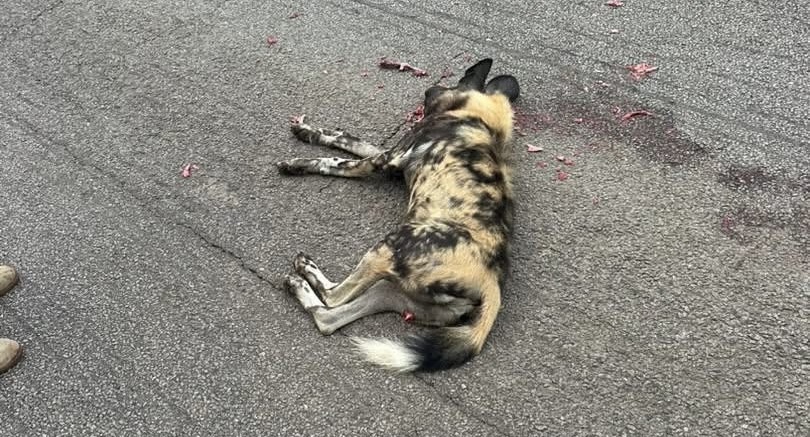
In a statement, Painted Dog Conservation confirmed that two pups from the Umkhonto pack were struck and killed by a vehicle overnight within the Hwange landscape.

“We are heartbroken to share that two pups from the Umkhonto pack were killed overnight after being struck by a vehicle along the Bulawayo–Victoria Falls road,” the organisation said on Saturday.

The group said the pack had been safely escorted across a nearby road earlier, but is believed to have been disturbed by lions during the night, forcing them to move again toward the highway where the accident occurred.

Advertisement

“Despite constant monitoring and intervention, moments like this remind us how fragile their survival can be,” the organisation added.

The deaths bring to three the number of painted dogs killed along the same highway corridor in less than a week, with another animal reportedly struck closer to Victoria Falls.

Conservationists warned that the loss goes beyond individual animals, highlighting the species’ already fragile population.

Advertisement

“It’s not ‘just three dogs’. These three could have become alphas and been responsible for producing over 300 dogs through their offspring and subsequent generations,” the statement read.

Highway poses growing threat to wildlife

The Bulawayo–Victoria Falls road, which cuts through key wildlife areas including parts of Hwange National Park, has long been flagged as a danger zone for animals.

Advertisement

The highway is a major tourism and freight route linking Bulawayo to Victoria Falls, carrying heavy traffic volumes that include haulage trucks, buses, and self-drive tourists—many travelling at high speeds, particularly at night.

Wildlife frequently crosses this corridor as it bisects natural habitats and migration routes, bringing animals such as elephants, lions and painted dogs into direct conflict with vehicles.

Conservation groups have repeatedly called for stricter enforcement of speed limits, improved signage, and traffic calming measures in wildlife zones, especially at night when visibility is poor and animal movement increases.

Advertisement

Calls for action

Painted Dog Conservation urged motorists to slow down and remain vigilant when driving through wildlife areas.

“We urge all road users to slow down—especially at night—and call on authorities to strengthen and enforce speed reduction measures in wildlife areas. Their survival depends on it.”

Advertisement

The deaths come amid growing concern over human-wildlife conflict in Matabeleland North, where expanding infrastructure and traffic volumes continue to put pressure on endangered species.

Advertisement
Continue Reading

In the community

Hwange residents invited to constitutional amendment public hearing

Published

on

BY NOKUTHABA DLAMINI 

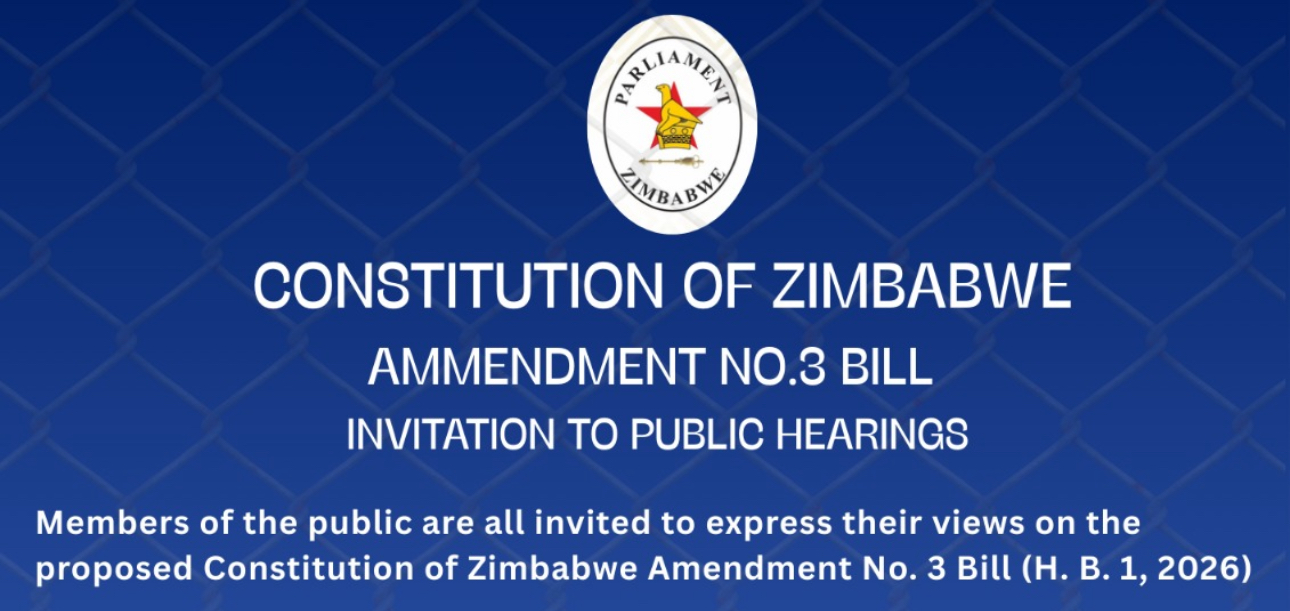
Residents in Hwange are set to have their say on proposed changes to the country’s supreme law as the Parliament of Zimbabwe rolls out public hearings on the Constitution of Zimbabwe Amendment No. 3 Bill.

Advertisement

The outreach programme will reach the coal-mining town on Tuesday, 31 March, with the hearing scheduled for 10am at Edmund Davies Hall, located at the No.1 Colliery Club near Thomas Coulter Primary School.

Attendance is free, and members of the public are being encouraged to participate and express their views on the proposed amendment.

According to Parliament, the hearings are part of a nationwide consultation process aimed at gathering citizens’ input before the bill is finalised. The proposed legislation—Constitution of Zimbabwe Amendment No. 3 Bill (H.B. 1, 2026)—seeks to introduce changes to key governance provisions.

Advertisement

The Matabeleland North outreach will begin in Tsholotsho on Monday, 30 March, before moving to Hwange, then to Binga on Wednesday, 1 April, and concluding in Lupane on Thursday, 2 April.

Parliament has also opened channels for written submissions, which can be sent to the Clerk of Parliament or via email.

However, authorities have warned that individuals wearing military uniforms, political party regalia, or carrying flags and badges will not be allowed into the hearings.

Advertisement

Residents in and around Hwange are urged to attend in numbers and make their voices heard.

Advertisement
Continue Reading

Trending

Copyright © 2022 VicFallsLive. All rights reserved, powered by Advantage