Connect with us

Slider

Zimbabwe eyes switch to cannabis as tobacco demand seen waning

Published

on

BY RAY NDLOVU

Zimbabwe’s tobacco industry is looking to cannabis as a major revenue source with anti-tobacco sentiment expected to dampen demand for one of the country’s biggest exports.

Advertisement

Anticipated demand for cannabis is projected to continue to grow while tobacco output globally may decline 15 percent by 2030, according to Meanwell Gudu, the chief executive officer of Zimbabwe’s Tobacco Industry and Marketing Board.

“One of the alternative crops we are looking at is industrial hemp,” he said by phone on Monday. “We want to be part of the entire industrial hemp chain.”

Tobacco earned the country US$819 million in revenue last year. Farming cannabis for medical use in Zimbabwe was first legalised n 2019.

Advertisement

The board has 145,000 registered tobacco growers, who started selling this year’s crop at auctions last week.

Farmers will be encouraged to plant cannabis so that a quarter of their income comes from the plant by 2025, Gudu said.

“It’s a crop which requires attention to detail, just like tobacco, and we are confident that they will have the skills,” he said.

Advertisement

The country exported 30 tons of industrial hemp to Switzerland last year, its first foray into the European market, said Zorodzai Maroveke, the founder of the Zimbabwe Industrial Hemp Trust. The group is partnering with the tobacco board to facilitate the “smooth transition” to cannabis for commercial purposes.

“Switzerland is the first gateway into Europe,” Maroveke said in an interview in the capital, Harare.

Another 20 tonnes of industrial hemp is set to be exported to the European nation, she said.

Advertisement

The board will look for export markets for industrial hemp including in China, the European Union and will also seek to develop a local market, Gudu said. – Bloomberg

Advertisement
Continue Reading
Click to comment

Leave a Reply

Your email address will not be published. Required fields are marked *

Hwange

Hwange MP challenges government over Nambya teacher deployment

Published

on

BY NOKUTHABA DLAMINI 

Hwange East legislator Joseph Bonda is pressuring the government to end the perceived marginalization of the Nambya language in schools, arguing that current teacher deployment policies are undermining foundational learning in Matabeleland North.
According to the National Assembly’s official record from 7 April, 2026, Bonda has formally challenged the Minister of Public Service, Labour and Social Welfare to explain “why trained Nambya speaking teachers are not being employed in Hwange District” while non-speakers are assigned to the area.The lawmaker contended that the practice is “depriving the children of getting instructions in their mother language at the early education stage,” a right central to the district’s cultural and educational development.
Advertisement

Despite the urgency expressed by local leaders, the matter has stalled in the House. The inquiry was officially deferred on the 18th of March, and as of the latest parliamentary sitting, the government’s ministry has yet to provide a formal response before the parliament.

“Our children are disadvantaged from the start, said Ester Ncube, a parent in Jambezi under Chief Shana. “If a child cannot understand the teacher in Grade One, it affects everything that follows.”

The dispute transcends education, touching on the preservation of Nambya identity. “Language is part of who we are,”said local elder Eliziya Vashe Shoko. “If schools do not teach in Nambya, we are slowly losing our identity. Government must take this seriously.”

Advertisement
Young professionals in the province say the issue is not a lack of qualified personnel but a failure in recruitment. “There are trained teachers who speak Nambya, Lozvi, Chidombe, and other languages, but they are not being deployed here,”said Lindiwe Sibanda, a recent graduate.
“At the same time, outsiders are brought in. It does not make sense, so we would like to see these languages being prioritized so that the community feel a sense of belonging and respect.”The language debate is part of a broader push for regional equity in Matabeleland North. Bonda has also recently moved to address local employment quotas in the wildlife sector and the exclusion of Hwange from national weather forecasts, citing a persistent mismatch between national policy and community needs.
SOURCE: CITE

Advertisement
Continue Reading

National

Zim’s backyard pharmacies boom as economic crisis bites

Published

on

BY VANESSA GONYE

Health experts have expressed growing concern over the emergence of illegal herbal creams and unregulated drug sales on the streets of Harare and throughout Zimbabwe.

Advertisement

A disturbing increase in the presence and sale of unregulated medicines is bedeviling the country, with worry rising over the dangerous outcomes associated with these products.

In recent years, the capital has witnessed a sharp rise in informal drug outlets commonly referred to as “backyard pharmacies”.

 These unlicensed operations are often run from residential homes, tuckshops, market stalls, or simply from blankets laid on busy pavements.

Advertisement

In recent years, the capital has witnessed a sharp rise in informal drug outlets commonly referred to as “backyard pharmacies”.

 These unlicensed operations are often run from residential homes, tuckshops, market stalls, or simply from blankets laid on busy pavements.

Surveys reveal that these backyard pharmacies operate without any quality control, cold chain storage, or professional oversight.

Advertisement

Some of the drugs may be counterfeit, expired, adulterated, or incorrectly labelled.

Itai Rusike, the executive director of the Community Working Group on Health (CWGH), expressed alarm over the proliferation of these vendors, noting the trend puts patients’ health and safety at serious risk.

“The challenge is and has always been the gap in communicating the dosage schedule and indication for treatment,” Rusike said.

Advertisement

“There is no accreditation or regulation of the practitioners, their practice, nor their premises, as is done for registered pharmacists trained in conventional medicine”.

Rusike also highlighted a dangerous lack of scientific data: “There is generally a lack of clinical trials, scientific data and evidence to support the efficacy of street medicines, despite some claims from treated individuals”.

He called for widespread health and treatment literacy programmes to stop citizens from “taking wild gambles” with their health.

Advertisement

Rusike urged that: “the regulatory authorities should also be seen to effectively apply the laws regulating the sale of medicines in the country and protecting the health and safety of the general public without fear or favour”.

Johannes Marisa, president of the Medical and Dental Private Practitioners of Zimbabwe, echoed these concerns, stating that selling drugs from unregulated places is a major threat to public health.

“When we are talking of public health, we become very worried when we see drugs being sold everywhere,” Marisa said.

Advertisement

He warned that counterfeit drugs can create a “false belief that you are recovering from something, yet you are taking a counterfeit drug, which does not work”.

He added that such practices prolong infections and increase both morbidity and mortality.

The trend is largely driven by economic hardships that have made formal healthcare unaffordable for many, alongside high unemployment that has pushed individuals into pharmaceuticals as a lucrative vending commodity.

Advertisement

The Medicines Control Authority of Zimbabwe (MCAZ) has repeatedly warned that these unregistered products pose significant risks, including kidney and liver damage, high blood pressure, and increased cancer risk.

In response, the government has introduced stiffer penalties, with offenders now facing up to 20 years in prison.

SOURCE: THE STANDARD

Advertisement

Continue Reading

Hwange

Hwange MP raises alarm over wildlife jobs bias as locals back call for reform

Published

on

BY NOKUTHABA DLAMINI 

Hwange East legislator, Joseph Bonda, has taken the fight for local employment in wildlife conservation to Parliament, questioning why communities living alongside dangerous animals are being sidelined in job opportunities.

Advertisement

In a question directed to the Minister of Environment, Climate and Wildlife, Bonda pressed for clarity on what measures are in place to ensure that residents of Hwange District are prioritised for employment by the Zimbabwe Parks and Wildlife Management Authority. He argued that locals, who bear the brunt of human-wildlife conflict, should be first in line for jobs in the sector.

The matter, however, did not receive an immediate response in the National Assembly and was deferred on 18 March 2026, leaving the concerns unresolved for now. 

Bonda’s intervention has resonated strongly with communities in Hwange, where wildlife is both a resource and a risk.

Advertisement

“We live with these animals every day”

In Mabale, local villager Sibangani Ndlovu said it is unfair that outsiders benefit from jobs linked to wildlife while locals face constant danger.

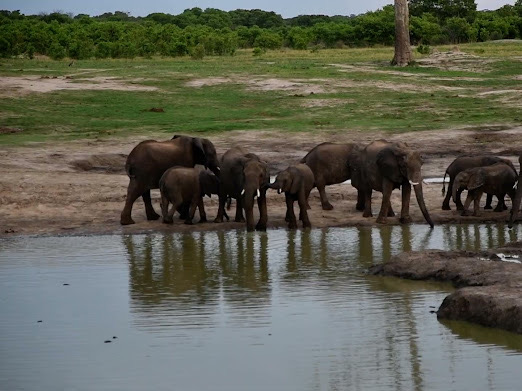
“We live with these animals every day. Elephants destroy our crops, sometimes people are injured or killed. But when jobs come, they go to people from far away. That is not right,” he said.

Advertisement

“Employment should be compensation too”

Another r, Memory Moyo from Dete, said employment in parks and safari operations should be viewed as part of community compensation.

“If we are expected to conserve wildlife, then we must also benefit. Jobs are one of the biggest benefits. Otherwise, people will start to see animals as a burden, not a resource.”

Advertisement

Youth feel locked out

Young people in the district say lack of access to jobs in the wildlife sector is worsening unemployment.

Talent Ncube, a youth from Hwange, said many qualified locals are overlooked.

Advertisement

“We have people trained in tourism and conservation here, but they are not getting opportunities. It discourages us as young people because we feel excluded from our own resources.”

Growing pressure on government

Bonda’s question adds to mounting pressure on government to align conservation efforts with community benefits, especially in areas like Hwange where human-wildlife conflict is frequent.

Advertisement

With the issue now formally raised in Parliament, residents say they are waiting to see whether authorities will respond with concrete policy changes—or whether, like many rural concerns, it will remain unresolved.

Advertisement
Continue Reading

Trending

Copyright © 2022 VicFallsLive. All rights reserved, powered by Advantage