Connect with us

National

UNICEF calls for action to protect children’s rights

Published

on

BY NOKUTHABA DLAMINI 

The United Nations Children’s Fund (UNICEF) has issued a call to action to governments in Southern Africa to protect children’s rights and ensure they receive quality education.

Advertisement

The call to action comes after a regional consultation with children from Botswana, Malawi, Mozambique, Namibia, South Africa, Zambia, and Zimbabwe.

The consultation, held in Victoria Falls, brought together over 5 000 children to share their experiences, concerns, and ideas for creating a better future.

UNICEF is urging governments to take concrete steps to address the challenges facing children in the region.

Advertisement

These include ensuring access to quality education, strengthening and enriching curricula, and providing children with equal opportunities for education.

“We call on our Governments to take
concerted action on the following issues…

To ensure access to Education:

Advertisement

Ensure all children – including children from
disadvantaged backgrounds – have access to
quality education, providing financial support for
those in need and addressing the specific needs
of girls andboys to access education.

Strengthen and enrich curricula to ensure
inclusion of practical life skills that enhance daily
living and learning to earning.

Curriculum content should be designed to ensure relevance and meet the current demands of children.

Advertisement

Quality education needs to be innovative,
allowing critical thinking and creativity, ensuring
appropriate learning materials and a supportive
learning environment, and facilitating
engagement and practical skills development.
Governments should provide this in consultation
with children.

Educators should be equipped to deliver
quality education, making learning fresh, and
impactful, and delivered in pleasant
environments and infrastructure, conducive to
learning, including well-equipped labs
andlibraries.

Construct child- and disability-friendly
infrastructure and provide sufficient teaching
resources, including solar power for
uninterrupted learning, build schools closer to
communities or provide transportation for
students.

Advertisement

Involve parents, guardians and community
leaders in creating an inclusive education
system – including adolescent girls at risk of
drop out of school, children involved in child
labour, minority groups and children with
disabilities – to ensure no child is left behind.,” said a UNICEF report.

The children who participated in the regional consultation also issued a call to action to their governments.

They demanded that their voices be heard and that they be included in decision-making processes that affect their lives.

Advertisement

“We want our governments to listen to us and to take our views seriously,” said one of the child delegates.

“We want quality education that prepares us for the future and enables us to reach our full potential.”

UNICEF is supporting the children’s call to action and is working with governments, civil society organizations, and other partners to ensure that all children in the region receive the quality education they deserve.

Advertisement

Continue Reading
Click to comment

Leave a Reply

Your email address will not be published. Required fields are marked *

National

Zimbabwe approves US$92 million Victoria Falls infrastructure deal

Published

on

BY WANDILE TSHUMA

The government has greenlit a major public-private partnership (PPP) to develop critical bulk infrastructure within the Masuwe Special Economic Zone (MSEZ), a move aimed at transforming Victoria Falls into a premier international hub for finance and tourism.

Advertisement

The project, approved during the Tuesday cabinet meeting, establishes a commercial joint venture (CJV) between the state-owned Mosi Oa Tunya Development Company (MTDC) and the JR Goddard (JRG) Consortium.

According to the government briefing, the MSEZ is a “flagship national development project” established to “transform Victoria Falls into a diversified, high-value hub integrating tourism, financial services and sustainable real estate”.

Under the terms of the agreement, the JRG Consortium—which includes JR Goddard Pvt Ltd, Sesani Pvt Ltd, Stewart Scott Zimbabwe Pvt Ltd, and GGF Africa Pvt Ltd—will provide funding of US25.6 million.

Advertisement

This arrangement results in a shareholding structure of 39% for MTDC and 61% for the JR Goddard Consortium.

The infrastructure roadmap for the 1 200-hectare site is extensive. Planned works include the surfacing of 8 km of internal roads, the upgrading of 9 km of existing gravel roads, and the construction of a 13 km water pipeline designed to serve both the economic zone and neighbouring communities.

Additional developments will feature a package water treatment plant, a sewerage reticulation system, a power sub-station, and effluent re-use storage ponds.

Advertisement

Cabinet said the project was subjected to a “rigorous evaluation” in compliance with the Zimbabwe Investment and Development Agency (ZIDA) Act.

Officials believe the partnership will “catalyse high-value investment” and provide a “sustainable fiscal contribution to gross domestic product (GDP)” while creating downstream jobs.

The government said the project is expected to “catapult the transformation of Victoria Falls into a modern and vibrant economic development city, fulfilling the attainment of Vision 2030”.

Advertisement

The joint venture includes a 25-year structured profit recoup period and will be overseen by a board chaired by the MTDC to ensure alignment with the country’s National Development Strategy 2.

Located within the Kavango-Zambezi Transfrontier Conservation Area (KAZA-TfCA), the Masuwedevelopment is seen as a strategic pivot for Zimbabwe to diversify its tourism-dependent economy into a more robust financial services and real estate centre.

Advertisement
Continue Reading

National

Zambia, Zimbabwe to ban heavy trucks from Victoria Falls Bridge

Published

on

BY DUMANI MOYO

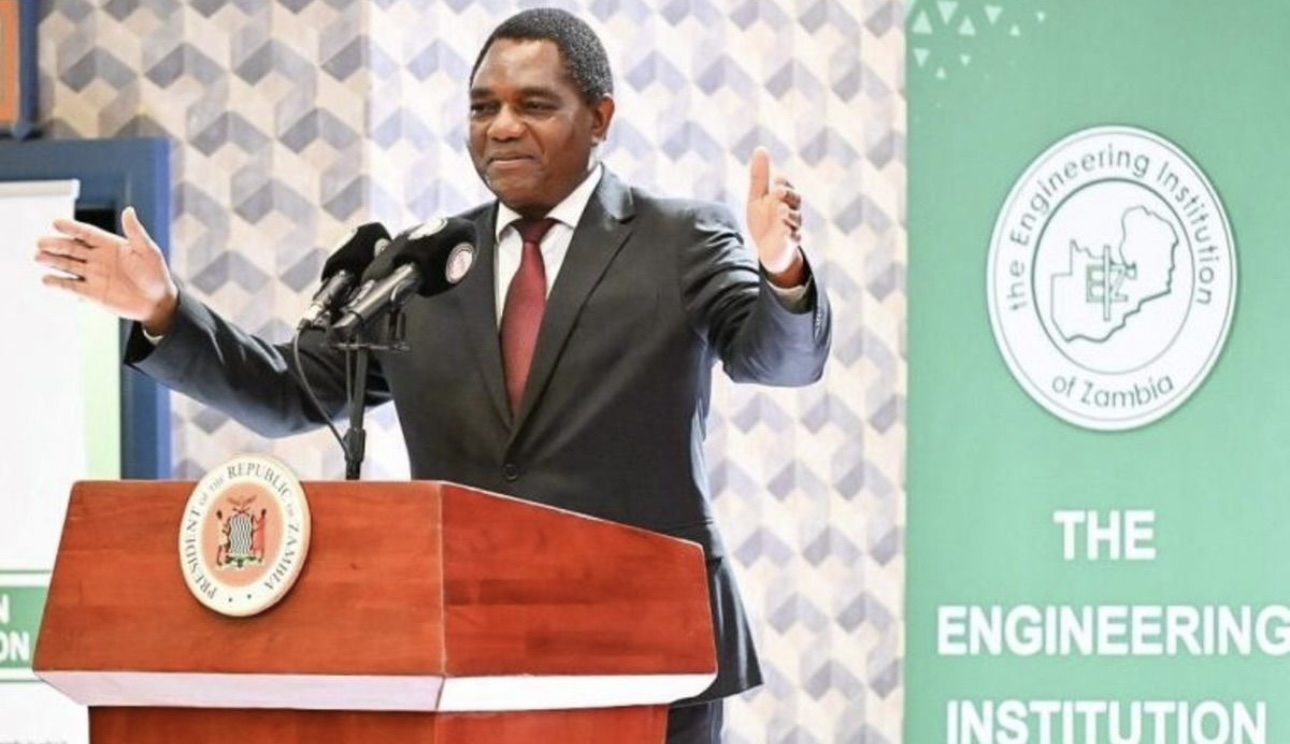
Zambian President Hakainde Hichilema has announced that Zambia and Zimbabwe will restrict heavy trucks and trains from using the century-old Victoria Falls Bridge.

Advertisement

Speaking at an engineering conference in Livingstone, he said the two countries will instead build a new bridge and railway crossing to handle modern freight demands.

Hichilema made it clear that the 121-year-old structure can no longer safely or efficiently carry today’s heavy-duty traffic.

Engineers designed the bridge in the early 1900s for much lighter loads, not for fully laden 60-tonne mining trucks or long freight trains that now dominate regional trade routes.

Advertisement

Engineers completed the Victoria Falls Bridge in 1905 as a narrow arch crossing linking road, rail and pedestrian traffic.

While it remains an iconic piece of infrastructure, its design limits its ability to support modern logistics.

Authorities have already imposed restrictions over the years.

Advertisement

Trains often move at very low speeds, while trucks have faced weight limits that forced heavier vehicles to reroute through other crossings.

Although rehabilitation work in 2006 extended the bridge’s lifespan, it did not solve the fundamental structural limitations.

Experts now agree that upgrading the bridge to meet current freight standards would cost nearly as much as building a new one.

Advertisement

WHY A NEW CROSSING MAKES ECONOMIC SENSE

Officials from both countries now favour constructing a new dual-purpose rail and road bridge instead of attempting further upgrades.

A purpose-built crossing would accommodate higher traffic volumes and modern freight loads without compromising safety.

A new structure would also eliminate a major bottleneck along the North-South Corridor, which links the copper belts of Zambia and the Democratic Republic of Congo to southern markets such as South Africa.

Advertisement

By separating heavy commercial traffic from tourism and local travel, the new bridge would allow the Victoria Falls Bridge to serve lighter vehicles, pedestrians and tourists, preserving its heritage value.

REGIONAL TRADE AND RAIL INTEGRATION BOOST

The proposed crossing would complement major regional projects, including the Mosetse-Kazungula-Livingstone Railway.

A dual-track rail bridge would strengthen links between Zambia and Zimbabwe while supporting long-term plans to expand rail connectivity across Southern Africa.

Advertisement

It would also mirror the successful model of the Kazungula Bridge, which has significantly increased traffic flow since opening in 2021.

FINANCING AND NEXT STEPS

Despite strong political backing, key questions remain around funding, construction timelines and project ownership.

Zimbabwe’s debt constraints could complicate financing, although improved economic reforms may unlock support from international lenders.

Advertisement

If both governments secure funding and move quickly, the new bridge could become one of the most important infrastructure developments in the Southern African Development Community in recent years.

This could transform trade flows and ease congestion along a critical regional corridor.

SOURCE: THE SOUTH AFRICAN

Advertisement

Continue Reading

National

Health ministry rolls out polio vaccination campaign

Published

on

BY OWN CORRESPONDENT

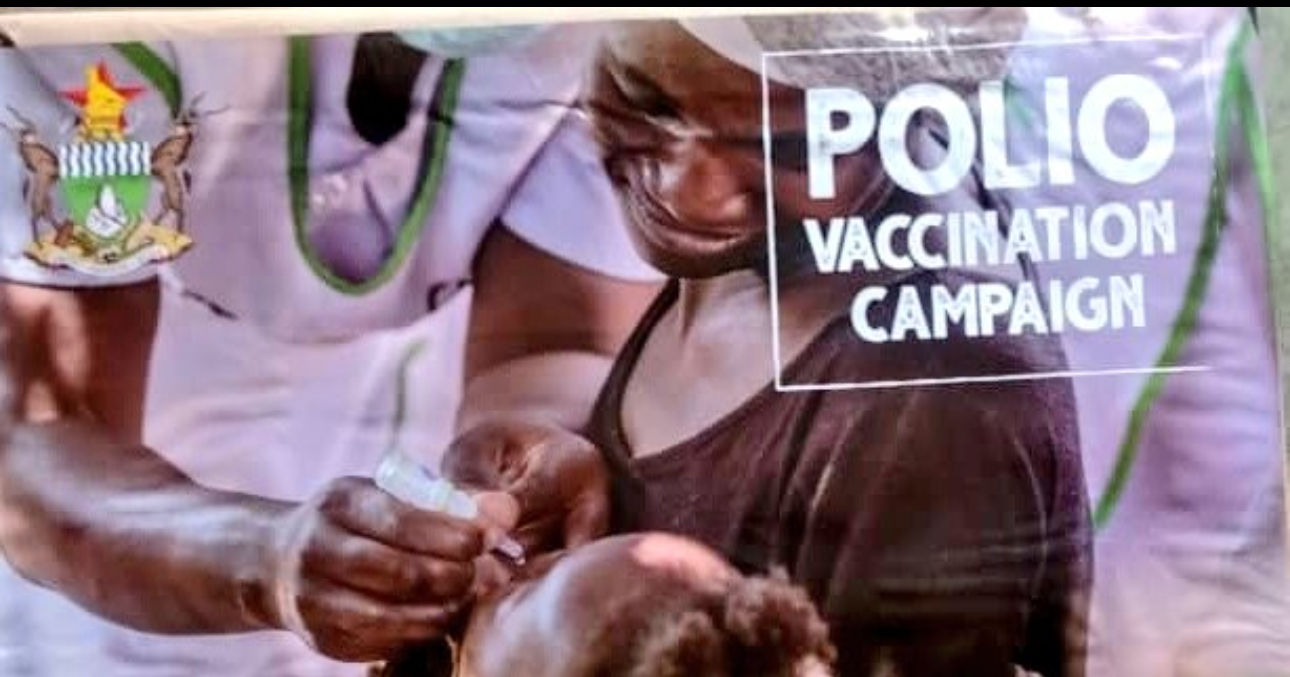
Ministry of Health and Child Care has launched a targeted polio vaccination campaign in selected districts, with health workers going door-to-door and setting up outreach points to reach young children.

Advertisement

The campaign aims to vaccinate all children under the age of five against polio, a highly infectious disease that can cause paralysis. Authorities say the initiative forms part of a wider regional effort to interrupt transmission, being conducted alongside neighbouring countries including Botswana, Malawi, Mozambique and Zambia.

In a message posted on X on Monday and circulated in official memos, the ministry said it was “embarking on a targeted polio vaccination campaign to interrupt the transmission of polioviruses”. It urged families in affected areas to ensure that all eligible children are vaccinated, regardless of their previous vaccination status.

The programme will be carried out in two rounds, from 20 to 23 April and from 2 to 5 June, covering both urban and rural communities.

Advertisement

In Bulawayo Metropolitan Province, vaccination teams are operating in Emakhandeni, the Northern Suburbs and Nkulumane. In Harare Metropolitan Province, the campaign covers Harare, Chitungwiza, Epworth and Ruwa.

In Manicaland Province, teams are working in Mutare, Mutasa, Chimanimani and Chipinge. In Mashonaland Central, the campaign targets Mbire, Mt Darwin, Centenary and Rushinga, while in Mashonaland East it focuses on Mudzi. In Mashonaland West, Kariba and Hurungwe are included.

Further south, the drive extends to Chiredzi in Masvingo Province, as well as Binga, Hwange and Tsholotsho in Matabeleland North. In Matabeleland South, teams are operating in Bulilima, Mangwe, Matobo and Gwanda.

Advertisement

Health workers are using a combination of fixed vaccination sites, mobile units and door-to-door visits in neighbourhoods, markets, shops and clinics to reach eligible children, including those in remote and hard-to-access areas.

The ministry has called on parents and guardians to cooperate with vaccination teams, saying the campaign is critical to protecting children and preventing the spread of the disease.

SOURCE: CITE

Advertisement

Continue Reading

Trending

Copyright © 2022 VicFallsLive. All rights reserved, powered by Advantage