Connect with us

In the community

Hwange entrepreneurs turn coal dust into cash with brick moulding ventures

Published

on

BY NOTHANDO DUBE

Hwange entrepreneurs are making brisk business from bricks that they mould using coal dust , which they sell to customers from as far as Harare.

Advertisement

Coal dust is a fine powdered form of the fossil mineral, which is created by the crushing, grinding or pulverising of coal.

In Hwange town, coal dust is found in huge quantities because of the mining activities and the processing of coal by various players.

Nkosiyapha Kufa (26) is one of the entrepreneurs, who are taking advantage of the resource to make a living through a brick moulding business.

Advertisement

Kufa, who is now legally registered as a brick moulder at Five Miles area under the Hwange Rural District Council (HRDC), says the business has changed his fortunes.

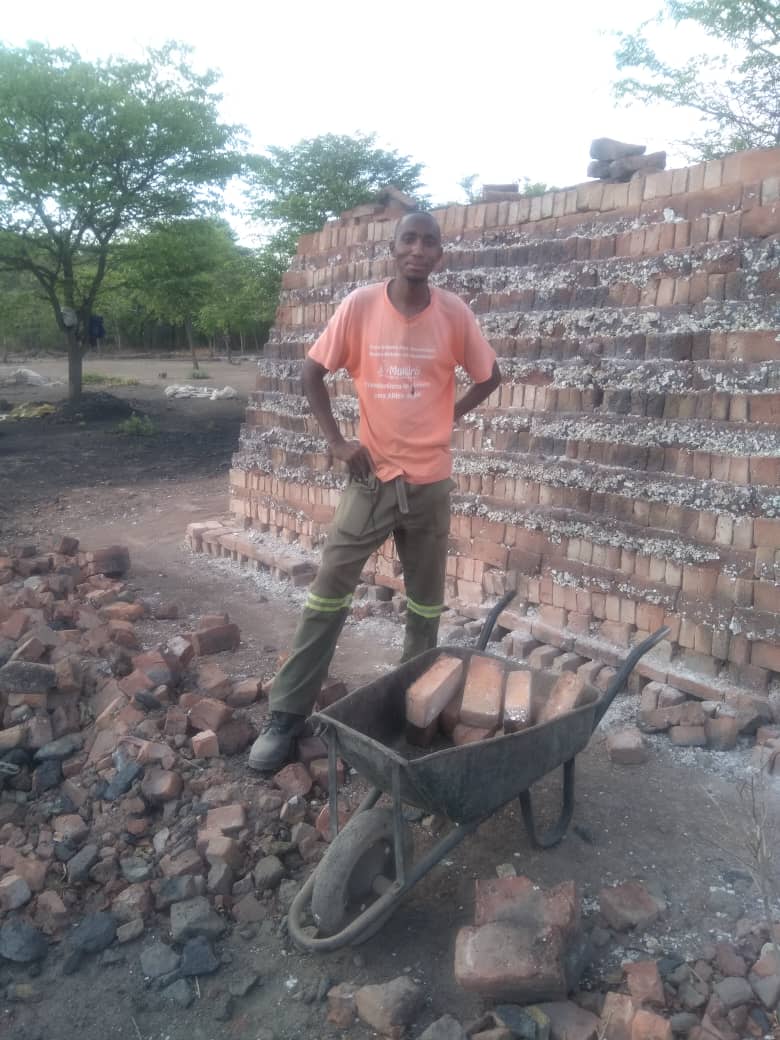
The major raw materials used by his business are coal, water and slurry (coal dust) that he uses to make the much sought after red bricks.

Kufa says the bricks have become very popular because they are strong and are moisture resistant.

Advertisement

“We mix the slurry (coal dust) with soil and and water to make these durable bricks,” he said.

“The coal is used in the ovens for heating these brick, but it is not easy.

“So a workforce of 10 people can take 14 days to mould about 10 000 bricks.”

Advertisement

Kufa said often female employs worked in the ovens while their male counterparts moulded the bricks.

“The bricks take seven days to ‘cook’ in the oven and the workforce is paid US$10 per 10 000 bricks, so l work with a target,” he said.

In Hwange’s Five Miles area, a group of 32 individuals have been given permission by the HRDC to venture into the brick moulding business.

Advertisement

They were allocated a piece of land to conduct their business, which has become an important source of scarce jobs.

The brick-moulders, who are licensed by the Environmental Management Agency, follow recommendations made by the agency which emphasises on the need for proper 0environmental care and tree planting around the areas where they operate from.
Kufa said although the business was rewarding, they faced varuous challenges.

Advertisement

“People are not reliable, some come with requests of advance payments to address their needs and they disappear once you pay them,” he said.

“I could not sleep the other day when it rained and I was thinking about the potential losses.

” I had a lot of ‘uncooked’ bricks and I feared for damage.”

Advertisement

Apart from operational challenges, brick moulders say lack of support by the government and the entry of Chinese companies into business, is threatening their survival.

For Sino Hydro Company, which is partnering the Zimbabwe Power Company (ZPC) in the Hwange Power Station expansion project buys its bricks from Zimbabwe Zhing-Zhong Bricks, another Chinese entity.

Hwange Central Member of Parliament Daniel Molokele said the Chinese company was choking the local brick producers.


Advertisement

Continue Reading
Click to comment

Leave a Reply

Your email address will not be published. Required fields are marked *

Hwange

Three-year-old girl killed in crocodile attack near Matetsi River Bridge

Published

on

BY NOKUTHABA DLAMINI 

A three-year-old girl from Matetsi in Hwange District, Matabeleland North Province, was killed by a crocodile on Tuesday evening while playing near the Matetsi River Bridge along the Bulawayo–Victoria Falls Highway.

Advertisement

According to ZBC, the toddler was with her five-year-old brother as their mother, Tariro Tsondzowore, was fishing nearby when the attack occurred. Authorities said the mother had briefly stepped away, leaving the children close to the riverbank, when a crocodile suddenly emerged from the water, struck and dragged the girl into the river.

People who were nearby reportedly attempted to scare the reptile away but were unsuccessful.

The child, who was from Masikili Village under Chief Shana in Hwange District, was taken before help could arrive.

Advertisement

Zimbabwe Parks and Wildlife Authority (ZimParks) rangers responded to the scene and shot one crocodile. Authorities confirmed that partial human remains have since been recovered, while efforts to retrieve additional remains are continuing.

Additional details of the incident were widely shared on social media platforms, where images from the scene show a sombre gathering along the riverbank. In the footage, several community members stand watching as uniformed personnel are seen in the water. A ZimParks vehicle is parked close to the river, while small groups of people look on from the grassy embankment, underscoring the gravity of the situation.

The tragedy has once again brought into focus the growing challenge of human-wildlife conflict in Zimbabwe, particularly in communities located near rivers and wildlife corridors.

Advertisement

Local authorities have urged residents, especially those living near riverbanks, to exercise extreme caution and remain vigilant against the dangers posed by crocodiles and other wild animals.

VicFallsLive will continue to follow developments on this story.

Advertisement
Continue Reading

In the community

Low environmental crime prosecutions raise concern in Matabeleland North

Published

on

BY STAFF REPORTER

The National Prosecuting Authority (NPA) has raised alarm over the low number of environmental cases recorded and prosecuted in Matabeleland North Province, warning that weak enforcement risks emboldening offenders.

Advertisement

Speaking at a multi-stakeholder engagement meeting organised by the Environmental Management Agency (EMA), Hwange-based public prosecutor Pride Mharadza said fewer than 15 EMA-related cases were recorded in the province in 2025, describing the situation as “deeply disappointing.”

“In Hwange, we only received one case last year involving the transport of hazardous substances without a permit,” Mharadza said. The accused, who had transported mercury, was convicted and fined US$500, with four months’ imprisonment suspended for five years.

Mharadza said Victoria Falls recorded no EMA cases in 2025, calling it “worrying that a whole station did not receive a single case.”

Advertisement

Binga recorded two cases involving cyanide, one resulting in six months’ imprisonment and forfeiture of the chemical, while the other could not proceed to court due to the absence of a forensic report.

In Inyathi, a single case involved implementing a project without an Environmental Impact Assessment (EIA) certificate, resulting in a US$200 fine. Nkayi recorded one case of prohibited alluvial mining, leading to suspended sentences for 19 accused persons.

Meanwhile, Tsholotsho and Lupane reported no EMA cases during the year.

Advertisement

Mharadza said delays in forensic reports, limited EMA representation, and weak collaboration between police and prosecutors were major obstacles to successful prosecution.

“The overall picture points to weak environmental law enforcement rather than an absence of environmental crimes,” she said. “Half the stations did not receive any EMA cases. Some prosecutors even said they do not know how to handle EMA cases because they are not receiving them.”

Mharadza urged law enforcement and prosecutors to take action, saying that successful prosecutions would “send a message to society” and strengthen environmental protection across the province.

Advertisement

SOURCE: CITE

Advertisement
Continue Reading

In the community

Tsholotsho man jailed for stealing and slaughtering neighbour’s goat

Published

on

BY STAFF REPORTER

A 31-year-old man from Tsholotsho has been sentenced to an effective six months in prison after being convicted of stealing and slaughtering his neighbour’s goat.

Advertisement

The incident occurred on 11 July 2024 when the complainant released his herd to graze at Mhlahlo grazing land. One black-and-white goat failed to return, prompting the owner and fellow villagers to launch a search.

The search led to the accused’s homestead, where the complainant positively identified the carcass of his missing goat. The man initially denied involvement in the theft, but investigations revealed overwhelming evidence linking him to the crime.

He was arrested and placed in police custody but later escaped while being taken to the police station. The escape was promptly reported, leading to his re-arrest.

Advertisement

The court sentenced the accused to 12 months’ imprisonment, with three months suspended on condition of good behaviour. A further three months were suspended on condition that he pays restitution amounting to ZAR1 500. He will therefore serve an effective six-month prison term.

In a statement, the National Prosecuting Authority of Zimbabwe commended communities for remaining vigilant and reporting crime promptly.

“Justice is strongest when citizens stand together against lawlessness. Silence and tolerance of crime only empower offenders,” the NPAZ said.

Advertisement

Continue Reading

Trending

Copyright © 2022 VicFallsLive. All rights reserved, powered by Advantage