Connect with us

Uncategorized

Caledonia’s new shaft lifts record ore tonnage, earnings double

Published

on

BY OWN CORRESPONDENT

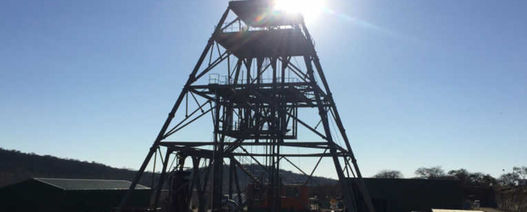
Victoria Falls Stock Exchange listed Caledonia Mining’s investment in a new shaft at Blanket Mine is starting to show results; ore tonnage reached new records in the second quarter, helping the company double earnings for the period.

Advertisement

The company commissioned a central shaft earlier this year, and in the three months to June, Blanket mined and milled 165,000 tonnes of ore, the biggest quarterly tonnage.

“This is a new production record for any quarter and reflects the contribution of the Central Shaft which was commissioned at the end of March 2021 and the build-up towards the target of 80,000 ounces per annum from 2022 onwards,” Caledonia says in a trading update released Thursday.

Gold output was 16,710 ounces in the quarter, 24% higher than the 13,499 ounces produced in Q2 2020. This is also a new production record for a second-quarter at the mine. Production was 29,907 ounces in the First Half, 8% more than the 27,732 ounces in the first half of 2020.

Advertisement

EBITDA – excluding asset impairments, net foreign exchange gains and losses, and export incentives – of US$14 million, sharply rose by 103% from US$6.9 million in Q2 2020.

Gross revenues of US$30 million were 31% above the US$22.9 million in the second quarter of 2020. Gross profit for the quarter was US$13.9 million, up 51% on the US$9.2 million in the same quarter last year.

Caledonia’s revenue for the six months was US$55.7 million from US$46.5 million, as a result of the increased output and a firmer gold price over the period. Gross profit was US$24.3 million from US$19.7 million last year.

Advertisement

The company is targeting 61,000 – 67,000 ounces for 2021, before ramping up to over 80,000 ounces per year from 2022, as a result of the new shaft. Last year, Blanket produced a record 57,899 ounces.

There are signs that the company will meet its targets, with production in July, at 5,995 ounces, being above average monthly production. –newZwire

Advertisement
Continue Reading
Click to comment

Leave a Reply

Your email address will not be published. Required fields are marked *

Slider

Three painted dogs killed along Hwange highway as conservationists raise alarm

Published

on

BY NOKUTHABA DLAMINI

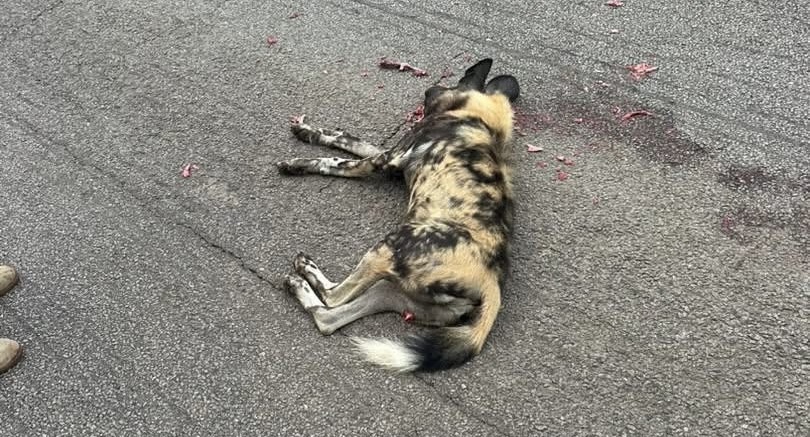
Conservationists have raised fresh concern over wildlife safety along the busy Bulawayo–Victoria Falls highway after three endangered African wild dog were killed in separate incidents within a week.

In a statement, Painted Dog Conservation confirmed that two pups from the Umkhonto pack were struck and killed by a vehicle overnight within the Hwange landscape.

“We are heartbroken to share that two pups from the Umkhonto pack were killed overnight after being struck by a vehicle along the Bulawayo–Victoria Falls road,” the organisation said on Saturday.

The group said the pack had been safely escorted across a nearby road earlier, but is believed to have been disturbed by lions during the night, forcing them to move again toward the highway where the accident occurred.

“Despite constant monitoring and intervention, moments like this remind us how fragile their survival can be,” the organisation added.

The deaths bring to three the number of painted dogs killed along the same highway corridor in less than a week, with another animal reportedly struck closer to Victoria Falls.

Conservationists warned that the loss goes beyond individual animals, highlighting the species’ already fragile population.

“It’s not ‘just three dogs’. These three could have become alphas and been responsible for producing over 300 dogs through their offspring and subsequent generations,” the statement read.

Highway poses growing threat to wildlife

The Bulawayo–Victoria Falls road, which cuts through key wildlife areas including parts of Hwange National Park, has long been flagged as a danger zone for animals.

The highway is a major tourism and freight route linking Bulawayo to Victoria Falls, carrying heavy traffic volumes that include haulage trucks, buses, and self-drive tourists—many travelling at high speeds, particularly at night.

Wildlife frequently crosses this corridor as it bisects natural habitats and migration routes, bringing animals such as elephants, lions and painted dogs into direct conflict with vehicles.

Conservation groups have repeatedly called for stricter enforcement of speed limits, improved signage, and traffic calming measures in wildlife zones, especially at night when visibility is poor and animal movement increases.

Calls for action

Painted Dog Conservation urged motorists to slow down and remain vigilant when driving through wildlife areas.

“We urge all road users to slow down—especially at night—and call on authorities to strengthen and enforce speed reduction measures in wildlife areas. Their survival depends on it.”

The deaths come amid growing concern over human-wildlife conflict in Matabeleland North, where expanding infrastructure and traffic volumes continue to put pressure on endangered species.

Continue Reading

In the community

Hwange residents invited to constitutional amendment public hearing

Published

on

BY NOKUTHABA DLAMINI 

Residents in Hwange are set to have their say on proposed changes to the country’s supreme law as the Parliament of Zimbabwe rolls out public hearings on the Constitution of Zimbabwe Amendment No. 3 Bill.

The outreach programme will reach the coal-mining town on Tuesday, 31 March, with the hearing scheduled for 10am at Edmund Davies Hall, located at the No.1 Colliery Club near Thomas Coulter Primary School.

Attendance is free, and members of the public are being encouraged to participate and express their views on the proposed amendment.

According to Parliament, the hearings are part of a nationwide consultation process aimed at gathering citizens’ input before the bill is finalised. The proposed legislation—Constitution of Zimbabwe Amendment No. 3 Bill (H.B. 1, 2026)—seeks to introduce changes to key governance provisions.

The Matabeleland North outreach will begin in Tsholotsho on Monday, 30 March, before moving to Hwange, then to Binga on Wednesday, 1 April, and concluding in Lupane on Thursday, 2 April.

Parliament has also opened channels for written submissions, which can be sent to the Clerk of Parliament or via email.

However, authorities have warned that individuals wearing military uniforms, political party regalia, or carrying flags and badges will not be allowed into the hearings.

Residents in and around Hwange are urged to attend in numbers and make their voices heard.

Continue Reading

In the community

EMA, Lupane State University step up fight against deadly Umkhawuzane in Mat North

Published

on

BY WANDILE TSHUMA

The Environmental Management Agency (EMA), in partnership with Lupane State University, has launched a community-based initiative to control and reduce the impact of the toxic plant Dichapetalum cymosum, locally known as Umkhawuzane or Gifblaar, which has caused significant livestock losses in Matabeleland North.

The initiative, focuses on managing the spread of the poisonous plant, which is widely recognised as one of the most dangerous threats to cattle in Southern Africa. Gifblaar is estimated to contribute to about eight percent of livestock deaths linked to toxic plants in the region. The plant contains fluoroacetate, a potent toxin that causes sudden death in animals and poses risks of secondary poisoning through the food chain.

According to EMA, the study was carried out in Ward 18 (Makhovula) in Lupane District and Ward 10 in Umguza District. It combined community sensitisation with mechanical and chemical control trials aimed at identifying effective ways to eradicate the plant.

Community engagements revealed a high level of awareness among farmers about the toxicity of Umkhawuzane. Farmers reported losing an average of three to four animals per household during the winter season, when forage is scarce and the plant remains green, increasing the risk of livestock consumption.

Results from the trials showed that mechanical removal of the plant produced promising outcomes. No regeneration was observed in areas where roots were excavated to depths of between one and 1.5 metres. However, chemical control using glyphosate only led to temporary suppression of the plant and did not achieve complete eradication, while also affecting surrounding vegetation.

EMA said the findings highlight the need for integrated and site-specific management approaches. These include effective mechanical removal, cautious use of chemicals, and continuous community education to prevent further losses.

The agency, together with Lupane State University, reaffirmed its commitment to working closely with local communities to protect livestock, improve rangeland management and reduce the economic losses caused by Umkhawuzane in Matabeleland North.

Continue Reading

Trending

Copyright © 2022 VicFallsLive. All rights reserved, powered by Advantage