Connect with us

In the community

Alarming number of school girls drop out due to pregnancy

Published

on

BY WANDILE TSHUMA

A recent National Assembly meeting  revealed a staggering statistic: 4557 school girls dropped out of school due to pregnancy in 2023 alone. The majority of these girls (3942) were from rural schools, and most were in secondary school.

Mutsa Murombedzi, MP for Mashonaland West, questioned the Minister of Primary and Secondary Education, Torerai Moyo, on the issue.

Advertisement

“The Ministry collects and collates such data on an annual basis and is recorded in our Education Management Information System (EMIS) report shared with all stakeholders. Therefore, for the year ending December, 2023, 4557 girls dropped out of school due to pregnancy, the majority of these (3 942) being from rural schools,” Minister Moyo revealed.

When asked about measures being taken to address the issue, Minister Moyo said, “We have instituted several measures to curb this problem, one of which is the introduction of Guidance and Counselling in schools. Through the Education Act, we have also ensured that the legal provisions are there to enable girls who fall pregnant to continue with their education.”

Minister Moyo also emphasized that the government is committed to ensuring that girls who fall pregnant can continue their education, citing the Education Amendment Act of 2020, which allows girls to take a two-week maternity leave and return to school.

Advertisement

“On the issue of stigma, we have done a lot of conscientisation and also, we have done a lot of dissemination of information in encouraging all the girls who fall pregnant. It is now their right to education, so they are supposed to go back to school,” Minister Moyo said.

When asked about the perpetrators, Minister Moyo assured the House that the law will take its course if the perpetrators are adults and the girls are under 18.

“Assuming the perpetrators are known and they are adults, the law will take its course. If there are circumstances whereby an elder or an adult male has had some relations with a girl and she becomes pregnant, if that girl is under the age of 18, the law will be applied.”

Advertisement

Continue Reading
Click to comment

Leave a Reply

Your email address will not be published. Required fields are marked *

Binga

Lawmaker urges localized climate strategies for Tsholotsho, Hwange

Published

on

BY NOKUTHABA DLAMINI

A Shamva South lawmaker has called for a radical shift in climate change mitigation strategies, demanding that the government abandon “one-size-fits-all” projects in favor of solutions that respect the unique geography and culture of districts like Tsholotsho, Hwange, and Binga.

Advertisement

During the debate on the Climate Change Management Bill, Joseph Mapiki argued that national programs often fail because they ignore local realities.

“We should look at our projects in terms of the area,” Mapiki told the National Assembly. “For example, in Tsholotsho and Hwange, where there are game parks, we cannot force them to do horticulture because there is no water. We should encourage them to engage in tourism”.

Mapiki also challenged the government’s staffing policies for climate initiatives, insisting that local language and cultural knowledge are essential for the success of any environmental committee.

Advertisement

“If someone from Mashonaland Central goes and is incorporated in a Committee in Binga, it means that the Committee will not function well because that person will not be conversant with the language,” he argued.

He further emphasized that “First preference should be given to the locals to avoid taking people from other areas… because those other people will not be aware of the language and culture of the people there”.

Beyond staffing and local projects, Mapiki raised concerns about the influence of international donors on Zimbabwe’s environmental policy.

Advertisement

He urged the government to ensure that the majority of climate funding is domestic to avoid “stringent measures and conditions” imposed by foreign entities.

“Our plea Hon. Minister, is that 98% funding for that Bill should be from Zimbabwe,” Mapiki stated.

“Foreign funding is hampering our progress”. His remarks were supported by other MPs who noted that climate change mainstreaming must include the “vulnerable communities” and “local authorities” who are on the frontlines of weather shocks in the province.

Advertisement

Continue Reading

Hwange

Hwange MP challenges government over Nambya teacher deployment

Published

on

BY NOKUTHABA DLAMINI

Hwange East legislator Joseph Bonda has called on the government to address what he describes as the marginalisation of the Nambya language in schools, arguing that current teacher deployment policies are undermining early learning in Matabeleland North.

Advertisement

According to the National Assembly’s official record of 7 April 2026, Bonda formally asked the Minister of Public Service, Labour and Social Welfare to explain why trained Nambya-speaking teachers are not being employed in Hwange District while non-speakers are posted to the area.

He said the practice was “depriving children of receiving instruction in their mother tongue at the early education stage”, which he described as critical to both educational outcomes and cultural development.

Under Zimbabwe’s language policy framework, learners are expected to be taught in their mother language in the early grades. Critics say failure to align teacher deployment with local languages weakens that principle in practice.

Advertisement

Despite the concerns raised, the matter remains unresolved in Parliament. The inquiry was deferred on 18 March and, at the latest sitting, the ministry had yet to provide a formal response.

Parents in the district say the issue has direct consequences for children’s performance.

“Our children are disadvantaged from the start,” said Ester Ncube, a parent in Jambezi under Chief Shana. “If a child cannot understand the teacher in Grade One, it affects everything that follows.”

Advertisement

Community leaders argue that the debate goes beyond classroom instruction and touches on identity.

“Language is part of who we are,” said local elder Eliziya Vashe Shoko. “If schools do not teach in Nambya, we are slowly losing our identity. Government must take this seriously.”

Young professionals in the province say the challenge is not a shortage of qualified personnel but gaps in recruitment and deployment.

Advertisement

“There are trained teachers who speak Nambya, Lozvi, Chidombe and other local languages, but they are not being deployed here,” said Lindiwe Sibanda, a recent graduate.

“At the same time, teachers from outside are brought in. It does not make sense. These languages should be prioritised so that communities feel a sense of belonging and respect.”

The language dispute forms part of a wider push for regional equity in Matabeleland North. Bonda has also raised concerns over local employment quotas in the wildlife sector and what he describes as the exclusion of Hwange from national weather forecasts. He argues that these issues reflect a broader mismatch between national policy and local needs.

Advertisement


SOURCE: CITE

Advertisement
Continue Reading

Hwange

Hwange MP raises alarm over wildlife jobs bias as locals back call for reform

Published

on

BY NOKUTHABA DLAMINI 

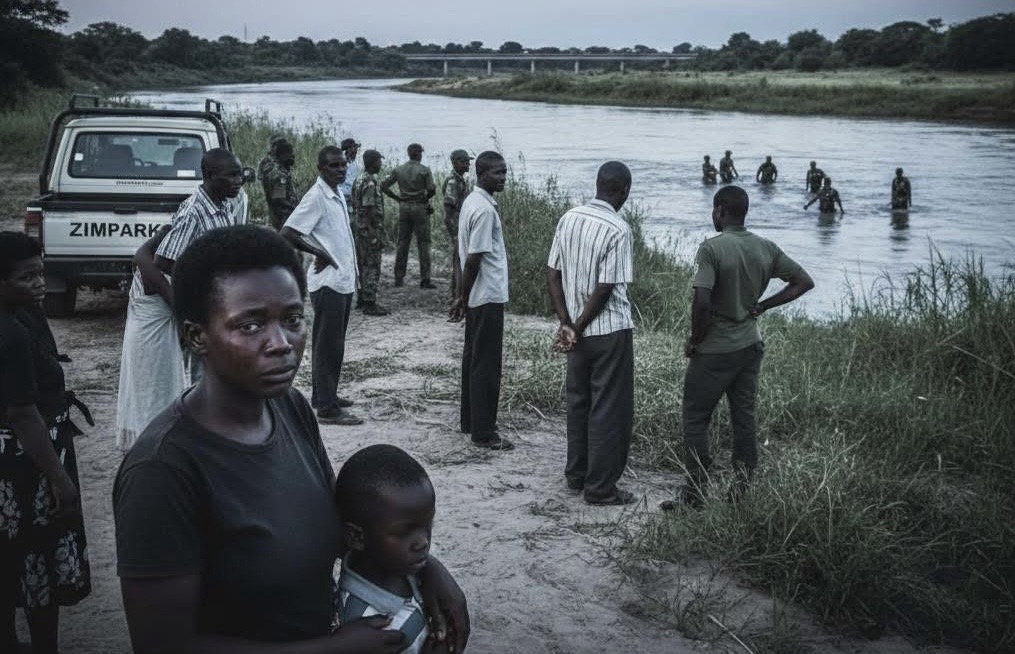
Hwange East legislator, Joseph Bonda, has taken the fight for local employment in wildlife conservation to Parliament, questioning why communities living alongside dangerous animals are being sidelined in job opportunities.

Advertisement

In a question directed to the Minister of Environment, Climate and Wildlife, Bonda pressed for clarity on what measures are in place to ensure that residents of Hwange District are prioritised for employment by the Zimbabwe Parks and Wildlife Management Authority. He argued that locals, who bear the brunt of human-wildlife conflict, should be first in line for jobs in the sector.

The matter, however, did not receive an immediate response in the National Assembly and was deferred on 18 March 2026, leaving the concerns unresolved for now. 

Bonda’s intervention has resonated strongly with communities in Hwange, where wildlife is both a resource and a risk.

Advertisement

“We live with these animals every day”

In Mabale, local villager Sibangani Ndlovu said it is unfair that outsiders benefit from jobs linked to wildlife while locals face constant danger.

“We live with these animals every day. Elephants destroy our crops, sometimes people are injured or killed. But when jobs come, they go to people from far away. That is not right,” he said.

Advertisement

“Employment should be compensation too”

Another r, Memory Moyo from Dete, said employment in parks and safari operations should be viewed as part of community compensation.

“If we are expected to conserve wildlife, then we must also benefit. Jobs are one of the biggest benefits. Otherwise, people will start to see animals as a burden, not a resource.”

Advertisement

Youth feel locked out

Young people in the district say lack of access to jobs in the wildlife sector is worsening unemployment.

Talent Ncube, a youth from Hwange, said many qualified locals are overlooked.

Advertisement

“We have people trained in tourism and conservation here, but they are not getting opportunities. It discourages us as young people because we feel excluded from our own resources.”

Growing pressure on government

Bonda’s question adds to mounting pressure on government to align conservation efforts with community benefits, especially in areas like Hwange where human-wildlife conflict is frequent.

Advertisement

With the issue now formally raised in Parliament, residents say they are waiting to see whether authorities will respond with concrete policy changes—or whether, like many rural concerns, it will remain unresolved.

Advertisement
Continue Reading

Trending

Copyright © 2022 VicFallsLive. All rights reserved, powered by Advantage