Connect with us

In the community

A nation in crisis: 280 children lost in four months – MP

Published

on

BY STAFF REPORTER 

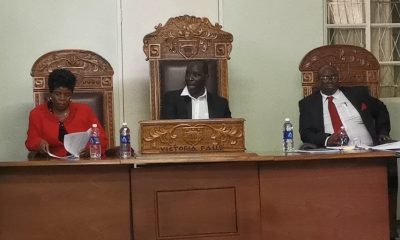
In a somber and thought-provoking address, Member of Parliament Asendu Dube of Matabeleland South stood before parliament on Tuesday to shed light on a devastating issue plaguing the nation.

Advertisement

“My point of interest is with regards to child mortality around the country,” MP Dube declared, setting the tone for a heartfelt and impassioned plea to tackle the alarming rise in deaths among Zimbabwe’s youngest citizens.

With a focus on the staggering figures emerging from Mpilo Hospital, where 98 children lost their lives in March 2024 alone, MP Dube’s speech painted a stark picture of a nation in crisis, prompting him to call for a comprehensive and collective response to curb the scourge of child mortality.

Below is his full speech:

Advertisement

HON. DUBE: On a point of national interest Madam Speaker. My point of interest is with regard to child mortality around the country.  Child mortality refers to death of children under the age of five years and may include still births.  Neonatal deaths and deaths for those under five years among other types of child mortality. 

Madam Speaker, Zimbabwe has faced an increase in child mortality during the first half of the year 2024, with the most alarming figures coming from Mpilo Hospital where 98 children are reported to have died in the month of March 2024 alone. 

Between January and April 2024, a total of 280 children are reported to have died at Mpilo Hospital alone. 

Advertisement

Madam Speaker, given that the National Assembly comprises of 280 MPs, this means that Zimbabwe potentially lost its entire future lower House in four months from one hospital.  More children were lost in other hospitals and this is a cause for concern. 

Madam Speaker, I rise to call for the whole society approach to curb child mortality, which should include an investigation by relevant Portfolio Committees on the cause of the rise in child mortality, a dedicated programme of ensuring all expectant mothers and mothers of infants have access to nutritious diets, adequate wages for nurses as well as availability of medicines at all baby clinics around the country.  I thank you.

THE HON. DEPUTY SPEAKER:  Thank you Hon. Dube. You have raised very important issues, but I advise you to raise a motion on this particular issue so it can be debated in this House.

Advertisement

Continue Reading
1 Comment

1 Comment

  1. Suzanne Baker

    July 28, 2024 at 8:43 am

    My brother suggested I might like this website. He was totally right. This post actually made my day. You cann’t imagine just how much time I had spent for this information! Thanks!

Leave a Reply

Your email address will not be published. Required fields are marked *

Hwange

Hwange MP raises alarm over wildlife jobs bias as locals back call for reform

Published

on

BY NOKUTHABA DLAMINI 

Hwange East legislator, Joseph Bonda, has taken the fight for local employment in wildlife conservation to Parliament, questioning why communities living alongside dangerous animals are being sidelined in job opportunities.

Advertisement

In a question directed to the Minister of Environment, Climate and Wildlife, Bonda pressed for clarity on what measures are in place to ensure that residents of Hwange District are prioritised for employment by the Zimbabwe Parks and Wildlife Management Authority. He argued that locals, who bear the brunt of human-wildlife conflict, should be first in line for jobs in the sector.

The matter, however, did not receive an immediate response in the National Assembly and was deferred on 18 March 2026, leaving the concerns unresolved for now. 

Bonda’s intervention has resonated strongly with communities in Hwange, where wildlife is both a resource and a risk.

Advertisement

“We live with these animals every day”

In Mabale, local villager Sibangani Ndlovu said it is unfair that outsiders benefit from jobs linked to wildlife while locals face constant danger.

“We live with these animals every day. Elephants destroy our crops, sometimes people are injured or killed. But when jobs come, they go to people from far away. That is not right,” he said.

Advertisement

“Employment should be compensation too”

Another r, Memory Moyo from Dete, said employment in parks and safari operations should be viewed as part of community compensation.

“If we are expected to conserve wildlife, then we must also benefit. Jobs are one of the biggest benefits. Otherwise, people will start to see animals as a burden, not a resource.”

Advertisement

Youth feel locked out

Young people in the district say lack of access to jobs in the wildlife sector is worsening unemployment.

Talent Ncube, a youth from Hwange, said many qualified locals are overlooked.

Advertisement

“We have people trained in tourism and conservation here, but they are not getting opportunities. It discourages us as young people because we feel excluded from our own resources.”

Growing pressure on government

Bonda’s question adds to mounting pressure on government to align conservation efforts with community benefits, especially in areas like Hwange where human-wildlife conflict is frequent.

Advertisement

With the issue now formally raised in Parliament, residents say they are waiting to see whether authorities will respond with concrete policy changes—or whether, like many rural concerns, it will remain unresolved.

Advertisement
Continue Reading

In the community

Victoria Falls launches bill-payment incentive program to drive municipal growth

Published

on

BY NOKUTHABA DLAMINI

The City of Victoria Falls has launched a promotional campaign offering prizes ranging from solar power systems to helicopter rides to encourage residents to settle their utility bills and rates.

Advertisement

The initiative, titled the “Pay and Stand a Chance to Win Promotion,” began on April 2, 2026, and is scheduled to run in three-month cycles through the end of the year. According to a notice issued by Town Clerk Ronnie Dube, the program aims to have residents work together to contribute to the continued growth and improvement of the city.

To qualify for the draws, domestic customers in high-density suburbs must pay at least 30% of their outstanding balance or a minimum of US$100. Residents in medium and low-density suburbs are required to pay at least 30% of their debt or a minimum of US$200.

The city is offering a tiered prize structure to incentivize different levels of payment. Four 3KVA solar systems are reserved as grand prizes for residents who achieve a zero-balance account. Other prizes in the pool include four refrigerators, four gas stoves, and 100 solar lights.

Advertisement

Leveraging its status as a World Heritage Site, the city is also offering four “Flight of Angels” helicopter rides, four boat cruise tickets, and four complimentary dinner tickets for two. Consolation prizes such as city-branded T-shirts will also be available.

The first draw is scheduled for the second week of July, followed by a second draw in October. The final and grand draw will take place in the second week of January 2027. Residents can enter by making payments at Council Pay Points and dropping their receipts into designated entry boxes.

Advertisement
Continue Reading

In the community

Mat North athletes use stones, sticks as equipment shortages stall progress

Published

on

BY NOKUTHABA DLAMINI 

For many young athletes from Matabeleland North, the road to national competitions begins with makeshift tools—stones in place of shot puts and sticks standing in for hurdles.

Advertisement

Despite a commendable showing at the just-ended National Association of Secondary School Heads (NASH) athletics championships in Kadoma, the province’s progress continues to be hampered by a critical shortage of proper equipment.

Speaking after the event, Matabeleland North NAPH vice secretary Edward Mudimba of Binga said the lack of standard implements at grassroots level is affecting athletes’ development and performance.

“In some cases, learners are using stones for throwing events and sticks for hurdles at school level. By the time they reach national competitions, they are not familiar with standard equipment,” said Mudimba.

Advertisement

Matabeleland North sent a delegation of 121 participants drawn from all seven districts and showed encouraging improvement at the national meet. However, Mudimba said the province’s potential is being held back by resource constraints.

“We are improving and we are going somewhere, but we need proper support. From school level up to provincial level, we are largely using substandard implements,” he said.

The challenge is most evident in field events such as shot put, discus and javelin, where proper technique depends on consistent use of correct equipment.

Advertisement

“You find that learners are improvising with stones or other objects. When they get to national level and are given standard equipment, it becomes difficult for them to adjust,” he added.

Other disciplines such as high jump are also affected, with many schools lacking basic equipment like landing mats, uprights and crossbars.

Despite these setbacks, Matabeleland North athletes still managed to compete against better-resourced provinces—highlighting the depth of raw talent in the region.

Advertisement

“There is talent in our children, but without proper equipment and financial support, it becomes difficult to fully develop that potential,” said Mudimba.

He urged schools and stakeholders to prioritise investment in standard athletics equipment, acknowledging that while costs are high, they are necessary for long-term development.


Advertisement

Continue Reading

Trending

Copyright © 2022 VicFallsLive. All rights reserved, powered by Advantage