Connect with us

In the community

Painted Dog Conservation and Uncommon bring free coding school to Gwai Valley Primary

Published

on

BY NOKUTHABA DLAMINI 

Painted Dog Conservation (PDC), in partnership with technology-driven organisation Uncommon, is set to establish a free coding school at Gwai Valley Primary in Lupane District, marking a new chapter in community empowerment and education.

Advertisement

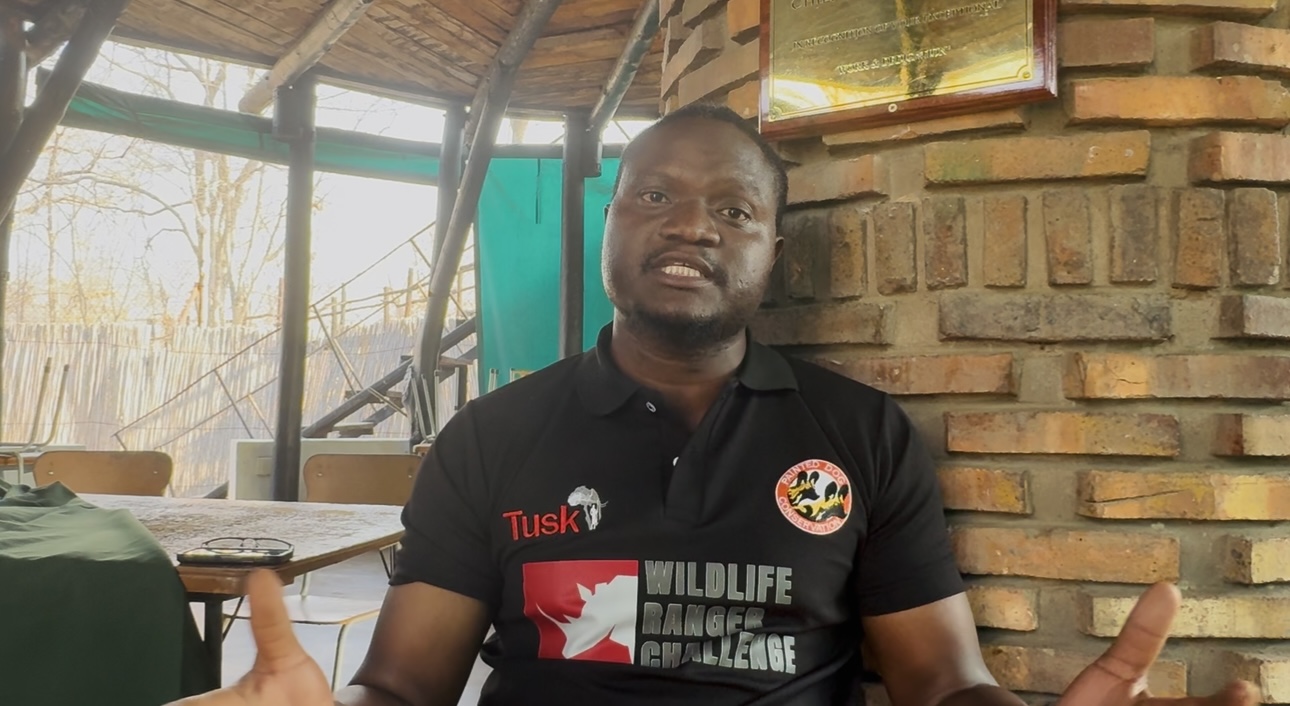
Speaking during an interview with VicFallsLive, PDC operations director, David Kuvawoga said the initiative stems from the organisation’s long-term work with local schools through its children’s bush camps.

“In our quest to find solutions to the poaching crisis, and building on the work we’ve done with schools over the years, we identified Gwai Primary as a good location to start a coding school,” he explained. “We partnered with Uncommon, which already runs facilities in Harare and Victoria Falls, to bring this opportunity closer to rural communities.”

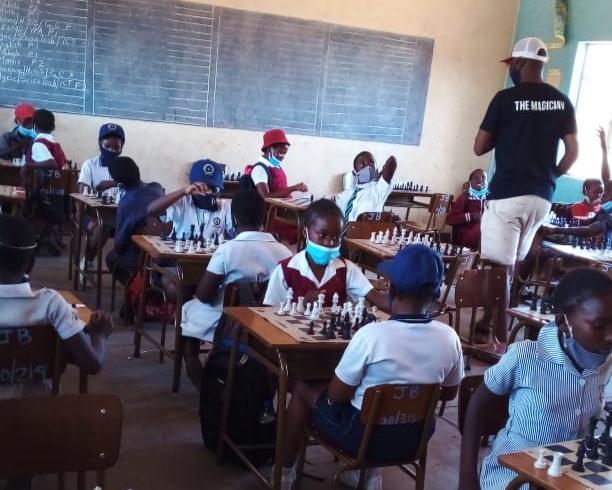
The school will be housed in container units equipped with computers and other necessary technology. According to PDC, the project will be led by youths from the Gwai community who underwent year-long training in Victoria Falls and are now prepared to teach children — and adults — the fundamentals of coding.

Advertisement

“This is not just for schoolchildren,” the operations director said. “Anyone in the community with the passion to learn can join. What matters is the interest and commitment, not formal qualifications.”

Importantly, the programme will be free of charge. Both organisations confirmed that tuition, equipment, and running costs are fully covered through fundraising efforts.

“No one is going to pay a cent,” he said. “Just like our bush camps, which host over a thousand children every year without charge, this coding school is fully funded. All the community needs to do is embrace it.”

Advertisement

PDC has previously supported communities through projects such as boreholes and gardens, but this marks its first major investment in technology. The director said the initiative has the potential to address unemployment, improve education, and give local youth world-class digital skills.

“Coding is a highly sought-after skill across the world,” he noted. “If young people here can learn it, they can secure jobs or even create employment for others. This is a brick in the foundation of uplifting Lupane, Hwange, and beyond.”

The coding school is expected to open in December at Gwai Valley Primary.

Advertisement

Continue Reading
Click to comment

Leave a Reply

Your email address will not be published. Required fields are marked *

In the community

Grade 2 pupil and neighbor die in gas-filled well in Nkayi

Published

on

BY NOKUTHABA DLAMINI 

A Grade 2 pupil and a young man died on Thursday in a tragic incident at a neighbor’s well in Nkayi Ward 19, after being overcome by suspected carbon monoxide and a total lack of oxygen.

Advertisement

The tragedy unfolded near Nkayi Primary School area when the young student was reportedly sent into the well by an elderly man  to retrieve a bucket that had fallen to the bottom.

He reportedly lured him on the promise of buying him sweets.

When the child failed to resurface, a neighbor entered the shaft in a desperate rescue attempt.

Advertisement

Councillor Thubelihle Mabuza Ncube, who visited the scene on Friday, described the harrowing moments that led to the double fatality. “What happened, we understand, is that a bucket fell into the well and the boy, whose mother was not at home at the time, was lured to get in an retrieve it in exchange of sweets and things,” Ncube said. “It is said there was carbon [monoxide]… there was no oxygen at all at the bottom and that’s how he died”.

According to the councillor, the second individual who had reportedly sent the child to fetch the bucket in the well reached the bottom and was briefly able to interact with the child before being overwhelmed . “He reached the bottom, but [the gas] overcame him,” Ncube explained. “He reportedly tapped the child, but then he was overcome by that carbon and lack of air… They both died in the water “.

A third person attempted to enter the well but immediately signaled to be pulled out, reporting a suffocating heat and a total lack of oxygen inside the shaft.

Advertisement

The councillor expressed deep distress over the decision to send a young child into the well. “It is very painful… a Grade 2 pupil being sent into the well by elders to go and retrieve a container from the bottom,” Ncube said, noting that it appeared the community had grown accustomed to such tasks.

Due to the extreme danger posed by the air quality, rescuers were unable to physically enter the well to recover the bodies. Instead, villagers were forced to use a makeshift tool to retrieve the deceased from the surface.

“They were finally taken out not by being fetched from below; instead, they ended up using something like a wire to pull them because people were afraid to enter where that gas was,” Ncube said.

Advertisement

The incident has left the Nkayi community in mourning. “Nkayi is hurting deeply,” the councillor added. “It is a very painful situation”.

The accused has been charged by the police, according to the councillor,

Advertisement
Continue Reading

Binga

Lawmaker urges localized climate strategies for Tsholotsho, Hwange

Published

on

BY NOKUTHABA DLAMINI

A Shamva South lawmaker has called for a radical shift in climate change mitigation strategies, demanding that the government abandon “one-size-fits-all” projects in favor of solutions that respect the unique geography and culture of districts like Tsholotsho, Hwange, and Binga.

Advertisement

During the debate on the Climate Change Management Bill, Joseph Mapiki argued that national programs often fail because they ignore local realities.

“We should look at our projects in terms of the area,” Mapiki told the National Assembly. “For example, in Tsholotsho and Hwange, where there are game parks, we cannot force them to do horticulture because there is no water. We should encourage them to engage in tourism”.

Mapiki also challenged the government’s staffing policies for climate initiatives, insisting that local language and cultural knowledge are essential for the success of any environmental committee.

Advertisement

“If someone from Mashonaland Central goes and is incorporated in a Committee in Binga, it means that the Committee will not function well because that person will not be conversant with the language,” he argued.

He further emphasized that “First preference should be given to the locals to avoid taking people from other areas… because those other people will not be aware of the language and culture of the people there”.

Beyond staffing and local projects, Mapiki raised concerns about the influence of international donors on Zimbabwe’s environmental policy.

Advertisement

He urged the government to ensure that the majority of climate funding is domestic to avoid “stringent measures and conditions” imposed by foreign entities.

“Our plea Hon. Minister, is that 98% funding for that Bill should be from Zimbabwe,” Mapiki stated.

“Foreign funding is hampering our progress”. His remarks were supported by other MPs who noted that climate change mainstreaming must include the “vulnerable communities” and “local authorities” who are on the frontlines of weather shocks in the province.

Advertisement

Continue Reading

Hwange

Hwange MP challenges government over Nambya teacher deployment

Published

on

BY NOKUTHABA DLAMINI

Hwange East legislator Joseph Bonda has called on the government to address what he describes as the marginalisation of the Nambya language in schools, arguing that current teacher deployment policies are undermining early learning in Matabeleland North.

Advertisement

According to the National Assembly’s official record of 7 April 2026, Bonda formally asked the Minister of Public Service, Labour and Social Welfare to explain why trained Nambya-speaking teachers are not being employed in Hwange District while non-speakers are posted to the area.

He said the practice was “depriving children of receiving instruction in their mother tongue at the early education stage”, which he described as critical to both educational outcomes and cultural development.

Under Zimbabwe’s language policy framework, learners are expected to be taught in their mother language in the early grades. Critics say failure to align teacher deployment with local languages weakens that principle in practice.

Advertisement

Despite the concerns raised, the matter remains unresolved in Parliament. The inquiry was deferred on 18 March and, at the latest sitting, the ministry had yet to provide a formal response.

Parents in the district say the issue has direct consequences for children’s performance.

“Our children are disadvantaged from the start,” said Ester Ncube, a parent in Jambezi under Chief Shana. “If a child cannot understand the teacher in Grade One, it affects everything that follows.”

Advertisement

Community leaders argue that the debate goes beyond classroom instruction and touches on identity.

“Language is part of who we are,” said local elder Eliziya Vashe Shoko. “If schools do not teach in Nambya, we are slowly losing our identity. Government must take this seriously.”

Young professionals in the province say the challenge is not a shortage of qualified personnel but gaps in recruitment and deployment.

Advertisement

“There are trained teachers who speak Nambya, Lozvi, Chidombe and other local languages, but they are not being deployed here,” said Lindiwe Sibanda, a recent graduate.

“At the same time, teachers from outside are brought in. It does not make sense. These languages should be prioritised so that communities feel a sense of belonging and respect.”

The language dispute forms part of a wider push for regional equity in Matabeleland North. Bonda has also raised concerns over local employment quotas in the wildlife sector and what he describes as the exclusion of Hwange from national weather forecasts. He argues that these issues reflect a broader mismatch between national policy and local needs.

Advertisement


SOURCE: CITE

Advertisement
Continue Reading

Trending

Copyright © 2022 VicFallsLive. All rights reserved, powered by Advantage