Connect with us

In the community

Bushmeat poachers target Victoria Falls wildlife

Published

on

BY NOKUTHABA DLAMINI

Rising demand for bushmeat during Covid-19 lockdowns has decimated wild animals that used to roam the streets of Zimbabwe’s prime resort town of Victoria Falls, conservationists say.

Advertisement

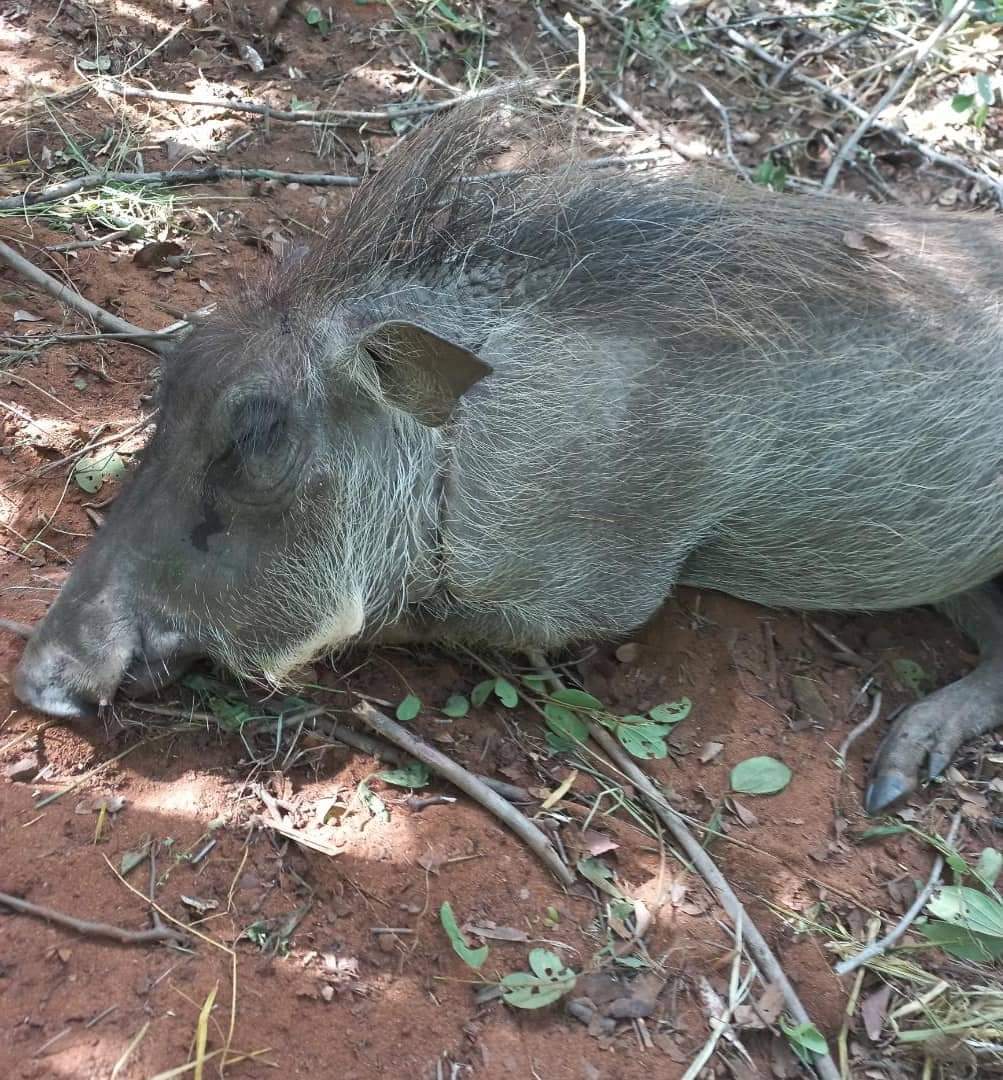
The Victoria Falls Anti-Poaching Unit (VFAPU) said animals such as warthogs that used to roam the city were now hard to come by because they were killed by poachers, who use snares.

“Due to Covid-19 mainly, many of the resident warthogs within the town of Victoria Falls have been poached,” VFAPU said.

“(In April), one of the surviving families (four of them) ventured into the bush by CHOGM (Commonwealth Heads of Government Meeting) park and sadly three of them were snared.

Advertisement

“Thank you to concerned residents of Victoria Falls who had heard the warthogs squealing, for chasing off the poacher, who had already butchered one of the pigs.” VFAPU said between January and October this year, 63 suspected poachers apprehended around Victoria Falls.

The anti-poaching unit removed 563 snares and another 309 snares were identified by Zambezi Horse Safaris.

During the period, 28 snared animals were rescued.

Advertisement

Trevor Lane, founder of Bhejane Trust, a non-profit organisation that seeks to protect wild animals in the region, said the snaring of animals by poachers had become a cause for concern.

“The poachers take advantage of small fines where one can get a suspended sentence and community service or fine.

“Although we appreciate how the courts are handling cases according to the law, we believe that the sentences should be tougher in order to send a message because the issue around these crimes is that the offenders will be doing it for commercial purposes.”

Advertisement

Employers Association for Tours and Safari Operators president Clement Mukwasi said the decimation of wild animals in Victoria Falls is now seriously affecting their business.

“Covid-19 exposed many wild animals in our nearby parks and around town to poaching because continued lockdowns meant that there was no monitoring of activities around wildlife crimes and due to massive job losses in the industry, people opted for self-help as streams of income diminished,” Mukwasi said.

“Wildlife around town has become part of our lifestyle and visitors enjoy that urban-wilderness feeling in harmony with nature and through our bush game drives in areas such as the Zambezi

Advertisement

National Park and with poaching in these areas, it means that there is a reduced variety of animals for one to view.

“We wouldn’t want to find ourselves in a situation where this continues happening as it kills our tourism.”

The snaring of wild animals is also affecting villagers living on the outskirts of Victoria Falls as their livestock gets caught by the snares.

Advertisement

Lifa Nekatambe from Monde village, which is located about 15 kilometres from Victoria Falls said he had lost livestock because of snares set up by poachers.

“In May, two of my calves were snared and killed while in November last year, one of my bulls was severely injured from the neck when poachers put snares at Masuwe River where our animals drink from,” Nekatambe said.

“The pain these poachers have inflicted on is too much and they are hardly known, but we understand that these are criminals who will be targeting wild animals and it keeps worsening,”

Advertisement

In February this year, Clemence Ncube, a Victoria Falls council employee was arrested and taken to court for running over a warthog with his vehicle before skinning it.

At the time, prosecutors said he hit the animal at the Aerodrome area and skinned it at his Chinotimba residency.

He was convicted on his own plea of guilty and fined $20,000 (£46) in Zimbabwean local currency.

Advertisement

Continue Reading
Click to comment

Leave a Reply

Your email address will not be published. Required fields are marked *

In the community

Hwange West MP demands urgent action after two killed by elephants in Victoria Falls

Published

on

BY NOKUTHABA DLAMINI 

VICTORIA FALLS – Hwange West legislator Vusumuzi Moyo has called for urgent and decisive intervention to address escalating human-elephant conflict after two people were killed by elephants in Victoria Falls within the space of a week.

Advertisement

Rising on a point of national interest in the National Assembly, Moyo said the recent deaths had left families in mourning and exposed the growing danger faced by communities living near wildlife corridors.

“In closing, Mr Speaker Sir, I want to convey my message to two families within Victoria Falls. This happened within a week. They lost their lives because of this conflict,” Moyo said. “In a space of a week, two families are mourning the loss of their loved ones.”

Victoria Falls and surrounding communities, which border wildlife areas, have in recent years experienced increased incidents of elephants straying into residential areas, destroying crops and infrastructure, and in some cases fatally attacking residents.

Advertisement

Moyo told Parliament that the crisis must no longer be viewed solely as a conservation issue but as a matter of human dignity and national development.

“My issue is not merely about wildlife management. It is about national development, constitutional responsibility and ultimately, protecting human dignity,” he said.

He warned that communities from Kariba to Binga, and in tourism corridors around Victoria Falls, are “under siege” from escalating human-elephant conflict.

Advertisement

“Families are losing crops, infrastructure is being destroyed and tragically, lives continue to be lost. This House cannot ignore the cries of rural citizens who coexist with wildlife every day,” Moyo said.

The Hwange West MP defended previous government decisions to cull elephants in high-conflict zones, arguing that such measures were sometimes necessary to restore ecological balance and protect human life.

“These are not acts of recklessness but acts of necessity because conservation must never come at the expense of human survival,” he said.

Advertisement

While acknowledging the importance of non-lethal measures such as fencing and translocation, Moyo said in some areas those interventions were no longer sufficient on their own.

He urged authorities to urgently implement provisions of the Parks and Wildlife Act, promulgated on 28 November 2025, particularly in communities bordering national parks.

“It is my sincere hope that the implementation of the Parks and Wildlife Act… will be taken to the areas that border within national parks so that people appreciate and that the regulations can be done as fast as possible,” he said.

Advertisement

Moyo stressed that Parliament must strike a balance between conservation and protecting human life.

“The people are not asking Parliament to choose between elephants and human beings. They are asking us to restore the balance,” he said.

The latest fatalities have renewed debate in Victoria Falls over how authorities can better safeguard residents while maintaining Zimbabwe’s strong conservation reputation.

Advertisement

Continue Reading

In the community

Grace-and-Favour: Binga RDC builds $200k lakeside mansion for CEO despite government ban

Published

on

BY TANAKA MREWA

In a district where hunger drives thousands of children out of school and most households lack basic sanitation, a luxury four-bedroom house with a jacuzzi is nearing completion on the shores of Lake Kariba, built at public expense for the long-serving chief executive of one of Zimbabwe’s poorest local authorities.

Advertisement

An investigation by CITE reveals that Binga Rural District Council (RDC) has spent close to US$200 000 constructing a “grace-and-favour” home for its chief executive officer, Joshua Muzamba, despite a standing government directive prohibiting local authorities from building personal residences for senior officials.

The development has ignited questions about governance, accountability and political protection in a district consistently ranked among Zimbabwe’s poorest, and where residents say public resources are routinely diverted from desperately needed services.

The house sits on a two-acre stand overlooking Lake Kariba, in an exclusive peninsula neighbourhood about six kilometres from Binga town, surrounded by water on two sides.

Advertisement

Council records and sources familiar with the project say the stand, valued at over US$40 000, was allocated to Muzamba free of charge. The property includes four bedrooms – three of them ensuite – a jacuzzi and two garages.

The project’s cost and scale contrast sharply with living conditions in the district.

Official statistics paint a grim picture: ZimStat data shows that 73 percent of households in Binga lack toilets, while many communities travel long distances for schools and healthcare facilities amid largely impassable roads.

Advertisement

Education ministry figures indicate that in 2022 alone, 6 671 pupils dropped out of school, while more than 13 000 children were irregular attendees due to hunger.

Yet despite chronic underdevelopment, council funds have been channelled into the high-end residence.

Muzamba and the council did not respond to multiple requests for comment.

Advertisement

A ministry of local government circular issued on October 6, 2014 (Circular CX154) explicitly forbids local authorities from allocating institutional properties to employees, mayors or council chairpersons.

The ministry’s spokesperson Gabriel Masvora confirmed the directive remains in force.

“The government’s wish is to see improved service delivery prioritised in local authorities for the benefit of the people,” Masvora said. “Local authorities are a third tier of government which have systems and controls in place to ensure resources are used effectively.”

Advertisement

He added that councillors should scrutinise expenditures to ensure compliance with government policy and residents’ priorities.

The Association of Rural District Councils of Zimbabwe (ARDCZ), with Muzamba as chair, passed a resolution allowing construction of houses for senior officials after 10 years of service, effectively sidestepping central government policy.

Muzamba has led Binga RDC for 14 years, a tenure marked by recurring controversies.

Advertisement

Fanuel Cumanzala, the MP for Binga South (CCC) describes the CEO as a dominant figure operating with little internal resistance.

“He has become a liability to Binga,” Cumanzala said. “Whatever he does is for personal gain, not for the wellbeing of the people. Councillors are afraid to go against him.”

Cumanzala alleges the CEO survives political pressure because of backing from influential figures with economic interests in the district.

Advertisement

Muzamba lost his position in Zanu PF’s central committee in 2018 after the Supreme Court ruled public officials could not hold multiple posts simultaneously.

Concerns over governance at Binga RDC stretch back years.

In 2018, police requested a full audit of the council after investigations into suspected theft of trust property revealed potential financial irregularities.

Advertisement

The then senior assistant commissioner Stephen Mutamba, now police commissioner general, wrote to the local government ministry recommending a comprehensive audit after police uncovered evidence that council employees were allegedly under-receipting cash.

The subsequent ministry audit found serious weaknesses, including: bank transfers not being recorded in cash books; rampant under-receipting; an absence of an authenticated employment policy, exposing the council to nepotism and unethical hiring practices; and unsigned council minutes, raising doubts about the authenticity of the records.

Despite these findings, residents say meaningful corrective action never followed.

Advertisement

Muzamba is accused of protecting one employee, Lovemore Siamuyi, who was implicated in earlier investigations and remains employed.

Current and former council insiders allege the CEO has filled the local authority with relatives, claims he has not publicly addressed.

A council official, speaking anonymously for fear of reprisals, said a previous resolution capped staff numbers at 50 due to financial constraints, leading to retrenchments.

Advertisement

“But soon after that, more people started being employed,” the source said. “Now the place is flooded with his kinsmen.”

Employees describe a workplace climate of fear and factionalism.

Residents also question a council resolution allowing senior officials to purchase service vehicles at book value after five years, a policy they say disproportionately benefits senior executives and their associates.

Advertisement

“This means residents effectively buy new vehicles every five years,” said one ratepayer.

The council is reportedly struggling with cash flow, at times paying salaries through allocations of housing stands instead of wages.

Muzamba’s critics argue that such challenges make spending on his luxury house especially difficult to justify.

Advertisement

The Auditor-General has previously warned that similar practices elsewhere risk undermining service delivery. In 2022, Marondera RDC was flagged after building a CEO residence using capital development funds. The Auditor-General cautioned that “service delivery may be compromised as council funds are used for unintended purposes.”

Matabeleland North Minister Richard Moyo said his office had received no formal complaints about corruption at Binga RDC.

“We haven’t received any official reports pertaining to this matter,” he said, suggesting some allegations could be politically motivated disputes between councillors from different parties.

Advertisement

Meanwhile, the government says a Zimbabwe Anti-Corruption Commission (ZACC) taskforce is examining corruption allegations across local authorities.

“If there are any reports made, the committee will swiftly look into the issues,” Masvora said.

The MP Cumanzala said it was particularly disheartening that communities in Binga remain trapped in poverty despite vast natural resources including Lake Kariba fisheries, forests teeming with wildlife and mineral wealth.

Advertisement

“Binga RDC is one of the worst run in the country in the sense that we have so much resources and a lot of potential and we receive a lot of attention from non-governmental organisations and the government itself, but those resources are being pocketed by certain people,” he said.

SOURCE: CITE

Advertisement
Continue Reading

Hwange

Three-year-old girl killed in crocodile attack near Matetsi River Bridge

Published

on

BY NOKUTHABA DLAMINI 

A three-year-old girl from Matetsi in Hwange District, Matabeleland North Province, was killed by a crocodile on Tuesday evening while playing near the Matetsi River Bridge along the Bulawayo–Victoria Falls Highway.

Advertisement

According to ZBC, the toddler was with her five-year-old brother as their mother, Tariro Tsondzowore, was fishing nearby when the attack occurred. Authorities said the mother had briefly stepped away, leaving the children close to the riverbank, when a crocodile suddenly emerged from the water, struck and dragged the girl into the river.

People who were nearby reportedly attempted to scare the reptile away but were unsuccessful.

The child, who was from Masikili Village under Chief Shana in Hwange District, was taken before help could arrive.

Advertisement

Zimbabwe Parks and Wildlife Authority (ZimParks) rangers responded to the scene and shot one crocodile. Authorities confirmed that partial human remains have since been recovered, while efforts to retrieve additional remains are continuing.

Additional details of the incident were widely shared on social media platforms, where images from the scene show a sombre gathering along the riverbank. In the footage, several community members stand watching as uniformed personnel are seen in the water. A ZimParks vehicle is parked close to the river, while small groups of people look on from the grassy embankment, underscoring the gravity of the situation.

The tragedy has once again brought into focus the growing challenge of human-wildlife conflict in Zimbabwe, particularly in communities located near rivers and wildlife corridors.

Advertisement

Local authorities have urged residents, especially those living near riverbanks, to exercise extreme caution and remain vigilant against the dangers posed by crocodiles and other wild animals.

VicFallsLive will continue to follow developments on this story.

Advertisement
Continue Reading

Trending

Copyright © 2022 VicFallsLive. All rights reserved, powered by Advantage