


President Emmerson Mnangagwa has warned of below-normal rainfall across the SADC region in the coming season, raising fresh concerns for communities in Matabeleland North already struggling with water shortages and stalled water infrastructure projects.
In his State of the Nation Address on Tuesday, Mnangagwa said the 2026/2027 SADC outlook was expected to bring unfavourable weather conditions.
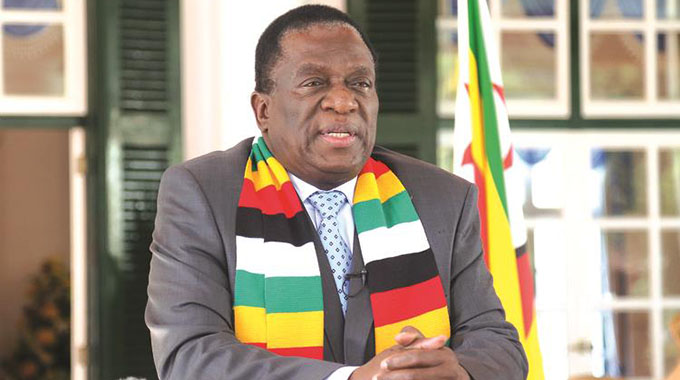
“The 2026/2027 outlook for our SADC sub-region is regrettably projected to be characterised by unfavourable weather patterns with below-normal rainfall,” Mnangagwa said.
He said Government had put in place a six-pillar plan to prepare for the expected shocks, including strengthening the strategic grain reserve, accelerating climate-smart agriculture, supporting livestock during drought and improving early-warning systems.
But in Matabeleland North, the warning comes against a backdrop of water problems that have persisted even before the latest rainfall outlook.
Villagers already walking kilometres for water
In parts of Gwayi and Lubimbi, communities have been forced to travel long distances in search of water, with some villagers relying on wells whose water has been described as salty and unsuitable for drinking.
Recent reporting from the area found families travelling by donkey-drawn scotch carts to fetch water, sometimes covering more than 10 kilometres. Villagers said shallow wells were drying up as the area becomes increasingly arid.
That means another season of below-normal rainfall could deepen an existing problem rather than create a new one.
The pressure is also felt by livestock-owning households, where access to reliable water and grazing determines whether cattle, goats and donkeys survive dry periods.
Ziminya Dam: another project communities expected to change their fortunes
In Nkayi, communities have also been waiting for the completion of Ziminya Dam, a project Government has said would help address water shortages while supporting irrigation and other economic activities.
But VicFallsLive reported that construction stalled after the contractor removed machinery from the site in November 2025.
Villagers interviewed by VicFallsLive said they had expected the dam to bring irrigation and employment opportunities, while livestock keepers were already dealing with deteriorating grazing conditions around the construction area.
Lameck Dlamini, a villager from Menda, told VicFallsLive that the stalled project had left the community disappointed because of its potential to transform agriculture.
He said the irrigation schemes associated with the project could help reduce poverty and hunger in Nkayi.
The Matabeleland North provincial minister, Richard Moyo, told VicFallsLive that lack of funding had contributed to the stoppage, saying Government needed to provide resources for the project to continue.
The dam was planned as a major infrastructure investment, with Government officials putting the cost of the dam and associated power and irrigation components at about US$132 million.
Gwayi-Shangani is expected to bridge the bigger water gap
At the centre of Government’s long-term water strategy is Gwayi-Shangani Dam, which is expected to supply water to Bulawayo and support irrigation and economic development in Matabeleland North.
The National Zambezi Water Project envisages the dam as part of a larger system involving pipelines carrying water towards Bulawayo. A parliamentary report described the project as a long-term solution to Bulawayo’s water problems.
But the project itself has another human dimension.
Communities in Lubimbi, Binga, are facing relocation as the reservoir expands.
Recent reporting on the Gwayi-Shangani Master Plan shows that affected communities are concerned about compensation, water, schools, clinics, roads, grazing land and livelihoods. The plan covers parts of Binga, Lupane and Hwange.
The dam is expected to submerge infrastructure in Lubimbi, including a school, roads and a local dip tank, while boreholes will also be affected.
Villagers have therefore found themselves in a complicated position: the same project that is expected to address major water problems for Bulawayo and support economic development is also creating a new water, relocation and livelihood challenge for communities living in the reservoir area.
Women in Lubimbi have specifically called for water sources, schools and health facilities to be provided before relocation, warning that moving households far from water would increase the burden of fetching water.
The question is whether the response reaches communities before the crisis
Mnangagwa said Government was preparing communities through traditional leaders.
“Through our Chiefs, Headmen and Village Heads, communities are being prepared to withstand future shocks,” he said.
For Matabeleland North communities, the coming season will test not only rainfall — but the ability of Government’s water and drought-response programmes to reach people before water scarcity becomes an emergency.