

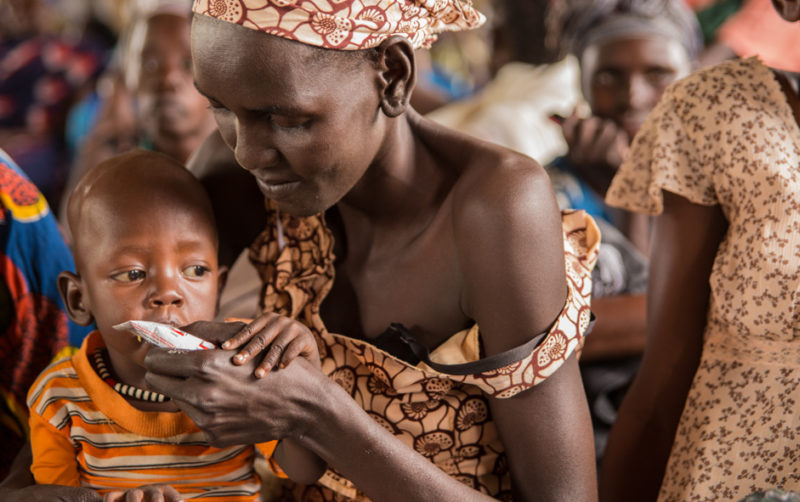
Nearly one in four children aged between six months and five years in Matabeleland North is stunted, according to the latest provincial livelihoods assessment, raising fresh concerns about child nutrition as communities say they have lost important food support programmes.
The 2025 Rural Livelihoods Assessment for Matabeleland North, conducted under the Zimbabwe Livelihoods Assessment Committee (ZimLAC), puts the prevalence of stunting among children aged 6–59 months at 23.3%.
The assessment classifies the level as high according to World Health Organisation standards.
The report also found that only 5.7% of children aged between six and 23 months were consuming a minimum acceptable diet in terms of both quality and quantity.
The findings come against a backdrop of food insecurity in parts of the province. During the peak hunger period between January and March 2026, Binga was projected to have the highest proportion of households facing cereal insecurity in Matabeleland North at 37%, followed by Nkayi at 22%.
The report projected that about 20% of rural households across the province would face cereal insecurity during the peak hunger period, equivalent to about 126,475 people requiring more than 10,000 tonnes of maize grain.
It recommended that Government and development partners implement programmes to address the cereal gap in affected districts.
For communities that previously received nutritional assistance through programmes such as the USAID-funded Amalima Loko, the findings are now being viewed against the loss of that support.
Amalima Loko was a five-year USAID-funded Resilience Food Security Activity implemented in Binga, Hwange, Lupane, Nkayi and Tsholotsho. It ran from October 2020 through 2025 and included food and nutrition interventions among its activities. USAID programme reporting shows that nutritional assistance, including supplementary food distributions, formed part of its work in the province.
In Hwange, councillor Given Moyo said the impact of the programme could be seen among young children who received nutritional support.
“When USAID introduced the Amalima Loko food aid programme, things became better for children who were under two years old,” Moyo said.
He said the programme supported children from pregnancy through the breastfeeding period.
“This is because they were feeding the child from the mother’s womb when the mothers were pregnant until the time when they are weaned from the breast.”
Moyo said the withdrawal of the programme had created concern in communities already struggling with poverty and food insecurity.
“Now it is going to be more complicated because now that they have withdrawn, children will be born stunted,” he said.
“This is because their parents are already starving. They are malnourished.”
He said pregnant women were particularly vulnerable.
“The mother, the expecting mother, is starving. So they are going to — it’s inevitable that they are going to give birth to children that are stunted.”
Moyo also warned of wider consequences of malnutrition, including risks to mothers and young children.
“Or the mother can die as well because of malnutrition. And these project programmes used to cover us, our poverty as a province, because most of our communities are in poverty and they are starving.”
He said communities had seen improvements in children’s health during the years the programme was operating.
“Since the coming of the programme over the years, you could see a big change in young children, showing that even in the womb and after, during breastfeeding, they would have gotten enough nutrients in their bodies. They were healthy.”
Moyo said he feared the gains could be reversed if nutritional support was not replaced.
“But the challenge is now that if it continued like this, we are going to see stunted cases.”
A Binga health worker, Margaret Bernard, also said she had witnessed changes among young children during periods when nutritional programmes were operating.
She said children who were brought for weighing and had previously been underweight showed improvements in their weight, while communities also saw fewer cases of stillbirths and children dying before the age of five.
Bernard said pregnant women also benefited from nutritional support, with fewer complications reported during childbirth.
She said the concern now was the absence of similar supplementation for pregnant women and newborn children in the communities she serves.
Moyo said Government food assistance did not reach enough people to compensate for the loss of donor-supported programmes.
“We hardly hear about Government coming to aid people with nutritious food, and whenever they come, they do not cover everyone. They cover between 30 to 40 percent.”
He also questioned the adequacy and condition of some food assistance reaching communities.
“People are not supplemented enough. The last time they gave people something, they gave them wheat, and at times when they give sorghum or maize meal, it is not even enough. At times, even the maize meal will be rotten.”
Moyo said the situation on the ground was forcing communities to continue looking towards external assistance.
“Our wish is Donald Trump from the USA could revive these programmes so that people can be saved. It’s not like I want us to depend on the donors, but it’s the situation on the ground.”
The concerns come as the provincial assessment calls for continued interventions to address food insecurity and strengthen the resilience of rural households.
The assessment also found that most households relied heavily on casual labour and remittances, while Government assistance remained an important source of social protection.
About Amalima Loko
Amalima Loko was a five-year, US$75 million USAID-funded Resilience Food Security Activity implemented in five Matabeleland North districts — Binga, Hwange, Lupane, Nkayi and Tsholotsho.
The programme, led by Cultivating New Frontiers in Agriculture (CNFA), worked on food and nutrition security alongside livelihoods, water and natural-resource management.
USAID reporting on the programme shows that supplementary food distributions formed part of its interventions in the province.
The programme’s end came amid the wider US foreign-assistance changes announced in 2025. On 20 January 2025, the US administration ordered a pause and review of foreign assistance, after which large numbers of USAID awards were terminated.
For communities in Matabeleland North, however, the concern is now what comes next.